
Landscaping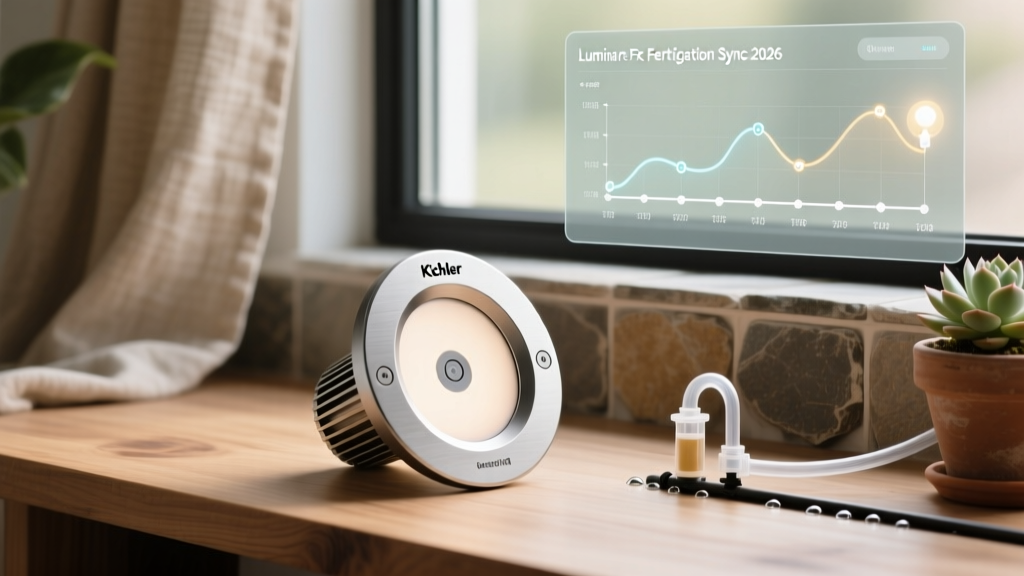
Kichler vs FX Luminaire: Smart Lighting & Fertigation 2026
Anna KowalskiPublished
The Intersection of Landscape Lighting and Fertilizer Schedules
In the modern landscaping industry, managing an outdoor environment goes far beyond simply planting shrubs and installing path lights. As we move through the 2026 landscaping season, the integration of hardscape technology with horticultural science has become paramount. One of the most complex, yet frequently overlooked, relationships in landscape management is the interaction between Artificial Light At Night (ALAN) and plant nutrient uptake. Specifically, how do premium LED landscape lighting systems—like those from Kichler and FX Luminaire—interact with your fertilizer types and application schedules?
When you illuminate a deciduous tree or a high-maintenance garden bed late into the night, you are altering its photoperiod. This disruption affects the plant's circadian rhythm, which in turn dictates how it processes the fertilizers you apply. If a landscape architect installs powerful uplighting without coordinating with the maintenance crew's seasonal fertilizer schedule, the result can be catastrophic winter die-back, excessive foliar burn, or rampant algae growth on illuminated hardscapes. Today, we are comparing the 2026 smart ecosystems of Kichler and FX Luminaire, analyzing how their scheduling capabilities can be perfectly synced with modern fertigation and granular feeding programs.
The Science: ALAN, Photoperiodism, and Nutrient Uptake
Before diving into the hardware, we must understand the biological stakes. Plants rely on light and dark cycles to trigger hormonal changes. In late autumn, shortening days signal deciduous plants to stop producing chlorophyll, pull nitrogen back into their root systems, and enter dormancy. This is the exact time when landscapers apply high-potassium, low-nitrogen "winterizer" fertilizers to promote root hardiness.
If an FX Luminaire or Kichler uplight is left on a standard 12-hour timer, the tree perceives extended daylight. It remains biologically "awake," continuing to push tender new growth. If your automated fertigation system simultaneously injects liquid nitrogen, the tree will fail to harden off, leading to severe frost damage. According to ecological research highlighted by DarkSky International, ALAN severely disrupts local flora and fauna ecosystems, making smart, seasonally-adjusted lighting schedules a necessity for any high-end landscape that utilizes aggressive feeding schedules.
Kichler Landscape Lighting: Residential Smart Syncing
Kichler has long been a staple in the residential landscape lighting market, and their 2026 smart transformer lineup embraces the new Matter smart home protocol. This allows Kichler's outdoor lighting hubs to communicate seamlessly with smart irrigation and fertigation controllers like the Rachio 4 or Hunter Hydrawise.
For the residential lawn and garden enthusiast, Kichler's app-based scheduling is incredibly user-friendly. You can easily set your lighting zones to mimic natural sunset and sunrise patterns based on your local GPS coordinates. But how does this tie into fertilizer schedules?
- Spring High-Nitrogen Feeds: In early spring, when you apply slow-release granular nitrogen (like a 28-0-3 polymer-coated urea), plants are actively seeking light for photosynthesis. Kichler's 3000K warm white LEDs provide an excellent spectrum that complements natural sunlight without causing excessive heat stress to newly fertilized, tender root zones.
- Summer Foliar Feeding: Many homeowners apply liquid kelp or micronutrient foliar sprays in the summer. Kichler's smart dimming allows you to reduce light intensity on patio zones during the hours immediately following application, preventing the rapid evaporation of the liquid fertilizer before the stomata can absorb the nutrients.
- The Autumn Cut-Off: Kichler's geofencing and astronomical clock features allow you to program a "Dormancy Protocol." As the autumn winterizer fertilizer is applied, the Kichler system automatically reduces uplighting duration by 15% each week, gently easing the plants into the darkness required for winter hardening.
FX Luminaire: Commercial ZDC and API Automation
FX Luminaire, particularly their Luxor line with Zonal Dimming and Color (ZDC) technology, is the gold standard for commercial estates and luxury properties. In 2026, FX Luminaire's robust API allows landscape management companies to integrate lighting zones directly into complex commercial fertigation systems.
Unlike Kichler's consumer-friendly approach, FX Luminaire is built for precision. If a commercial property utilizes an automated fertilizer injection pump that delivers specific N-P-K ratios to different hydrozones, the FX Luxor controller can respond to those irrigation events.
- Algae Prevention on Hardscapes: When liquid phosphorus-rich fertilizers are injected into drip zones near illuminated retaining walls, the combination of moisture, nutrients, and LED light can trigger explosive algae growth on the stonework. FX Luminaire's API allows the lighting system to temporarily shut off specific hardscape washers during and for two hours after a fertigation cycle, depriving the algae of the light spectrum it needs to bloom.
- RGBW Spectrum Management: FX Luminaire's RGBW fixtures allow for custom color blending. While primarily used for architectural accents, advanced horticulturalists use specific blue and red spectrums to manipulate plant growth in high-end ornamental beds. By syncing the Luxor controller with your liquid fertilizer schedule, you can supplement the exact light wavelengths a plant needs to maximize the uptake of specific chelated iron or manganese applications.
2026 Feature Comparison: Kichler vs. FX Luminaire
| Feature | Kichler Smart Hub (2026) | FX Luminaire Luxor ZDC (2026) |
|---|---|---|
| Target Market | Residential / Prosumer | Commercial / Luxury Estate |
| Fertigation API Integration | Indirect (via Matter/Smart Home routines) | Direct (via commercial landscape APIs) |
| Dormancy Scheduling | Astronomical clock with seasonal offsets | Custom ZDC programming per fixture |
| Color Temperature | Fixed or selectable CCT (2700K-4000K) | Full RGBW + Tunable White |
| Fertilizer Zone Sync | Basic time-based delays | Real-time hydrozone event triggering |
| Warranty | Limited Lifetime on fixtures, 5yr on electronics | 10-Year comprehensive commercial warranty |
Seasonal Fertilizer and Lighting Schedules: A 2026 Guide
To maximize the health of your landscape, your lighting schedule must adapt to your fertilizer calendar. Here is a best-practice schedule for 2026 that integrates both disciplines.
Spring: The Nitrogen Push and Extended Photoperiods
Fertilizer Type: High-nitrogen, slow-release granular (e.g., 30-0-5 with pre-emergent). Lighting Schedule: As plants break dormancy, they require maximum energy for cellular division. Program your Kichler or FX Luminaire path lights and uplights to operate at 100% intensity. The extended artificial photoperiod can actually benefit spring-flowering shrubs by encouraging robust bloom sets, provided the soil moisture from spring rains is adequate to support the increased metabolic rate driven by the nitrogen.
Summer: Micronutrients and Heat Stress Management
Fertilizer Type: Liquid foliar feeds, chelated iron, and potassium-heavy stress relief formulas. Lighting Schedule: Summer heat combined with high-intensity LED fixtures can raise the ambient temperature around plant canopies, increasing transpiration and water loss. Utilize the dimming capabilities of FX Luminaire or Kichler to reduce fixture output by 30% during the peak summer months. This not only saves energy but reduces the thermal load on plants that are already stressed by summer drought conditions and heavy liquid feeding.
Autumn: Winterizers and the Dark-Sky Transition
Fertilizer Type: High-potassium, zero-nitrogen winterizer (e.g., 0-0-10 or organic kelp meals). Lighting Schedule: This is the most critical intersection of lighting and fertilization. As you apply your winterizer to promote root strength and frost tolerance, you must simultaneously reduce your lighting schedule. According to guidelines supported by the EPA WaterSense and smart landscape management practices, automating your system to reduce watering and lighting in tandem prepares the site for winter. Program your tree uplights to turn off completely by late October. This ensures the trees experience the dark, cold nights required to shut down sap flow and enter true dormancy, locking in the benefits of your potassium-rich autumn fertilizer.
Optimizing Smart Irrigation Controllers for Dual Management
In 2026, the smartest landscapes are those where water, nutrients, and light are managed as a single triad. Upgrading to a Wi-Fi-enabled smart irrigation controller allows you to automate the delay of lighting schedules based on soil moisture and fertigation events. When the system detects that a liquid fertilizer injection is occurring, it can trigger a lighting blackout on the corresponding zone, ensuring that the nutrient solution is absorbed into the soil matrix without the catalytic effect of artificial light promoting surface algae or fungal pathogens.
Conclusion
Choosing between Kichler and FX Luminaire in 2026 ultimately depends on the scale of your landscape and the complexity of your fertilizer regimen. For residential properties utilizing seasonal granular feeds and basic smart home routines, Kichler provides an accessible, beautiful, and highly effective solution. For commercial estates, botanical gardens, or luxury properties utilizing automated liquid fertigation and requiring precise spectral control to manage plant dormancy, FX Luminaire's Luxor ZDC system remains unrivaled. By treating your landscape lighting and fertilizer schedules not as separate chores, but as an interconnected biological system, you ensure a healthier, more vibrant, and ecologically responsible landscape for years to come.

