
Landscaping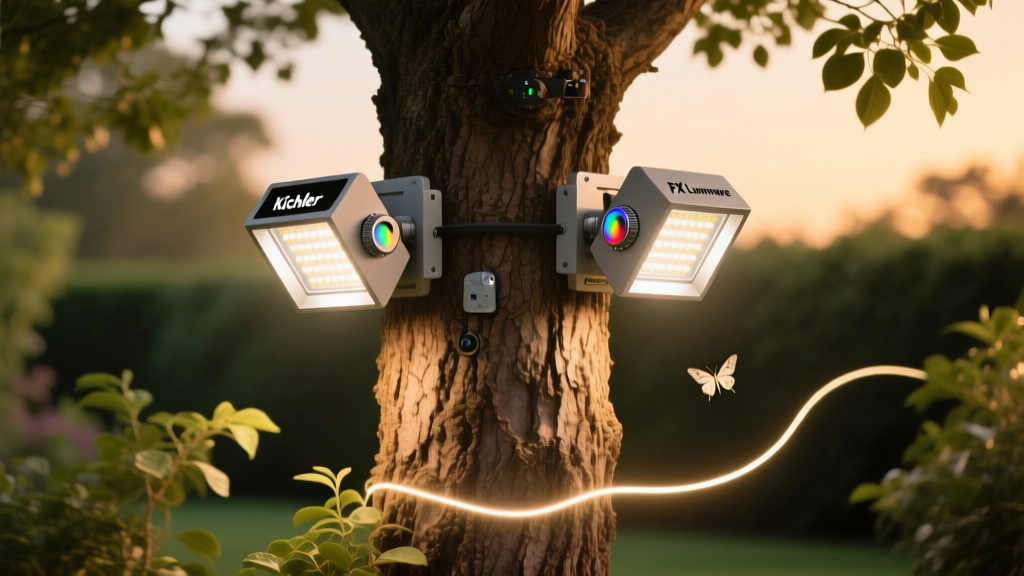
Kichler vs FX Luminaire LEDs: Tree Web Worm Lighting 2026
Emily WatsonPublished
The Intersection of Landscape Lighting and Web Worm Management
As we move through the 2026 landscaping season, homeowners and professionals alike are seeking ways to maintain pristine outdoor environments without relying heavily on broad-spectrum chemical pesticides. One of the most persistent aesthetic and biological challenges in North American yards is the fall webworm (Hyphantria cunea) and the eastern tent caterpillar. These pests create unsightly, silken webs in the canopies of pecan, mulberry, persimmon, and sweetgum trees. According to entomologists at the University of Florida IFAS Extension, early detection is critical; treating the nests when they are small with biological controls like Bacillus thuringiensis (Bt) is highly effective, whereas large, mature webs are nearly impossible to penetrate with sprays.
But how does landscape lighting factor into pest management? The adult moths that lay the eggs responsible for web worm infestations are nocturnal and highly phototactic, meaning they are strongly attracted to artificial light. If your tree uplighting strategy utilizes the wrong color temperature or beam spread, you are essentially creating a beacon that draws egg-laying moths directly to your most prized trees. In 2026, the debate over the best LED fixtures for this delicate balance of aesthetic illumination and pest deterrence centers on two industry giants: Kichler and FX Luminaire.
Why Light Spectrum Matters for Moth and Web Worm Control
Not all LED light is created equal. Insects, including web worm moths, possess photoreceptors that are highly sensitive to ultraviolet (UV) and short-wavelength blue light (roughly 400 to 500 nanometers). Older generation LEDs, and many cheap 2026 hardware store alternatives, achieve high lumen outputs by using a blue LED chip coated with a yellow phosphor. This results in a massive blue spike in the spectral output, even if the light appears warm white to the human eye.
DarkSky International has extensively documented how artificial light at night (ALAN) disrupts insect navigation, mating, and egg-laying behaviors. To minimize moth attraction to your trees, you must select fixtures with a low correlated color temperature (CCT), ideally 2200K (amber) or a high-quality 2700K with a high Color Rendering Index (CRI) that minimizes the blue spike. Both Kichler and FX Luminaire have refined their 2026 LED diode selections to offer superior spectral control, but they approach the challenge from different technological angles.
Kichler Design Pro LED Series (2026) for Tree Uplighting
Kichler’s 2026 Design Pro LED series remains a staple for landscapers who prioritize durability and optical precision. For tree uplighting, the Kichler 16000 Series LED spotlights are particularly relevant. These fixtures feature Kichler’s proprietary Radiax lens technology, which provides an exceptionally smooth beam spread without the harsh hot spots that can scatter light into the upper canopy where moths congregate.
Key Features for Web Worm Management:
- Spectral Purity: Kichler’s 2700K and 3000K diodes in the 2026 lineup are engineered with advanced phosphor blends that reduce blue-light leakage, making them less attractive to nocturnal moths compared to standard 3000K LEDs.
- Glare Control: The integrated shrouds and optional hex louvers allow you to cut off light spill. By keeping the light focused strictly on the lower trunk and primary scaffold branches, you illuminate the tree for architectural beauty without lighting up the entire canopy like a moth magnet.
- Early Detection Lumens: With outputs ranging from 200 to over 800 lumens per fixture, you can easily achieve the 5 to 10 foot-candles required at the trunk level to spot the early, translucent webbing of young caterpillars from your patio.
Priced between $160 and $240 per fixture in 2026, the Kichler Design Pro is an excellent mid-to-high-tier choice for static, reliable illumination that respects the local nocturnal ecosystem.
FX Luminaire ZDC and Luxor System (2026) for Precision Pest Monitoring
FX Luminaire takes a highly technological approach to landscape lighting, which proves invaluable for integrated pest management (IPM). Their 2026 ZDC (Zone Dimension Control) fixtures, paired with the Luxor smart transformer system, offer dynamic control that Kichler’s standard analog setups cannot match out of the box.
Key Features for Web Worm Management:
- Dynamic Dimming via Luxor App: During the peak web worm moth flight periods (typically late May through June, and again in August), you can use the Luxor app to dim your tree uplights to 10% or 15% intensity. This drastically reduces the phototactic draw on the moths while still providing enough ambient glow to navigate the yard.
- Tunable White Technology: FX Luminaire’s premium 2026 tunable white fixtures allow you to shift the CCT. On nights when you are entertaining, you can set the trees to a crisp 3000K. On humid, windless August nights when moth activity is highest, you can shift the spectrum down to a 2200K amber, which is virtually invisible to most insect photoreceptors.
- Zone-Specific Targeting: If you have a highly susceptible tree (like a mature pecan), you can isolate its lighting zone and turn it off completely during the egg-laying window, while leaving the rest of the landscape illuminated.
The barrier to entry is higher. An FX Luminaire Luxor transformer and a set of ZDC uplights will cost upwards of $400 to $600 per zone in 2026. However, for the arboriculture enthusiast or high-end property manager, the ability to manipulate light as a pest-deterrent tool is unmatched.
Feature Comparison: Kichler vs. FX Luminaire for Arboricultural Care
| Feature | Kichler Design Pro (2026) | FX Luminaire ZDC + Luxor (2026) |
|---|---|---|
| Primary Technology | Radiax Optics, Fixed CCT | ZDC Optics, Luxor Smart Control |
| Best CCT for Moth Deterrence | 2700K Warm White | Tunable White (2200K Amber shift) |
| Smart Dimming Capability | Requires 3rd-party smart transformer | Native 1-100% App Dimming |
| Glare Control Accessories | Integrated Shrouds, Hex Louvers | Adjustable Glare Guards, Snoots |
| Estimated 2026 Fixture Cost | $160 - $240 | $220 - $350+ |
| Ideal User Profile | Set-and-forget architectural lighting | Dynamic IPM and smart-home integrators |
Best Practices for Illuminating Web-Prone Trees in 2026
Regardless of whether you choose Kichler’s optical precision or FX Luminaire’s smart dimming capabilities, proper installation technique is paramount when dealing with web-prone trees. According to guidelines from Penn State Extension, maintaining tree health and monitoring for early signs of defoliation are key to preventing severe damage. Lighting should aid, not hinder, this process.
- Avoid Canopy Penetration: Never aim an unshielded spotlight directly into the dense foliage of a web-prone tree. The light will reflect off the leaves, creating a massive, diffuse glow that attracts moths from miles away. Use well lights with heavy glare guards or directional spotlights aimed parallel to the trunk.
- Utilize Moonlighting Sparingly: Downlighting (moonlighting) is popular for creating natural shadows, but placing a fixture high in the canopy of a sweetgum or mulberry tree will illuminate the exact branches where web worms build their nests. While this makes the webs highly visible, the fixture itself will act as a trap, drawing moths into the tree to lay eggs. If you must moonlight, use FX Luminaire’s dimmable pendants and keep them below 10% output during summer months.
- Pair Lighting with Bt Sprays: Use your landscape lighting to conduct weekly nighttime visual inspections during the early summer. The high CRI of both Kichler and FX Luminaire’s 2700K LEDs will reveal the stark white, silken threads of newly hatched web worm colonies. Apply a Bt kurstaki spray immediately upon detection. Because Bt must be ingested by the young caterpillars, treating them while the webs are small (less than a foot across) ensures the spray penetrates the nest.
- Maintain Fixture Cleanliness: Dirty lenses scatter light in unpredictable directions, increasing the ambient glow that attracts insects. Clean your Kichler or FX Luminaire lenses every spring with a soft cloth and mild soapy water to ensure the beam stays tightly focused on the trunk.
Conclusion
Managing tree web worms in 2026 requires a holistic approach that extends beyond the spray tank and into the very way we illuminate our outdoor spaces. By understanding the biological triggers of the fall webworm moth, landscapers can make informed decisions about their lighting infrastructure. Kichler’s Design Pro LED series offers exceptional optical control and spectral purity for those who want a reliable, static solution that minimizes blue-light attraction. Conversely, FX Luminaire’s Luxor ecosystem provides unparalleled, app-based flexibility, allowing you to dim or color-shift your tree lighting in real-time response to local pest flight patterns. Ultimately, combining the right LED technology with vigilant, early-season monitoring will ensure your trees remain healthy, beautiful, and mercifully free of web worms this year and beyond.

