Pest Control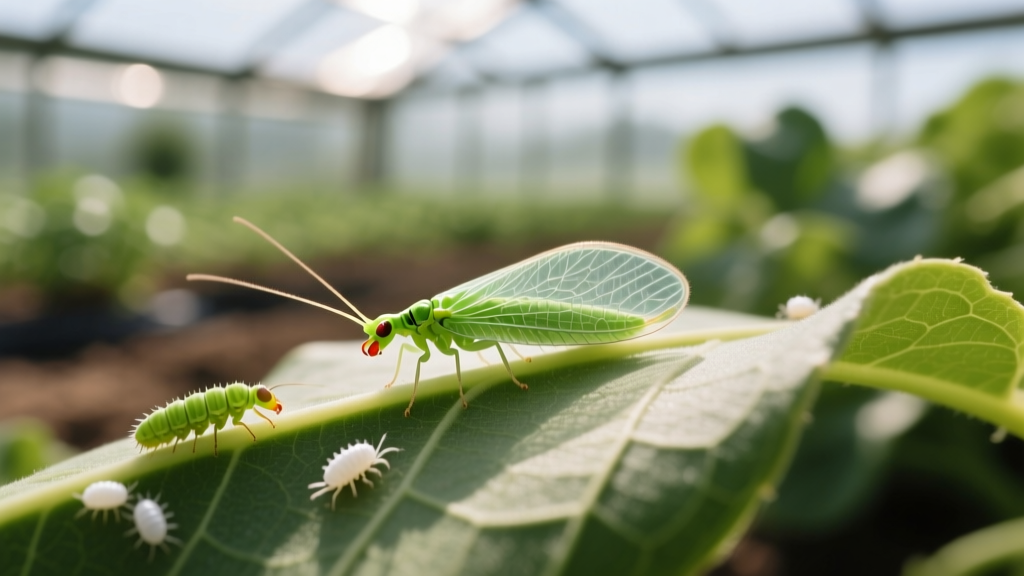
Lacewing Larvae Application Rates for Whitefly Control in 2026
David ParkPublished
The Escalating Whitefly Threat in 2026
As urban agriculture, home greenhouse gardening, and sustainable landscaping continue to surge in 2026, so does the prevalence of stubborn sap-sucking pests. Among the most destructive are whiteflies, specifically the greenhouse whitefly (Trialeurodes vaporariorum) and the silverleaf whitefly (Bemisia tabaci). These pests not only weaken plants by draining vital phloem sap but also excrete honeydew, which fosters the growth of unsightly and photosynthesis-blocking sooty mold. Furthermore, whiteflies are notorious vectors for devastating plant viruses.
With increasing regulatory restrictions on broad-spectrum chemical pesticides and a growing resistance among whitefly populations to traditional insecticides, home gardeners and commercial growers alike are turning to Integrated Pest Management (IPM). The cornerstone of a successful 2026 bio-control strategy against whiteflies is the deployment of green lacewings. However, simply buying and releasing these beneficial insects is not enough; understanding the precise lacewing larvae application rate for whitefly management is critical to achieving total crop protection.
Green Lacewings: Nature's Voracious Predators
While adult green lacewings (Chrysoperla carnea and Chrysoperla rufilabris) are delicate, pale-green insects that primarily feed on nectar, pollen, and honeydew, their larvae are entirely different. Often referred to as "aphid lions," these tiny, alligator-like larvae are aggressive, generalist predators. According to the University of California Statewide Integrated Pest Management Program, a single lacewing larva can consume hundreds of soft-bodied pests during its two-to-three-week developmental stage.
When targeting whiteflies, lacewing larvae use their specialized, sickle-shaped mandibles to pierce the whitefly nymphs and pupae, injecting digestive enzymes and sucking out the liquefied internal contents. Because whiteflies reproduce rapidly and cluster densely on the undersides of leaves, the voracious appetite and mobility of lacewing larvae make them an ideal biological control agent.
Calculating the Optimal Application Rates
The most common mistake gardeners make when utilizing bio-control is underestimating the predator-to-prey ratio required to collapse a whitefly population. Application rates must be tailored to the severity of the infestation, the environment (outdoor garden vs. enclosed greenhouse), and the specific life stage of the whitefly population.
Below is the standardized 2026 application rate chart recommended by entomologists for releasing lacewing larvae specifically for whitefly management:
| Infestation Level | Environment | Larvae per Sq. Ft. | Release Frequency | Expected Control Timeline |
|---|---|---|---|---|
| Preventative / Low | Greenhouse / Hoop House | 1 - 2 | Every 2 to 3 weeks | Maintains suppression |
| Moderate | Outdoor Garden / Landscape | 3 - 5 | Weekly for 3 weeks | 21 - 30 days |
| High / Severe | Greenhouse / Indoor Grow | 5 - 10 | Twice weekly until controlled | 14 - 21 days |
| Hotspot Treatment | Any (Targeted) | 10 - 15 | Every 5 days for 2 weeks | 7 - 14 days |
Note: When treating mature, densely foliated plants like tomatoes or hibiscus, calculate the square footage based on the total leaf surface area rather than just the footprint of the garden bed, as whiteflies inhabit the vertical canopy.
Eggs vs. Larvae: What Should You Release?
When sourcing green lacewings from commercial insectaries in 2026, you generally have two options: purchasing eggs or purchasing pre-hatched larvae. Understanding the difference is vital for your application strategy.
Releasing Lacewing Eggs
Lacewing eggs are typically shipped mixed with a carrier like rice hulls or bran. They are highly cost-effective, usually priced between $12 and $18 per 1,000 eggs in 2026. However, eggs require 3 to 7 days to hatch depending on ambient temperatures. During this waiting period, whiteflies will continue to feed and reproduce. Furthermore, newly hatched larvae are cannibalistic; if eggs are clustered too closely together upon hatching, the first larvae to emerge will eat their unhatched siblings, drastically reducing your effective application rate.
Releasing Pre-Hatched Larvae
For immediate whitefly knockdown, purchasing pre-hatched larvae suspended in a biodegradable gel or buckwheat husk carrier is the superior choice. Though more expensive (often $25 to $40 per 1,000 larvae), you are guaranteed immediate predatory action. Modern 2026 shipping methods utilize temperature-controlled packaging that ensures the larvae arrive dormant but hungry, ready to be broadcast directly onto infested foliage.
Step-by-Step Release Protocol for Maximum Efficacy
To ensure your calculated application rate translates to actual pest control, follow these precise release steps:
- Timing is Everything: Release larvae during the early evening or on overcast days. Lacewing larvae are highly susceptible to desiccation and UV radiation. Releasing them at night gives them time to seek shelter on the undersides of leaves before the sun rises.
- Canopy Preparation: If the honeydew and sooty mold buildup is severe, gently wash the plant foliage with a mild insecticidal soap or a strong jet of water 24 hours before release. This removes the sticky barriers that can trap tiny larvae and allows them to move freely across the leaf surface.
- Targeted Broadcasting: Do not simply toss the carrier material onto the soil. Whiteflies live on the leaves. Gently sprinkle the larvae and carrier material directly into the upper and middle canopy of the plant, focusing heavily on the undersides of the leaves where whitefly nymphs congregate.
- Utilize Sachets for Slow Release: For preventative greenhouse applications, consider using slow-release paper sachets. These sachets contain lacewing eggs and a food source for the hatching larvae. The larvae crawl out of specialized exit holes over a period of 2 to 3 weeks, providing a sustained, low-dose application rate that perfectly matches the hatching cycle of whiteflies.
Environmental Optimization and Climate Considerations
The efficacy of your lacewing application rate is heavily dictated by environmental conditions. According to research published by Cornell University's Biological Control program, green lacewings thrive in temperatures between 68°F and 86°F (20°C - 30°C). In the increasingly hot summers of 2026, daytime greenhouse temperatures can easily exceed 95°F, which causes lacewing larvae to become lethargic, stop feeding, and eventually perish.
To counteract this, ensure adequate shade cloth deployment (30% to 50% shade) during peak summer months. Maintain relative humidity levels above 50%; lacewing larvae require moisture to successfully molt between their three instar stages. If your garden or greenhouse is excessively dry, misting the foliage lightly in the mornings will create the necessary microclimate for larval survival.
Integrating Lacewings into a 2026 IPM Program
Lacewing larvae should not be viewed as a standalone magic bullet, but rather as a vital component of a holistic IPM strategy. The University of Florida IFAS emphasizes that preserving natural enemy habitats is just as important as the initial release.
- Companion Planting: Plant alyssum, dill, fennel, and yarrow near your susceptible crops. These plants produce tiny, shallow flowers that provide essential nectar and pollen for adult lacewings, encouraging them to stay in your garden and lay the next generation of eggs naturally.
- Pesticide Compatibility: Avoid all broad-spectrum insecticides, including pyrethroids and carbamates. Even organic options like Neem oil or horticultural oils can smother lacewing eggs and young larvae. If you must use a chemical intervention to knock down a catastrophic whitefly population before releasing lacewings, use a short-residual insecticidal soap and wait at least 5 to 7 days before introducing your predators.
- Monitoring with Yellow Sticky Cards: Deploy yellow sticky traps throughout your garden to monitor adult whitefly flights. This data will tell you exactly when a new generation of whiteflies is emerging, allowing you to time your subsequent lacewing larvae applications perfectly.
Cost Analysis and Sourcing Expectations
As bio-control manufacturing has scaled up to meet 2026 demand, the cost of green lacewings has stabilized. For a standard 10x10 foot home greenhouse (100 sq. ft.) experiencing a moderate whitefly infestation, the recommended rate is 5 larvae per square foot, totaling 500 larvae per release. Over a three-week treatment period requiring three releases, you will need approximately 1,500 larvae. Budgeting around $45 to $60 for this complete treatment cycle offers a highly economical alternative to repeated applications of premium organic sprays, with the added benefit of zero chemical residue on your harvest.
Conclusion
Managing whiteflies requires patience, precision, and a deep respect for ecological balances. By adhering to the correct lacewing larvae application rates, timing your releases to coincide with pest life cycles, and fostering a hospitable environment, you can effectively eradicate whitefly populations without resorting to toxic chemicals. As we move further into 2026, embracing these advanced bio-control methodologies will ensure your garden remains a vibrant, thriving, and naturally balanced ecosystem.