Pest Control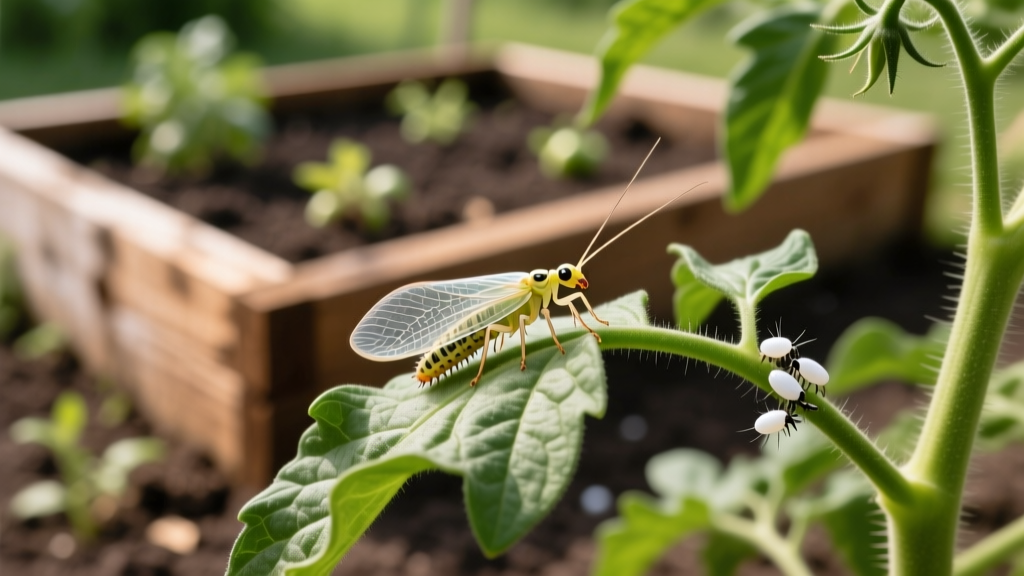
2026 Guide: Lacewing Larvae Rates for Whitefly Control
Robert HayesPublished
The Raised Bed Microclimate and Whitefly Proliferation
Raised bed vegetable gardening offers fantastic soil control, superior drainage, and ergonomic benefits. However, the intensive planting densities typical of raised bed layouts create a unique microclimate that whiteflies absolutely thrive in. The sheltered canopy of closely spaced tomatoes, peppers, and brassicas traps humidity and limits airflow, providing the perfect breeding ground for both the greenhouse whitefly (Trialeurodes vaporariorum) and the silverleaf whitefly (Bemisia tabaci). In the 2026 growing season, home gardeners are increasingly turning away from broad-spectrum chemical sprays that harm pollinators, opting instead for refined Integrated Pest Management (IPM) strategies.
Whiteflies damage crops by piercing phloem tissue and sapping plant vigor. Furthermore, as noted by University of Kentucky Entomology, their excretion of honeydew leads to the rapid accumulation of black sooty mold, which inhibits photosynthesis and severely reduces vegetable yields. Managing this pest requires a targeted, biological approach that fits the spatial constraints of a raised bed.
The Biological Arsenal: Green Lacewing Larvae
While adult green lacewings (Chrysoperla rufilabris and Chrysoperla carnea) are delicate, nectar-feeding insects, their larvae are voracious predators. Often referred to as "aphid lions," these larvae are equally lethal to whitefly eggs and nymphs. According to the University of Minnesota Extension, a single lacewing larva can consume up to 200 soft-bodied insects or eggs per week. Because they do not fly away immediately upon release, larvae are vastly superior to adult lacewings for localized pest control in confined spaces like 4x8 or 4x4 raised garden beds.
2026 Lacewing Larvae Application Rates for Raised Beds
Determining the correct application rate is critical. Under-releasing will fail to curb the whitefly population, while over-releasing is an unnecessary expense and can lead to cannibalism among the larvae if food sources run out. The University of California Integrated Pest Management (UC IPM) program emphasizes that whitefly management requires targeting the nymph stage on the undersides of leaves, which aligns perfectly with the hunting behavior of lacewing larvae.
Below is the 2026 recommended application matrix specifically calibrated for standard raised bed vegetable gardens (assuming a 32-square-foot planting area, such as a standard 4x8 bed):
| Infestation Level | Larvae per Sq Ft | Total Larvae per 4x8 Bed | Release Frequency |
|---|---|---|---|
| Preventative / Low (Few adults, no visible nymphs) | 2 - 5 | 64 - 160 | Every 2-3 weeks |
| Moderate (Clouds of adults, some nymphs/honeydew) | 5 - 10 | 160 - 320 | Weekly for 2-3 weeks |
| Heavy (Severe leaf yellowing, heavy sooty mold) | 10 - 15 | 320 - 480 | Twice a week for 3 weeks |
Step-by-Step Release Protocol
Proper application ensures the larvae survive and immediately begin hunting. In 2026, most commercial suppliers ship lacewing larvae mixed with a carrier material, such as rice hulls or vermiculite, to prevent cannibalism during transit.
- Timing is Everything: Release larvae in the early morning or late evening. The cooler temperatures and lower UV index prevent desiccation and give them time to settle into the plant canopy before the heat of the day.
- The Sprinkle Method: For loose larvae in a carrier, gently shake the container and sprinkle the mixture directly over the infested plants. Focus heavily on the upper canopy; the larvae will naturally migrate downward to the undersides of leaves where whitefly nymphs congregate.
- Targeted Hotspots: If you notice a specific tomato or eggplant acting as a "nurse crop" with a massive whitefly population, concentrate 40% of your total bed allocation directly onto that single plant.
- Moisture Provision: Lacewing larvae require high humidity to survive their first few days. Lightly mist your raised bed canopy with a fine spray of water immediately after release to provide essential hydration.
Monitoring Whitefly Populations Post-Release
Releasing beneficial insects is not a "set it and forget it" strategy. Active monitoring is a cornerstone of the IPM approach. After releasing lacewing larvae into your raised beds, you must track the whitefly population dynamics to determine if secondary releases are necessary.
Yellow Sticky Cards: Place one yellow sticky trap per 4x8 raised bed, positioning it just above the plant canopy. Whiteflies are highly attracted to the color yellow. By checking these cards twice a week, you can monitor the adult whitefly flight activity. A sharp decline in trapped adults over a 14-day period indicates that the lacewing larvae are successfully disrupting the breeding cycle by consuming the nymphs before they can mature and take flight.
Leaf Underside Inspections: The true measure of success is found on the undersides of the leaves. Using a 10x jeweler's loupe or a macro lens on your smartphone, inspect the lower canopy of your most susceptible crops. You are looking for the presence of lacewing larvae—which resemble tiny, mottled brown and white alligators—and a decrease in the translucent, scale-like whitefly nymphs. If you see "hollow" whitefly nymph skins, this is a definitive sign of successful lacewing predation.
Understanding the Lacewing Life Cycle in the Garden
To truly master biological pest control in 2026, gardeners must understand the life cycle of the green lacewing. The larvae stage is the only predatory phase. After approximately 14 to 21 days of relentless feeding, the third-instar larva will spin a silken cocoon, usually attaching it to the underside of a leaf or along the stem of your raised bed crops. During the pupal stage, which lasts about 5 to 7 days, it is crucial that you do not prune or destroy these cocoons, mistaking them for pest casings.
Once the adult lacewing emerges, it will not eat whiteflies. Instead, it will seek out the nectar sources provided by your companion plants. A single female adult can lay up to 200 eggs during her lifespan, depositing them on the ends of long, silken stalks attached to leaves. These stalks prevent the newly hatched larvae from cannibalizing each other before they disperse across the plant canopy. By fostering this complete life cycle within your raised bed ecosystem, you transition from purchasing biological controls to cultivating a permanent, resident army of natural predators.
Environmental Optimization and IPM Synergy
Biological controls do not exist in a vacuum. To maximize the efficacy of your lacewing larvae application in a raised bed, you must align your broader garden management practices with IPM principles.
Temperature and Humidity
Green lacewing larvae are most active and voracious when ambient temperatures are between 65°F and 85°F (18°C - 29°C). If your raised bed is covered with hoop houses or row covers to deter other pests, ensure adequate ventilation to prevent temperatures from exceeding 90°F, which can be lethal to the larvae.
Companion Planting for Nectar
While the larvae are strict predators, the adult lacewings require nectar and pollen to reproduce. Planting alyssum, dill, yarrow, and cilantro around the borders of your raised beds will encourage adult lacewings to stay, mate, and lay eggs directly in your garden, creating a self-sustaining biological defense system for the 2026 season and beyond.
Avoiding Pesticide Interference
Never use broad-spectrum insecticides, including organic options like neem oil or insecticidal soaps, within 5 to 7 days before or after releasing lacewing larvae. Even "soft" pesticides can suffocate or poison the delicate larvae. If a localized whitefly outbreak requires immediate chemical intervention, use a targeted horticultural oil spray only on severely infested leaves, and wait a full week before introducing biological controls.
2026 Sourcing, Pricing, and Viability
The commercial availability of beneficial insects has expanded significantly. As of 2026, purchasing green lacewing larvae is highly accessible for home gardeners. A standard shipment of 1,000 larvae typically costs between $25.00 and $35.00, excluding overnight shipping fees which are mandatory to ensure the insects arrive alive.
For a standard home garden featuring three or four raised beds, a single 1,000-larvae order is usually sufficient for an initial moderate-infestation treatment across all beds. When stored properly in a refrigerator (at roughly 45°F to 50°F), unused larvae in their carrier can be kept for up to 3 days, allowing you to stage multiple releases over a single weekend. By integrating precise lacewing larvae application rates into your raised bed maintenance routine, you can effectively eradicate whitefly populations, protect your vegetable yields, and maintain a thriving, ecologically balanced garden ecosystem.