Pest Control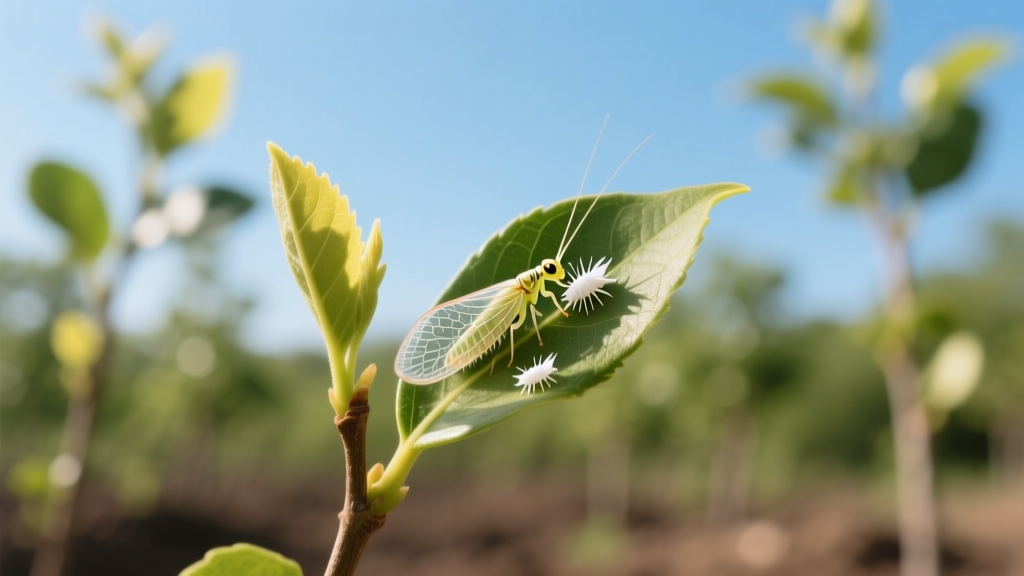
2026 Guide: Lacewing Larvae Application Rates For Tree Whiteflies
Lisa ThompsonPublished
Integrating Biological Pest Control into Tree Selection and Planting
As landscape architects, arborists, and home gardeners finalize their tree selection and planting guides for the 2026 season, managing early-stage pest pressure is paramount. Young, establishing trees are highly vulnerable to sap-sucking insects, which can stunt growth, transmit devastating plant viruses, and cause premature leaf drop. Among the most pervasive of these pests are whiteflies (Aleyrodidae), particularly the silverleaf whitefly (Bemisia tabaci) and the citrus blackfly (Aleurocanthus woglumi). While chemical interventions were once the default, modern 2026 integrated pest management (IPM) protocols heavily favor biological controls to protect soil microbiomes and local pollinator populations.
One of the most effective biological agents for whitefly management is the green lacewing (Chrysoperla species). Specifically, it is the lacewing larvae—often referred to as "aphid lions"—that serve as voracious predators of whitefly eggs and nymphs. This comprehensive guide explores how to select trees with whitefly resistance in mind, and details the precise lacewing larvae application rates required to protect susceptible species during their critical establishment phases.
Tree Selection: Identifying Whitefly-Susceptible Species
Before calculating lacewing larvae application rates, it is critical to understand which trees require this biological intervention. When designing a landscape, selecting naturally resistant species reduces long-term maintenance. However, if your design aesthetic or agricultural goals require planting whitefly-prone trees, you must plan for immediate biological support upon planting.
High-Risk Trees for Whitefly Infestations
- Citrus Trees: Lemons, oranges, grapefruits, and kumquats are notorious magnets for whiteflies. The tender new flush of growth on young citrus trees provides the perfect sugary sap that whiteflies crave.
- Ficus Species: Both ornamental and fruiting ficus trees, including the weeping fig (Ficus benjamina), are highly susceptible to heavy whitefly colonization, which leads to severe honeydew secretion and subsequent sooty mold.
- Ash and Mulberry: These deciduous shade trees often suffer from localized whitefly outbreaks in late spring and mid-summer, particularly in regions experiencing the warmer, drier microclimates common in 2026.
- Avocado and Persimmon: Fruit-bearing subtropical trees frequently experience whitefly pressure that can damage the developing fruit rind and reduce photosynthetic capacity.
According to the University of California Integrated Pest Management (UC IPM) program, whiteflies thrive in warm, dry conditions and are often exacerbated by the excessive use of broad-spectrum insecticides that eliminate their natural predators. Therefore, introducing lacewing larvae at the exact time of tree planting provides an immediate defensive perimeter.
Understanding Green Lacewing Larvae for Whitefly Management
Green lacewings (Chrysoperla rufilabris and Chrysoperla carnea) are generalist predators, but their larval stage is uniquely adapted to hunting soft-bodied insects. Upon hatching, the larvae use their specialized, sickle-shaped mandibles to pierce whitefly nymphs and eggs. They inject a digestive enzyme that liquefies the internal organs of the pest, which the larva then consumes. A single lacewing larva can consume hundreds of whitefly eggs and nymphs over its two-to-three-week developmental period before pupating.
For tree planting guides, the focus is strictly on releasing the larvae rather than the adult lacewings or lacewing eggs. Adults are primarily nectar feeders and may fly away from the release site before ovipositing. Eggs take several days to hatch, during which they may be eaten by other insects or washed away by irrigation. Larvae, however, are immediately active and begin hunting the moment they are distributed across the tree canopy.
2026 Lacewing Larvae Application Rates for Trees
Determining the correct application rate depends heavily on the tree's canopy size, the planting environment (open field vs. greenhouse), and the severity of the whitefly presence. In 2026, commercial biocontrol suppliers ship lacewing larvae suspended in breathable media, such as sterilized buckwheat hulls or corn grits, mixed with a small amount of moth egg diet to prevent cannibalism during transit.
The following data table outlines the recommended lacewing larvae application rates based on tree canopy dimensions and infestation levels. These rates align with current IPM standards for woody ornamentals and fruit trees.
| Tree Canopy Diameter | Tree Stage / Type | Preventative Rate (Low Pressure) | Curative Rate (Moderate/High Pressure) | Release Frequency |
|---|---|---|---|---|
| 1 - 3 Feet | Newly planted saplings, young citrus | 50 - 100 larvae per tree | 150 - 250 larvae per tree | Every 10-14 days for 2 cycles |
| 4 - 8 Feet | Establishing ornamentals, mid-size Ficus | 250 - 500 larvae per tree | 500 - 1,000 larvae per tree | Every 10-14 days for 3 cycles |
| 9 - 15 Feet | Mature canopy, large shade/fruit trees | 1,000 - 2,000 larvae per tree | 2,000 - 4,000 larvae per tree | Every 14 days until control is achieved |
| Per Acre (Orchard) | Commercial citrus/avocado planting | 20,000 - 30,000 larvae / acre | 50,000+ larvae / acre | Bi-weekly during spring flush |
Note: When purchasing lacewing larvae, suppliers typically sell them in quantities of 1,000 or 5,000. For small backyard tree plantings, you can store unused larvae in a ventilated container in the refrigerator (between 45°F and 50°F) for up to 48 hours before releasing them onto additional susceptible plants in your garden.
Step-by-Step Release Strategy for Newly Planted Trees
Applying lacewing larvae correctly is just as important as calculating the right dosage. The University of Minnesota Extension notes that environmental stressors like UV radiation and desiccation can severely impact larval survival rates if release protocols are not followed.
- Timing is Everything: Release the larvae during the early morning or late evening. This avoids the peak UV radiation and heat of the day, giving the larvae time to seek shelter on the undersides of leaves where whitefly nymphs congregate.
- Target the Undersides: Whiteflies lay their eggs and develop through their nymphal stages almost exclusively on the lower surfaces of the tree canopy. Gently sprinkle the buckwheat hull or corn grit mixture directly onto the foliage, focusing heavily on the shaded lower branches and the inner canopy.
- Hydrate the Canopy: Lacewing larvae require moisture to survive their first few hours in a new environment. Lightly mist the tree canopy with water immediately after release. This also helps the carrier medium adhere to the leaves rather than falling to the soil surface.
- Manage Ant Interference: Ants often "farm" whiteflies, protecting them from predators in exchange for their sugary honeydew secretions. If ants are present on your newly planted tree, apply a sticky barrier (like Tanglefoot) around the base of the trunk to prevent them from climbing up and attacking the lacewing larvae.
Companion Planting to Sustain Adult Lacewings
A core tenet of advanced 2026 tree planting guides is understory companion planting. While the larvae handle the immediate whitefly outbreak, you want to encourage the surviving larvae to pupate and emerge as adult lacewings right in your landscape. Adult lacewings require nectar and pollen to reproduce. By planting specific companion plants within the tree's dripline, you create a permanent biological nursery.
Excellent companion plants to integrate around the base of whitefly-prone trees include:
- Sweet Alyssum (Lobularia maritima): A low-growing, shallow-rooted groundcover that provides abundant nectar without competing with the tree's deep root system.
- Yarrow (Achillea millefolium): Features umbrella-shaped flower clusters that are perfectly suited to the feeding anatomy of adult lacewings.
- Dill and Fennel: If planting fruit trees in a permaculture or edible landscape design, allowing these herbs to bolt and flower provides exceptional habitat for adult lacewings and parasitic wasps.
Monitoring and Long-Term IPM Strategies
After releasing the larvae, ongoing monitoring is essential to gauge the success of your application. Hang yellow sticky cards in the lower and middle canopy of the tree. While these cards will catch adult whiteflies, they are primarily used to track population trends rather than serve as a control method. Check the cards weekly; a sharp decline in trapped whiteflies indicates that the lacewing larvae are successfully disrupting the breeding cycle.
Furthermore, as highlighted by the Environmental Protection Agency (EPA), integrating biological controls requires a fundamental shift away from preventative chemical sprays. If a secondary pest issue arises, such as spider mites or scale, avoid using broad-spectrum pyrethroids or neonicotinoids, which will instantly eradicate your lacewing population. Instead, opt for targeted, short-residual treatments like insecticidal soaps or narrow-range horticultural oils, applying them only to localized hotspots and strictly avoiding areas where lacewing larvae are actively hunting.
Conclusion
Selecting the right trees for your landscape involves more than just matching soil types and sun exposure; it requires a proactive strategy for pest management. By understanding the specific vulnerabilities of trees like citrus and ficus, and by deploying green lacewing larvae at the precise application rates outlined above, you can establish a thriving, resilient landscape. Embracing these 2026 biological control standards ensures your newly planted trees grow vigorously, free from the stunting effects of whiteflies, while fostering a vibrant, ecologically balanced garden ecosystem.