Pest Control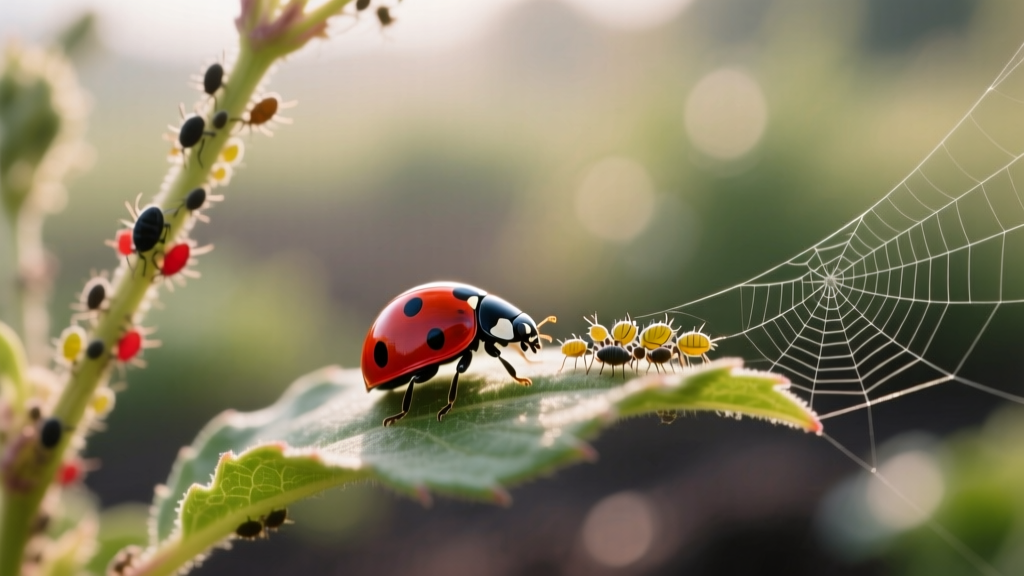
Documenting Ladybug Release Timing For Aphids In 2026
Emily WatsonPublished
The Intersection of Pest Control and Garden Documentation
In the modern era of integrated pest management (IPM), treating a garden is no longer just about applying a solution and hoping for the best. As we navigate the 2026 growing season, the most successful gardeners are those who combine biological pest control with meticulous visual documentation. By photographing and journaling your garden's ecosystem, you transform from a passive observer into an active, data-driven land manager. One of the most classic and rewarding biological control methods to document is the release of ladybugs (specifically the convergent lady beetle, Hippodamia convergens) to combat aphid infestations in garden beds.
Aphids are notorious for their rapid, parthenogenetic reproduction, capable of overwhelming tender new growth on roses, milkweed, and vegetable crops in a matter of days. While releasing ladybugs is a staple of organic gardening, poor timing and lack of environmental preparation often result in the beetles flying away before they consume a single pest. By pairing precise release timing with macro photography and structured visual journaling, you can track the efficacy of your IPM strategies, prove the return on investment of your beneficial insects, and build a long-term ecological database of your garden.
Identifying the Aphid Threshold: When to Act
Before ordering your live ladybugs, you must establish that your garden has reached an actionable pest threshold. According to the University of California Agriculture and Natural Resources IPM guidelines, an economic or aesthetic injury level is reached when pest damage or the pest population itself exceeds the point where control action is justified. In a home garden, this threshold is largely aesthetic and health-based: are the aphids causing leaf curl, stunted growth, or transmitting viruses?
This is where your camera becomes a vital scouting tool. Using a macro lens or a smartphone with a dedicated macro mode, photograph the terminal buds and the undersides of the leaves. Documenting the 'before' state provides a crucial baseline. Look for the telltale signs: clusters of soft-bodied green, black, or yellow aphids, the presence of ants (which farm aphids for honeydew), and the early stages of sooty mold. By capturing high-resolution images of the infestation, you can accurately estimate the density of the aphid colony and determine exactly how many ladybugs are required for your specific garden bed square footage.
Precise Ladybug Release Timing for Maximum Retention
The most common mistake gardeners make is releasing ladybugs in the middle of a hot, sunny afternoon. Ladybugs are highly phototactic and will instinctively fly upward and away from the release site if they are active and disoriented. To ensure they stay in your garden beds and begin hunting aphids, you must manipulate their environment and release them under highly specific conditions.
According to the University of Minnesota Extension, lady beetles require a hydrated environment and will immediately leave a dry, stressed garden. The optimal release strategy involves pre-watering your garden beds heavily a few hours before dusk. The moisture provides the beetles with a necessary drink and lowers the ambient temperature of the microclimate. Furthermore, releasing them at twilight or just after sunset ensures they are naturally inclined to settle down for the night rather than take flight. By morning, they will have acclimated to the area, discovered the aphid colonies, and begun feeding.
2026 Ladybug Release Parameters Checklist
| Parameter | Optimal Condition | Documentation Tip |
|---|---|---|
| Time of Day | Dusk or immediately after sunset | Use a low-light macro ring light to photograph the release without disturbing them. |
| Ambient Temperature | Between 60°F and 85°F (15°C - 29°C) | Log the exact temperature and humidity in your visual journal at the moment of release. |
| Plant Hydration | Soil and foliage heavily watered 2 hours prior | Photograph water droplets on leaves; ladybugs will drink from these before hunting. |
| Acclimation | Stored in refrigerator for 2-4 hours prior | Document the beetles' sluggish movement as they warm up in the twilight garden. |
| Distribution | Scattered in small groups at the base of infested plants | Capture wide-angle shots of the release zones to map out your IPM strategy. |
Photographic Documentation: Capturing the IPM Process
Documenting the release and subsequent predation requires specialized photographic techniques. In 2026, macro photography has become more accessible than ever, with flagship smartphones featuring AI-driven focus stacking and dedicated macro sensors that rival traditional DSLR setups. However, capturing the intricate details of a ladybug hunting an aphid requires an understanding of depth of field and lighting.
When photographing insects in the garden bed, you are dealing with a very shallow depth of field. To ensure both the ladybug's compound eyes and the aphid colony are in sharp focus, you must stop down your aperture to at least f/8 or f/11. Because this reduces the amount of light hitting the sensor, you will need supplemental lighting. A wireless macro LED diffuser or a dedicated macro ring light is essential. This allows you to use a fast shutter speed (1/250th of a second or faster) to freeze the movement of the insects and the sway of the foliage in the evening breeze.
Focus stacking is another critical technique for the garden documentarian. By taking a series of photos at slightly different focal distances and merging them in post-processing software, you can achieve edge-to-edge sharpness on the insect. This is particularly useful when documenting ladybug larvae, which look like tiny, spiky alligators and are often mistaken for pests by untrained gardeners. Documenting these larvae is vital, as they are actually the most voracious aphid-eating stage of the ladybug's lifecycle.
Building a Visual Pest Control Journal
A photograph is only as valuable as the data attached to it. To truly leverage your garden photography for pest control, you must integrate your images into a structured visual journal. In 2026, numerous digital journaling apps allow you to tag photos with GPS coordinates, weather data, and custom IPM metrics.
Your journal entries should follow a strict cadence:
- Day 0 (Release Day): Document the aphid density (e.g., 'approx. 50 aphids per square inch on milkweed terminal bud'), the number of ladybugs released, and the environmental conditions.
- Day 3 (Initial Assessment): Photograph the same terminal buds. Look for a reduction in live aphids and the presence of ladybug eggs (tiny, yellow, football-shaped ovals laid directly within the aphid colonies).
- Day 7 (Larval Emergence): Document the hatching larvae. Note that the adults may have moved on, but the larvae will remain and consume up to 400 aphids each before pupating.
- Day 14 (Ecosystem Recovery): Capture the 'after' state. The plant should show signs of new, uncurled growth. Document any secondary beneficial insects that have arrived, such as hoverflies or parasitic wasps, which are attracted to the recovering ecosystem.
"Visual documentation transforms a single season's pest control effort into a multi-year ecological dataset. By reviewing your macro photography from previous years, you can predict aphid flare-ups before they reach the economic injury threshold."
Evaluating Success: The 'After' Documentation
How do you know if your timed release was a success? The ultimate proof lies in your photographic archive. Successful biological control does not mean the complete eradication of aphids; a small, manageable population must remain to sustain the beneficial predators. According to the Environmental Protection Agency's IPM principles, the goal is to manage pest damage by the most economical means, and with the least possible hazard to people, property, and the environment.
When reviewing your 2026 macro documentation, look for 'aphid mummies'—the swollen, bronze, or black hollowed-out shells of aphids that have been parasitized by beneficial wasps. While ladybugs are the primary predators you introduced, a healthy, documented garden bed will soon recruit a secondary army of parasitoids. Your camera will reveal this hidden war playing out on the undersides of your leaves. By meticulously timing your ladybug releases and documenting the subsequent ecological shifts, you not only save your prized garden beds from aphid destruction but also build a stunning, scientifically valuable visual record of your garden's natural resilience.