
Landscaping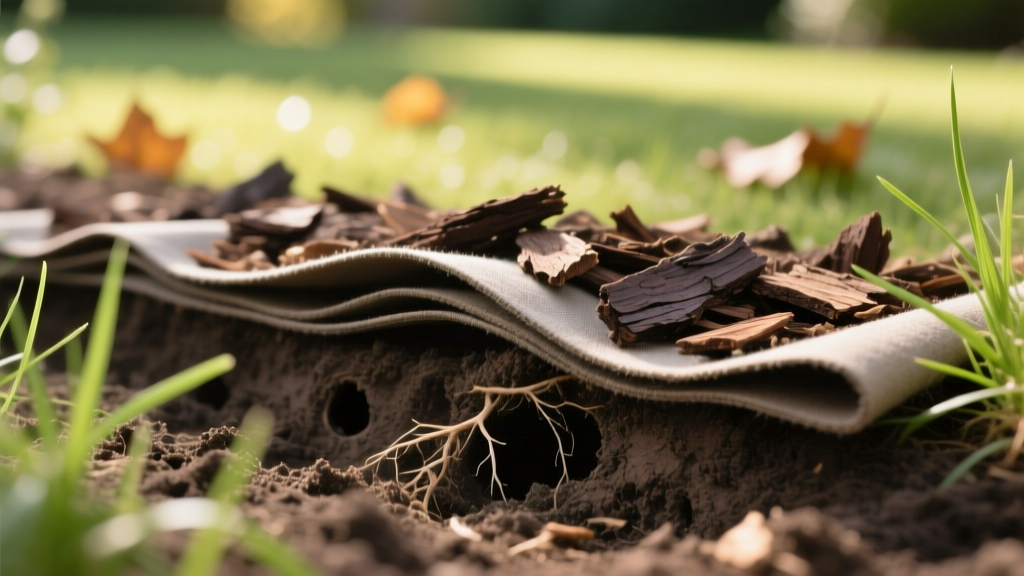
2026 Mulch and Weed Fabric Guide: Core Aeration View
Robert HayesPublished
Bridging Turf Science and Landscape Beds
When homeowners and landscaping professionals think of core aeration, the mind immediately jumps to turfgrass management. The mechanical removal of soil plugs to relieve compaction, improve water infiltration, and enhance gas exchange is a cornerstone of lawn care. However, the fundamental principles of soil aeration are equally critical when planning garden beds, managing tree rings, and installing mulch. In 2026, the landscaping industry is undergoing a massive shift toward regenerative soil practices, and the intersection of mulch installation, weed barriers, and soil porosity is at the forefront of this movement.
While your lawn might be breathing easily after a fall aeration service, the adjacent landscape beds might be suffocating. The subtopic of mulch installation with landscape fabric weed barriers is often approached purely from a weed-suppression standpoint. But from a core aeration and soil health perspective, the materials you place on top of your soil dictate its biological viability, drainage capacity, and resistance to compaction. This comprehensive guide explores how to install mulch and weed barriers in 2026 without undoing the vital aeration processes that keep your landscape thriving.
The Hidden Dangers of Woven Weed Barriers
For decades, woven polypropylene landscape fabric was marketed as the ultimate solution for weed control in garden beds. The logic seemed sound: block sunlight to prevent weed germination while allowing water to pass through. However, modern soil science and aeration experts have thoroughly debunked the long-term viability of this approach. From a soil aeration perspective, landscape fabric creates a physical barrier that severely restricts gas exchange between the soil and the atmosphere.
Soil requires oxygen for root respiration and for the survival of aerobic microbes that break down organic matter. When landscape fabric is installed and covered with inorganic mulch (like river rock) or heavy wood chips, the soil beneath becomes isolated. Over time, foot traffic, heavy rainfall, and the weight of the mulch compress the soil particles. Without the natural freeze-thaw cycles and organic matter integration that occur in exposed or properly mulched soil, the bulk density of the soil increases. In essence, landscape fabric acts as a catalyst for soil compaction, creating an anaerobic environment that mirrors the worst conditions of an un-aerated, high-traffic lawn.
Furthermore, as the fabric ages, it becomes clogged with fine soil particles, dust, and decomposing organic debris. According to research highlighted by the University of Minnesota Extension, this clogging effectively turns the permeable fabric into an impermeable plastic sheet. Water runoff increases, soil moisture plummets during summer months, and the vital macropores that core aeration seeks to establish in turf are entirely absent in the landscape beds.
Gas Exchange, Macropores, and the Soil Food Web
To understand why traditional weed barriers fail, we must look at soil structure through the lens of core aeration. Healthy soil is composed of roughly 50% solid material (minerals and organic matter) and 50% pore space. This pore space is divided into micropores (which hold water) and macropores (which drain water and hold air). Core aeration machines physically carve out macropores in compacted lawns to restore this balance.
In garden beds, we rely on the soil food web—earthworms, nematodes, and fungi—to naturally maintain these macropores. Earthworms are nature's core aerators; their burrows create deep channels for water and oxygen. When you install a synthetic landscape fabric, you sever the connection between the soil surface and the organic matter above it. Earthworms cannot easily penetrate the synthetic weave to pull leaf litter and mulch down into the soil profile. The result is a sterile, compacted layer of dirt beneath the fabric that lacks the structural integrity to support robust plant root systems. According to the USDA Natural Resources Conservation Service (NRCS), maintaining soil structure and preventing compaction requires continuous organic matter input and biological activity, both of which are stifled by synthetic barriers.
2026 Material Comparison Chart: Weed Barriers and Soil Breathability
When planning your 2026 landscaping projects, it is crucial to select materials that suppress weeds while mimicking the benefits of core aeration. Below is a comparison of common weed barrier materials evaluated through the lens of soil health and gas exchange.
| Barrier Material | Water Permeability | Gas Exchange (Aeration) | Earthworm Access | 2026 Recommendation |
|---|---|---|---|---|
| Woven Polypropylene | High (Initially), Low (Over time) | Poor | Blocked | Avoid: Causes long-term compaction and anaerobic soil conditions. |
| Solid Black Plastic | None | None | Blocked | Never use in planting beds: Completely suffocates soil biology. |
| Corrugated Cardboard | Moderate (Breaks down) | Excellent (As it decomposes) | Unrestricted (Post-decomposition) | Highly Recommended: Ideal for sheet mulching and smothering weeds. |
| Thick Newspaper Layers | High | Good | Unrestricted (Post-decomposition) | Good for small beds: Decomposes quickly, requires thick mulch topping. |
| Burlap / Jute Netting | High | Excellent | Unrestricted | Excellent for slopes: Holds mulch in place while allowing full soil respiration. |
The 2026 Sheet Mulching Alternative: Step-by-Step
Instead of relying on synthetic fabrics that promote compaction, the 2026 industry standard for weed suppression and soil building is 'sheet mulching.' This method utilizes biodegradable barriers that smother existing weeds while eventually breaking down to feed the soil food web, promoting natural aeration and drainage.
Step 1: Site Preparation and Broadforking
Before laying any barrier, address existing soil compaction in the bed. Just as you would core aerate a lawn, use a broadfork or a deep-tine garden fork to manually fracture compacted soil in your landscape beds. Insert the tines 6 to 8 inches deep and gently rock the handle back to crack the soil crust without turning it over. This preserves the soil layers while opening vital macropores for oxygen and water infiltration.
Step 2: Hydration and Nitrogen Boost
Thoroughly water the aerated soil. If the soil is poor, apply a thin layer of compost or a nitrogen-rich organic fertilizer. As the carbon-heavy weed barrier decomposes, it will tie up surface nitrogen; this initial boost prevents nitrogen deficiency in your desirable plants.
Step 3: Laying the Biodegradable Barrier
Use plain, uncoated corrugated cardboard (remove all plastic tape and staples). Lay the cardboard directly over the soil and existing weeds, overlapping the edges by at least 6 inches to prevent opportunistic weeds from finding a gap. Wet the cardboard heavily as you lay it; this initiates the decomposition process and conforms the material to the soil contours, eliminating air pockets where weed seeds might blow in and germinate.
Step 4: Applying the Correct Mulch Depth
Cover the cardboard with 3 to 4 inches of coarse, aged arborist wood chips or shredded bark. Avoid 'dyed' mulches or finely shredded 'double-hammered' mulches, as they compact easily and restrict gas exchange. Coarse wood chips mimic the forest floor, allowing rain to penetrate while maintaining a highly aerated environment at the soil-barrier interface. Keep the mulch at least 3 inches away from the trunks of trees and shrubs to prevent bark rot and rodent damage.
Evaluating and Removing Existing Landscape Fabric
If you are renovating an older landscape, you will likely encounter degraded weed fabric. From a core aeration perspective, leaving this fabric in place is detrimental to the long-term health of your plants. The soil beneath is almost certainly compacted, hydrophobic, and devoid of biological life.
In 2026, the best practice is complete removal. Use a heavy-duty landscaping rake and a flat-edged spade to peel back the fabric. You will likely find a dense mat of roots trapped just beneath the surface, and a hardpan layer of soil below. Once the fabric is removed, aggressively aerate the bed using a broadfork, amend with 2 inches of high-quality compost, and transition to the cardboard sheet mulching method outlined above. While removal is labor-intensive, the resulting improvement in soil drainage, plant vigor, and natural aeration is immeasurable.
Long-Term Maintenance and Soil Health
Maintaining an aerated, healthy landscape bed requires an annual commitment to top-dressing. As the cardboard decomposes and the wood chips break down, the mulch layer will thin. Each spring, add 1 to 2 inches of fresh, coarse wood chips to maintain the 3-to-4-inch depth. Never use pre-emergent chemical herbicides on top of organic mulch, as these chemicals disrupt the fungal networks and microbial life that naturally maintain soil structure and porosity.
By viewing mulch installation through the lens of core aeration, you shift your focus from merely suppressing weeds to actively cultivating a living, breathing soil ecosystem. In 2026, the most beautiful landscapes are those built on a foundation of uncompromised soil structure, robust gas exchange, and deep, unhindered root growth. Ditch the plastic and fabric, embrace the cardboard and coarse wood chips, and let your landscape beds breathe.

