
Landscaping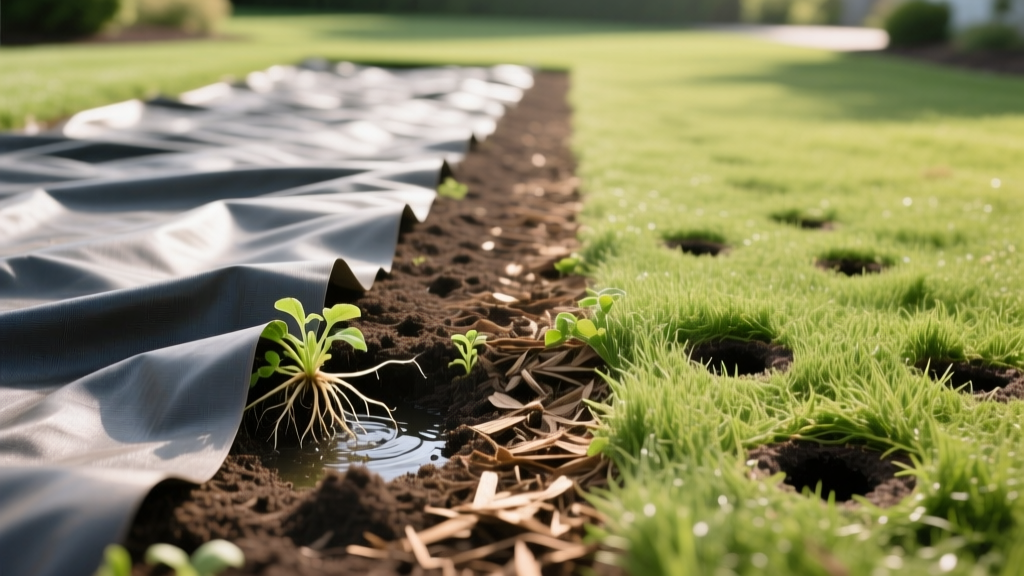
Mulch and Fabric Weed Barriers: Aeration and Seeding Impacts 2026
David ParkPublished
The Holistic Lawn: Why Garden Beds Dictate Turf Success
As we move through the 2026 landscaping season, the industry has fully embraced regenerative soil practices. Homeowners and professionals alike are investing heavily in liquid aeration, deep-tine core aeration, and precision overseeding to build drought-resistant, resilient turf. However, a critical blind spot remains in many landscape designs: the transition zone between the newly seeded lawn and the adjacent mulched garden beds. Specifically, the widespread use of traditional polypropylene landscape fabric weed barriers beneath mulch is actively sabotaging the very soil aeration and seeding efforts you are trying to achieve.
While landscape fabric was popularized decades ago as a "set-it-and-forget-it" weed solution, modern soil science has thoroughly debunked its long-term viability. When you install impermeable or semi-permeable plastic weed barriers in beds bordering your lawn, you disrupt the natural hydrological cycle and gas exchange required for both bed health and adjacent turfgrass germination. Understanding the conflict between fabric weed barriers and soil aeration is essential for anyone looking to maximize their lawn care investments in 2026.
The Hidden Conflict: Landscape Fabric vs. Soil Aeration
Soil aeration is not just about punching holes in the ground with a core aerator; it is about maintaining a continuous network of macropores and micropores that allow oxygen, water, and carbon dioxide to move freely through the soil profile. According to research highlighted by Penn State Extension, healthy soil requires a constant exchange of gases. Tree roots, shrub roots, and the soil microbiome consume oxygen and release carbon dioxide.
When you lay down woven or non-woven landscape fabric and cover it with mulch, you effectively cap the soil. Over time, fine soil particles and organic matter clog the microscopic pores of the fabric. By year two or three, the fabric becomes entirely impermeable. This creates an anaerobic environment beneath the mulch, suffocating beneficial mycorrhizal fungi and earthworms—the very organisms that perform natural, biological soil aeration. Without these organisms, the soil in your garden beds becomes heavily compacted, losing its structure and its ability to absorb heavy rainfall.
How Fabric Weed Barriers Sabotage Lawn Seeding
You might wonder how suffocating the soil in a garden bed affects the grass seed you just spread on your lawn. The answer lies in edge-to-turf water dynamics and surface runoff. When you overseed a lawn, whether you are using advanced endophyte-enhanced tall fescues or premium Kentucky bluegrass blends, consistent moisture in the top quarter-inch of soil is non-negotiable for germination.
If the adjacent garden beds are capped with degraded landscape fabric, they cannot absorb water. During heavy spring rains or your daily irrigation cycles, the water hits the fabric, pools beneath the mulch, and aggressively runs off the surface. This runoff is often directed right into the transition zone of your lawn. The consequences for your newly seeded turf are severe:
- Seed Washout: Fast-moving runoff from fabric-lined beds physically washes away expensive grass seed before it can establish root contact with the soil.
- Edge Compaction: The constant flow of water over the bed edge compacts the soil in the first 12 to 24 inches of your lawn, negating the benefits of your recent core aeration.
- Fungal Disease Promotion: Poor drainage at the bed-to-lawn interface creates stagnant, overly saturated microclimates that invite damping-off disease and pythium blight, which can wipe out young seedlings overnight.
2026 Material Comparison: Weed Barriers and Aeration Metrics
To protect your aeration and seeding investments, you must choose bed materials that promote infiltration rather than runoff. The table below compares traditional options with the latest 2026 breathable alternatives.
| Material Type | Water Permeability | Soil Aeration Impact | Weed Suppression | Lifespan |
|---|---|---|---|---|
| Woven Polypropylene | Low (Degrades over time) | Severe Restriction | High (Initially) | 5-10 Years |
| Non-Woven Plastic | Very Low | Total Blockage | High | 10+ Years |
| Biodegradable Jute/Coir | High | Excellent | Moderate | 1-2 Seasons |
| Bio-Cellulose (2026 Tech) | High | Very Good | High | 2-3 Years |
| Bare Organic Mulch (3-Inch) | Very High | Excellent | Moderate-High | 1 Season (Requires Top-up) |
As noted by Clemson University Extension, a proper 3-inch layer of organic mulch applied directly to the soil surface acts as a natural weed suppressant while regulating soil temperature and retaining moisture, entirely eliminating the need for synthetic fabrics.
Step-by-Step: Aeration-Friendly Mulch Installation
If you are renovating your landscape beds to support a healthy, well-aerated lawn ecosystem, follow this 2026 best-practice installation guide.
Step 1: Deep Tine Bed Aeration
Before laying down any mulch or barrier, the soil in the bed must be aerated. Avoid using motorized tillers, which destroy soil structure and chop up beneficial fungal networks. Instead, use a 4-tine broadfork or a manual deep-tine aerator to gently fracture the compacted soil in the bed to a depth of 6 to 8 inches. This allows water to infiltrate deeply rather than running off toward your newly seeded lawn.
Step 2: Install a Breathable Bio-Barrier (Optional)
If your beds are heavily infested with aggressive perennial weeds like bindweed or bermudagrass, a bare mulch layer may not be enough. Instead of plastic, unroll a biodegradable jute or coir weed barrier. These natural fibers allow 100% of oxygen and water to pass through into the soil profile. By the time the jute decomposes (usually after 18 to 24 months), the underlying soil biology will have restored its natural structure, and the thick layer of organic mulch will take over weed suppression duties.
Step 3: Edge and Trench for Turf Protection
Create a physical "V" trench between the garden bed and the lawn. This trench serves two purposes: it stops rhizomatous weeds from invading the turf, and it acts as a catch-basin for minor water runoff, giving it time to percolate into the lawn's root zone rather than washing over the surface and displacing your grass seed.
Step 4: Apply Premium Hardwood or Pine Bark Mulch
Apply a uniform 3-inch layer of double-shredded hardwood bark or pine bark nuggets. Avoid "dyed" mulches or rubber mulches, which contain heavy metals and chemical residues that can leach into the soil and stunt the growth of adjacent turfgrass roots. Keep the mulch exactly 2 inches away from the base of tree trunks and shrub stems to prevent crown rot.
The 2026 Shift: Bio-Cellulose Innovations
One of the most exciting developments in 2026 is the commercial availability of bio-cellulose weed barriers. Derived from agricultural waste products and engineered to mimic the porous structure of natural leaf litter, these barriers offer the heavy-duty weed suppression of woven plastics but break down into harmless organic carbon after three years. They maintain a 95% water infiltration rate throughout their lifespan, ensuring that your lawn's irrigation schedule isn't compromised by bed runoff. While slightly more expensive upfront (averaging $0.45 per square foot compared to $0.20 for cheap plastics), the savings in lawn reseeding, fungal treatments, and soil remediation make them the superior choice for the modern, aeration-focused landscape.
Conclusion: Rethinking the Transition Zone
A beautiful, thick lawn does not exist in a vacuum. The health of your turf is inextricably linked to the soil biology and water management of the garden beds that border it. By abandoning outdated, soil-suffocating landscape fabrics in favor of deep bed aeration, biodegradable barriers, and thick organic mulch, you create a cohesive landscape that thrives from the ground up. Protect your aeration and seeding investments this year by letting your soil breathe, and watch as both your garden beds and your lawn reach unprecedented levels of vigor and resilience.

