Pest Control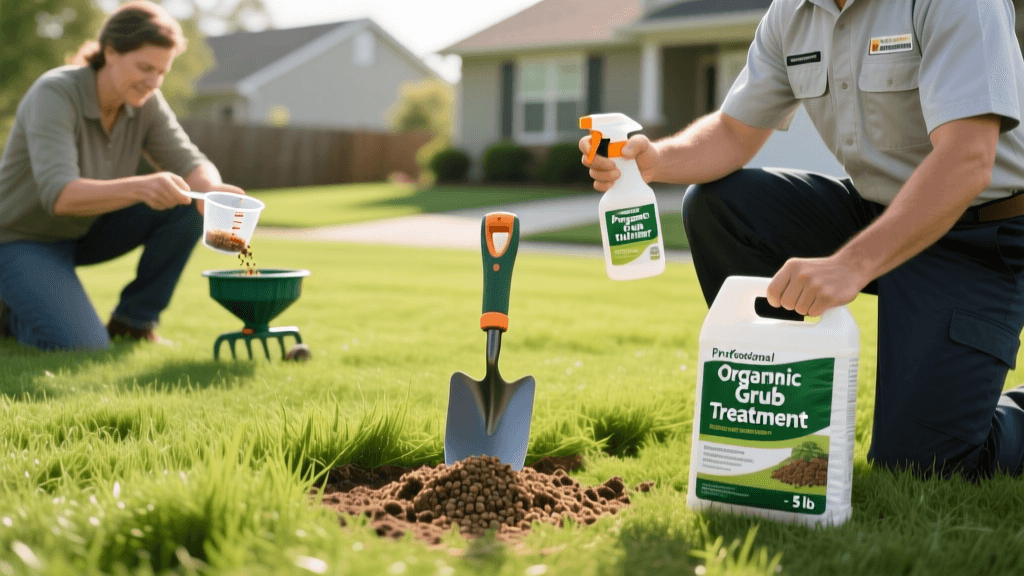
Lawn Grub Control Costs: DIY vs Professional Treatment Guide
The Financial Impact of Lawn Grubs
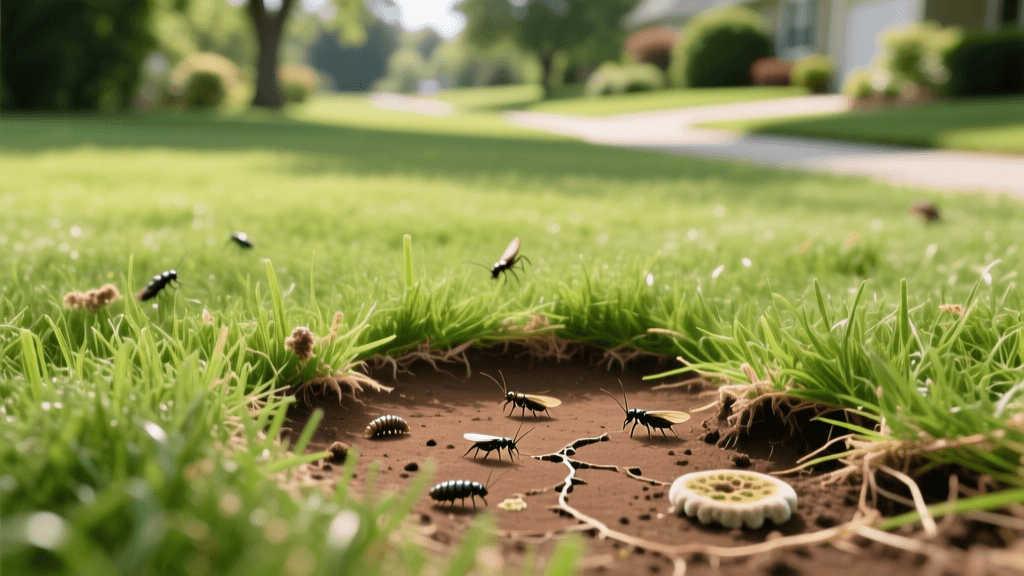
White grubs—the larval stage of Japanese beetles, June bugs, and European chafers—are among the most destructive subterranean pests in North American lawns. By feeding aggressively on turfgrass roots, grubs sever the plant's ability to absorb water and nutrients, leading to large, spongy, brown patches of dead grass. However, the direct damage to the grass is only half the problem. Grub-infested lawns frequently attract secondary predators like skunks, raccoons, and crows, which tear up the turf in search of a protein-rich meal.
For homeowners, the financial stakes are high. Replacing a grub-destroyed lawn can cost anywhere from $0.50 to $1.50 per square foot for professional sod installation. For an average 5,000-square-foot lawn, that translates to a staggering $2,500 to $7,500 in landscape rehabilitation. Fortunately, proactive pest control is a fraction of this cost. Understanding the economics of grub control—weighing preventative versus curative strategies, and DIY applications versus professional services—is essential for effective lawn care budgeting.
Understanding the Grub Life Cycle and Treatment Windows
To budget effectively, you must first understand when to deploy your resources. Grub control is highly dependent on the pest's life cycle. According to Penn State Extension, adult beetles lay their eggs in the soil during early to mid-summer. These eggs hatch into young grubs in late July and August, which immediately begin feeding on grassroots before burrowing deep into the soil to overwinter.
This biological timeline creates two distinct treatment windows, each with different cost implications:
- Preventative Treatments: Applied in late spring or early summer (May through July) before eggs hatch. These products remain in the soil and kill young grubs as they emerge. They are generally cheaper and highly effective.
- Curative Treatments: Applied in late summer or early fall (August through October) when grubs are actively feeding and damage becomes visible. These products act as a 'rescue' treatment but are typically more expensive and require precise application.
DIY Preventative Grub Control Costs
Preventative treatments are the cornerstone of a budget-friendly lawn care regimen. The two most common active ingredients for DIY preventative grub control are Chlorantraniliprole and Imidacloprid.
Chlorantraniliprole (e.g., Scotts GrubEx1)
Chlorantraniliprole is a highly effective, low-toxicity preventative that targets young grubs without harming beneficial insects like earthworms. Products like Scotts GrubEx1 are widely available at home improvement stores. A standard 10,000-square-foot bag costs approximately $25 to $30. This breaks down to an incredibly budget-friendly $1.25 to $1.50 per 1,000 square feet. Application timing is flexible, ideally applied between April and June, and requires watering in with about 0.5 inches of irrigation to activate the chemical barrier in the soil.
Imidacloprid (e.g., Bayer Advanced 24 Hour Grub Killer Plus)
Imidacloprid is a systemic neonicotinoid that also acts as a preventative. It is slightly more toxic to non-target pollinators if applied to flowering weeds, so mowing before application is recommended. A 10-pound bag covering 5,000 square feet typically costs around $18 to $22, equating to roughly $3.60 to $4.40 per 1,000 square feet. It must be applied in early summer before grub eggs hatch.
DIY Curative Grub Control Costs
If you missed the preventative window and notice brown, peeling patches of turf in September, you need a curative approach. Curative products utilize fast-acting contact pesticides like Trichlorfon (e.g., Dylox) or Carbaryl.
Trichlorfon is the industry standard for rapid grub knockdown. A 10-pound bag of Dylox, which covers approximately 5,000 square feet, retails for $30 to $40. This raises the cost to $6.00 to $8.00 per 1,000 square feet. Curative treatments are more expensive and carry a higher environmental risk due to their broad-spectrum nature and potential for runoff. Furthermore, Trichlorfon degrades rapidly in alkaline soils (pH above 7.0), meaning you may need to apply a second treatment if your soil pH is high, effectively doubling your budget.
Organic and Biological Control Costs
For environmentally conscious homeowners or those managing organic landscapes, biological controls offer a sustainable, albeit sometimes slower, alternative to synthetic chemicals.
- Beneficial Nematodes (Heterorhabditis bacteriophora): These microscopic worms seek out and destroy grubs in the soil. A commercial application covering 5,000 square feet costs between $35 and $50 ($7.00 to $10.00 per 1,000 square feet). Nematodes are living organisms; they must be shipped overnight, kept refrigerated, and applied during cool, overcast evenings with heavy irrigation to survive.
- Milky Spore (Paenibacillus popilliae): This naturally occurring bacterium specifically targets Japanese beetle grubs. While a 40-ounce dispenser tube covering an acre can cost upwards of $80 (roughly $2.00 per 1,000 square feet), it takes 2 to 4 years to establish a protective spore network in the soil. It is a long-term capital investment rather than an immediate fix.
Professional Lawn Care Service Costs
Hiring a licensed lawn care professional removes the guesswork, labor, and equipment storage from your shoulders. Professional grub control is rarely sold as a standalone service; it is typically bundled into a comprehensive 5-to-7-step annual lawn care program.
For an average 5,000 to 10,000-square-foot lawn, an annual professional fertilization and weed/pest control program costs between $400 and $700 per year. If we isolate the grub control application (usually Step 4 or 5 in mid-summer), the effective cost allocated to grub prevention is roughly $75 to $125 per application. While this is significantly more expensive than a $25 bag of DIY Chlorantraniliprole, professional services include commercial-grade products, precise calibration, and service guarantees that often include free re-treatments or damage repair if the application fails.
Cost Comparison Chart: Grub Control Strategies
| Treatment Strategy | Common Active Ingredient | Application Timing | Est. Cost (per 5,000 sq ft) | Efficacy & Notes |
|---|---|---|---|---|
| DIY Preventative | Chlorantraniliprole | May - July | $6.50 - $15.00 | Excellent. Safe for pollinators; long residual. |
| DIY Preventative | Imidacloprid | June - July | $18.00 - $22.00 | Very Good. Avoid applying near blooming weeds. |
| DIY Curative | Trichlorfon (Dylox) | August - October | $30.00 - $40.00 | Good. Fast-acting rescue; degrades in high pH soil. |
| DIY Organic | Beneficial Nematodes | August - September | $35.00 - $50.00 | Variable. Requires strict soil moisture and temp control. |
| Professional Service | Commercial Preventatives | May - July | $75.00 - $125.00 | Excellent. Includes labor, equipment, and guarantees. |
Hidden Costs: Repairing Grub and Animal Damage
When budgeting for pest control, you must also account for the worst-case scenario: turf rehabilitation. If grubs are left unchecked, or if secondary animal damage occurs, you will face landscape repair costs.
Overseeding a damaged lawn requires purchasing turf-type tall fescue or Kentucky bluegrass seed, starter fertilizer, and topsoil. Expect to budget $40 to $80 per 1,000 square feet for DIY reseeding, which includes the cost of renting a core aerator or slit seeder ($50 to $80 per day). If the damage is too severe and requires resodding, the costs skyrocket. Professional sod removal, soil grading, and installation average $1.00 to $1.50 per square foot, meaning a 2,000-square-foot damaged patch could cost up to $3,000 to replace.
Budgeting with Integrated Pest Management (IPM)
The most cost-effective approach to grub control is not blindly applying chemicals every year, but rather adopting an Integrated Pest Management (IPM) strategy. The Environmental Protection Agency (EPA) defines IPM as a science-based, common-sense approach that utilizes current information on the life cycles of pests and their interaction with the environment to manage pest damage by the most economical means, with the least possible hazard.
According to Michigan State University Extension, a healthy lawn can tolerate a surprising amount of grub feeding before showing visible damage. The economic threshold for treatment is generally considered to be 5 to 10 grubs per square foot.
To practice budget-conscious IPM:
- Scout in August: Use a flat-edged shovel to cut three sides of a 1-foot square in your turf and peel it back like a carpet. Count the grubs in the top 2 inches of soil.
- Evaluate the Threshold: If you find fewer than 5 grubs per square foot, do not spend money on curative treatments. Your lawn's root system can outgrow the minor feeding damage.
- Target High-Risk Zones: If you have a history of Japanese beetles or live near highly irrigated, sunny slopes (which attract egg-laying females), budget for a low-cost preventative like Chlorantraniliprole in those specific zones rather than treating the entire property.
Conclusion
Budgeting for lawn grub control requires a strategic balance between upfront chemical costs and potential long-term landscape repair. For the vast majority of homeowners, a DIY preventative application of Chlorantraniliprole in early summer offers the highest return on investment, costing less than $20 to protect an average 5,000-square-foot lawn. By combining affordable preventative products with IPM scouting techniques, you can safeguard your turf's root system, deter destructive wildlife, and keep your annual lawn care budget firmly in the green.