Pest Control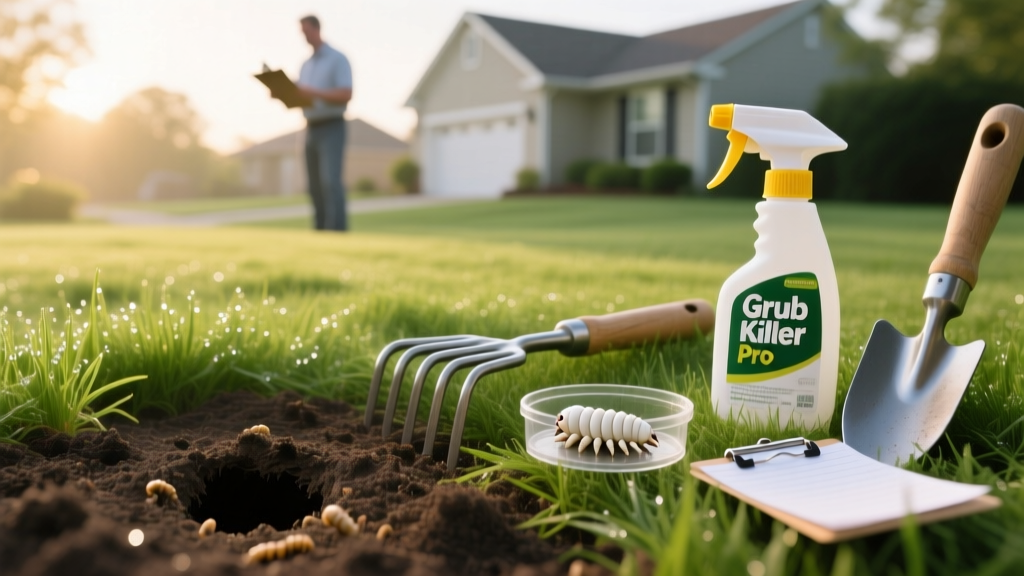
Top 5 Lawn Grub Control Mistakes and How to Fix Them
James MillerPublished
Introduction: The Hidden Threat Beneath Your Turf
White grubs—the larval stage of beetles like Japanese beetles, June bugs, and European chafers—are among the most destructive pests in home lawns. These C-shaped, cream-colored larvae feast on grassroots just below the soil surface, severing the plant from its water and nutrient supply. Left unchecked, a severe grub infestation can destroy an entire lawn in a matter of weeks, leading to thousands of dollars in sod replacement and landscaping costs.
Despite the availability of effective treatments, many homeowners fail to eradicate grubs because they fall victim to common application and timing errors. According to Penn State Extension, improper timing and misidentification are the leading causes of failed grub control. In this guide, we will break down the top five lawn grub control mistakes and provide actionable, step-by-step fixes to help you reclaim your turf.
Mistake 1: Treating at the Wrong Time of Year
The most frequent mistake homeowners make is applying grub control products when the insects are not vulnerable. Grubs have a distinct annual life cycle. Adult beetles emerge, mate, and lay eggs in the soil during early to mid-summer (typically July). The eggs hatch in August, and the young grubs begin feeding aggressively on grassroots through the fall. As winter approaches, they burrow deep into the soil to hibernate, returning to the surface in spring to feed briefly before pupating into adults.
The Fix: Match the Product to the Season
You must align your treatment strategy with the grub life cycle. There are two main approaches:
- Preventative Control (Early Summer): Apply products containing Chlorantraniliprole (e.g., Scotts GrubEx) or Imidacloprid (e.g., Bayer Advanced Merit) between April and mid-July. These chemicals take weeks to move through the soil profile but remain active long enough to kill young grubs as they hatch in August.
- Curative Control (Late Summer/Fall): If you missed the preventative window and spot damage in September or October, use a fast-acting curative product containing Trichlorfon (e.g., Bayer 24 Hour Grub Killer). This works within 24 hours but breaks down quickly, meaning it must be applied when grubs are actively feeding near the surface.
Mistake 2: Misidentifying Grub Damage
Brown patches in the lawn are a universal symptom of turf stress, but they are not always caused by grubs. Drought stress, chinch bug damage, fungal diseases like brown patch, and dog urine spots can all mimic grub damage. Applying expensive grub killers to a lawn suffering from a fungal infection will not only waste your money but can also harm beneficial soil organisms.
The Fix: Perform the 'Tug Test' and Soil Sampling
Before purchasing any chemicals, verify the presence of grubs using these two methods recommended by the University of California Integrated Pest Management (UC IPM) program:
- The Tug Test: Grab a handful of brown turf and pull gently. If the grass rolls back like a loose carpet with no roots attached, grubs have likely severed the root system.
- The Square Foot Count: Using a flat-edged shovel, cut three sides of a 1-foot by 1-foot square of turf, about 2 inches deep. Peel it back and count the grubs in the soil and on the roots. The treatment threshold is generally 5 to 10 grubs per square foot. If you find fewer than 5, your lawn can usually outgrow the damage without chemical intervention.
Mistake 3: Failing to Water the Product In
Grubs live in the soil, not on the grass blades. Many homeowners apply granular grub control and assume the job is done, leaving the product sitting on the surface or trapped in the thatch layer. When exposed to direct sunlight, UV radiation can degrade the active ingredients. Furthermore, if the product doesn't reach the soil surface where the grubs are feeding, it is entirely ineffective.
The Fix: Immediate and Measured Irrigation
Immediately after applying any granular preventative or curative treatment, you must water the lawn to activate the product and wash it off the grass blades into the soil.
- Measurement: Apply exactly 0.25 to 0.5 inches of water. This is typically about 20 to 30 minutes with a standard oscillating sprinkler.
- Timing: Water within 24 hours of application, ideally immediately after spreading. If you use a liquid spray formulation, allow it to dry on the grass blades for 2 hours before watering to ensure proper absorption and translocation.
Mistake 4: Using the Wrong Active Ingredient for the Situation
Walking into a garden center and grabbing the first bag labeled 'Grub Control' is a recipe for failure. Different active ingredients have vastly different modes of action, longevity, and target windows. Using a slow-acting preventative in October will not save your lawn, and using a fast-acting curative in May will leave your lawn unprotected by the time eggs hatch in August.
The Fix: Consult the Grub Control Comparison Chart
Use the table below to select the correct product based on your current situation and budget. According to Michigan State University Extension, understanding the active ingredient is crucial for integrated pest management.
| Active Ingredient | Common Brand Names | Type | Best Application Window | Est. Cost per 1,000 sq ft |
|---|---|---|---|---|
| Chlorantraniliprole | Scotts GrubEx, Acelepryn | Preventative | April - June | $8.00 - $12.00 |
| Imidacloprid | Bayer Advanced Merit | Preventative | June - Mid-July | $4.00 - $6.00 |
| Trichlorfon | Bayer 24 Hour Grub Killer (Dylox) | Curative | August - October | $7.00 - $10.00 |
| Heterorhabditis bacteriophora | BioLogic Scanmask (Beneficial Nematodes) | Organic Curative | August - September | $20.00 - $30.00 |
Note: Always read the product label for exact application rates. Over-applying chemicals is illegal, environmentally hazardous, and will not yield better results.
Mistake 5: Ignoring Cultural Lawn Practices
Relying solely on chemicals while ignoring basic lawn care practices creates an environment that attracts pests. Adult female Japanese beetles and European chafers prefer to lay their eggs in moist, warm soil with short grass. If you are watering your lawn heavily every day during July and mowing it down to 1.5 inches, you are essentially rolling out a red carpet for egg-laying females.
The Fix: Adjust Irrigation and Mowing Habits
- Smart Watering: During the peak egg-laying season (July), allow your lawn to go slightly dormant if local water restrictions permit, or water deeply and infrequently (1 inch per week in a single session) rather than light daily watering. Dry topsoil discourages egg survival.
- Proper Mowing Height: Keep your mower deck set to 3 to 4 inches. Taller grass develops deeper, more robust root systems that can tolerate minor grub feeding without showing visible browning. Taller grass also shades the soil, making it less inviting for egg-laying beetles.
Bonus: How to Repair Existing Grub Damage
If you have successfully killed the grubs but are left with unsightly brown, dead patches, you must take steps to repair the turf. Grubs do not kill the crown of the grass immediately, but once the roots are entirely gone and the grass turns brown and brittle, those patches are dead and will not recover on their own.
The Repair Protocol:
- Remove Dead Turf: Use a thatch rake or a sod cutter to remove the dead, rolled-back carpet of grass.
- Loosen the Soil: Use a manual core aerator or a garden fork to break up the compacted soil exposed by the grubs.
- Overseed and Topdress: Apply a high-quality, region-appropriate grass seed at a rate of 5 to 8 pounds per 1,000 square feet. Cover the seed with a 1/4-inch layer of peat moss or compost to retain moisture.
- Keep Moist: Water the newly seeded areas lightly 2 to 3 times a day for 14 days until germination occurs.
Conclusion
Effective grub control is less about finding a 'magic bullet' chemical and more about understanding the biology of the pest and the timing of your interventions. By avoiding these five common mistakes—treating at the wrong time, misdiagnosing the problem, failing to water in products, choosing the wrong active ingredient, and neglecting cultural practices—you can protect your lawn from severe root damage. Always prioritize accurate identification and follow label instructions meticulously to maintain a thick, healthy, and grub-free landscape.