
Landscaping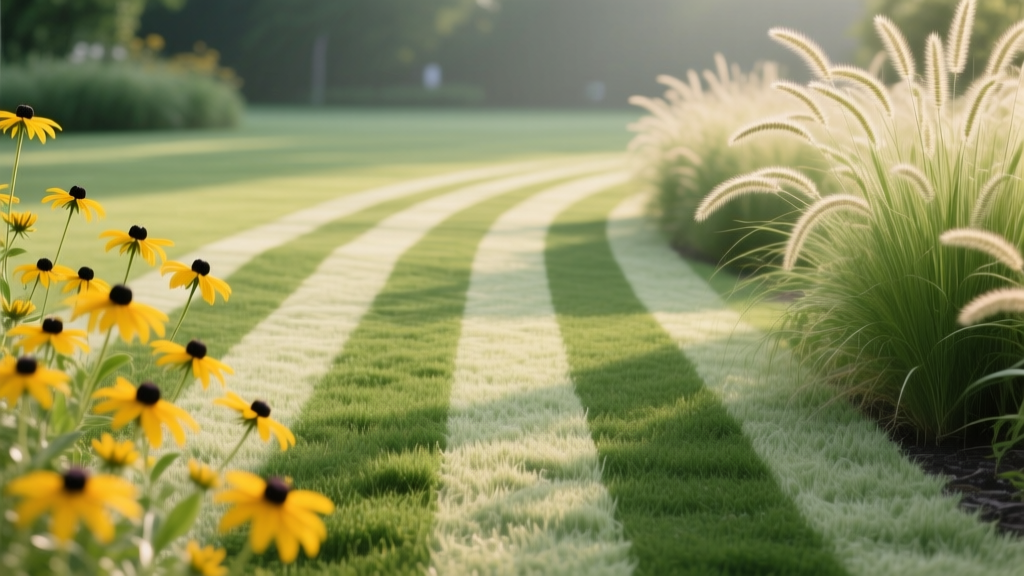
2026 Lawn Striping Patterns With Black-Eyed Susan & Switchgrass
David ParkPublished
The Intersection of Lawn Geometry and Native Landscaping in 2026
In the world of modern landscape design, the manicured lawn has long served as a blank canvas for aesthetic expression. Lawn striping—the art of mowing turf in alternating directions to create light and dark geometric patterns—remains a hallmark of pristine curb appeal. However, as we move through 2026, the most striking landscape designs no longer rely on endless monocultures of turfgrass. Instead, top-tier landscape architects and master gardeners are integrating native plant borders to frame, contrast, and elevate these geometric turf patterns. By pairing the architectural height of switchgrass with the vibrant color-blocking of black-eyed Susan, homeowners can create a dynamic visual experience that is as ecologically beneficial as it is beautiful.
The philosophy behind this design trend is rooted in contrast. The formal, rigid lines of a striped lawn are visually amplified when bordered by the structured yet naturalistic textures of native prairie plants. This guide will walk you through the precise techniques for designing, planting, and maintaining a striped lawn framed by black-eyed Susan and switchgrass, ensuring your outdoor space stands out in 2026.
The Power Duo: Switchgrass and Black-Eyed Susan
To successfully frame a striped lawn, you need plants that offer vertical structure, seasonal interest, and a color palette that complements the deep greens and pale highlights of mowed turf. The combination of Panicum virgatum (switchgrass) and Rudbeckia hirta (black-eyed Susan) is the undisputed champion of native prairie landscaping for this exact purpose.
Switchgrass: The Vertical Anchor
Switchgrass is a warm-season perennial bunchgrass native to North America. In 2026, cultivars like 'Northwind' and 'Heavy Metal' are highly favored for landscape borders due to their strict upright habits. Growing between 4 to 5 feet tall, switchgrass acts as a living fence. When planted along the perimeter of a lawn, its vertical lines draw the eye inward, emphasizing the converging lines of a diamond or checkerboard striping pattern. Furthermore, its deep root system—extending up to 10 feet into the soil—makes it incredibly drought-tolerant and excellent for stabilizing the soil edges where the turf meets the garden bed.
Black-Eyed Susan: The Color Blocker
While switchgrass provides the structural frame, black-eyed Susan provides the visual pop. Blooming profusely from early summer through mid-autumn, the golden-yellow petals and dark brown centers create a high-contrast color block. In color theory, yellow and green are analogous but offer distinct luminosity contrasts. When placed adjacent to the dark green stripes of a freshly mowed lawn, the yellow blooms make the turf appear richer and more vibrant. In 2026, landscaping supply centers typically price black-eyed Susan plugs at around $4 to $6 each, while bulk native seeds cost approximately $15 to $20 per ounce, making it a cost-effective way to cover large border areas.
Designing Geometric Lawn Patterns with Native Borders
The key to merging lawn striping with native beds is intentional geometry. You are not simply planting a random wildflower meadow; you are engineering a living frame for your turf art. Here are two highly effective pattern designs for 2026.
The Chevron Edge
The chevron pattern involves mowing the lawn in deep, alternating V-shapes that point toward a central focal point, such as a fire pit or a water feature. To frame this, plant a dense, 2-foot-wide border of switchgrass along the outer property lines to create a solid green backdrop. Then, plant black-eyed Susans in staggered, zigzagging formations along the inner edges of the turf. The zigzag planting of the Susans mimics and reinforces the chevron lines mowed into the grass, creating a cohesive, unified design that pulls the viewer’s eye through the landscape.
The Diamond Motif
For a classic diamond striping pattern, the turf is mowed in intersecting diagonal lines. To highlight this, use switchgrass to mark the four corners of the lawn's diamond grid. Planting a tight cluster of three 'Northwind' switchgrass plants at each corner acts as a visual anchor. Fill the linear borders between these corners with mass plantings of black-eyed Susan. The continuous ribbon of yellow blooms outlines the perimeter, while the tall grasses at the corners give the landscape a sense of architectural permanence.
2026 Implementation and Planting Guide
Proper installation is critical to ensure your native borders do not encroach on your striping canvas. Turfgrass and native prairie plants have different water and nutrient requirements, so establishing a clean, physical edge is mandatory.
| Season | Native Border Task | Lawn Striping Task | Estimated 2026 Cost |
|---|---|---|---|
| Early Spring | Cut back switchgrass to 6 inches; divide crowded clumps. | Core aeration and apply pre-emergent crabgrass control. | $120 (Tool rental & amendments) |
| Mid-Spring | Plant black-eyed Susan plugs 12 inches apart; mulch beds. | Begin diagonal mowing patterns; install mower striping kits. | $150 (Plugs & mulch) |
| Summer | Deadhead Susans for re-bloom; monitor switchgrass for lodging. | Mow at 3.5 inches to enhance stripe contrast; water deeply. | $40 (Edging & fuel) |
| Autumn | Leave switchgrass seed heads for winter interest and birds. | Transition to final autumn striping pattern before dormancy. | $0 (Enjoy the view) |
When installing the beds, dig a 6-inch deep trench between the turf and the native plants. Install a steel or heavy-duty poly landscape edging to prevent the aggressive rhizomes of the turfgrass from invading the native bed, and conversely, to stop the native plants from seeding into your pristine striping canvas.
Precision Mowing and Edging Techniques
Maintaining crisp lines where a manicured lawn meets a wilder native border requires specific equipment and technique. In 2026, the standard for edge maintenance involves using a commercial-grade stick edger or a high-torque string trimmer equipped with a guide wheel. Models like the Echo SRM-225 or the Toro Flex-Force Power System edgers are highly recommended for their precision.
When mowing your geometric patterns, always make your perimeter pass first. This creates a clean turnaround zone for your mower, ensuring that the tires do not crush the black-eyed Susans or snap the lower stems of the switchgrass when executing tight 180-degree turns. After mowing, use a backpack blower to clear grass clippings out of the native beds. Leaving turf clippings in the native bed can introduce excess nitrogen to the soil, which causes switchgrass to become floppy and weak-stemmed, ruining its vertical aesthetic.
Ecological and Environmental Advantages
Beyond the striking visual contrast, integrating native plants into your lawn striping design offers profound environmental benefits. According to the Environmental Protection Agency, landscaping with native plants significantly reduces the need for irrigation, fertilizers, and pesticides. Because switchgrass and black-eyed Susan are adapted to local rainfall patterns, you can reduce the water consumption of your landscape borders to near zero once established, saving hundreds of dollars on utility bills over the summer months.
Stormwater Management and Soil Health
The deep root systems of switchgrass act as a biological sponge. When heavy summer storms hit, the runoff from your compacted turfgrass lawn is directed into the native beds, where the switchgrass roots rapidly absorb and filter the water. This prevents localized flooding and protects your lawn's root zone from waterlogging, which can cause turf diseases that ruin the visual quality of your striping patterns.
Supporting Local Pollinators
A purely manicured lawn is an ecological desert. By framing your lawn with black-eyed Susan, you are providing a vital nectar source for native bees, butterflies, and other pollinators. The Pollinator Partnership emphasizes that planting native flowering species is one of the most effective ways to combat pollinator decline. Furthermore, the National Wildlife Federation notes that leaving switchgrass standing through the winter provides essential overwintering habitat for beneficial insects and seeds for native songbirds. Your landscape becomes a thriving ecosystem without sacrificing an inch of your formal lawn geometry.
Conclusion
The 2026 landscaping paradigm proves that you do not have to choose between a formal, patterned lawn and a sustainable, eco-friendly garden. By utilizing the structural height of switchgrass and the brilliant color-blocking of black-eyed Susan, you can create a breathtaking frame for your lawn striping patterns. This approach not only elevates your property's curb appeal through striking visual contrast but also builds a resilient, low-maintenance landscape that supports local wildlife and conserves vital resources. Grab your mower, lay out your string lines, and let the native prairie frame your masterpiece.

