Gardening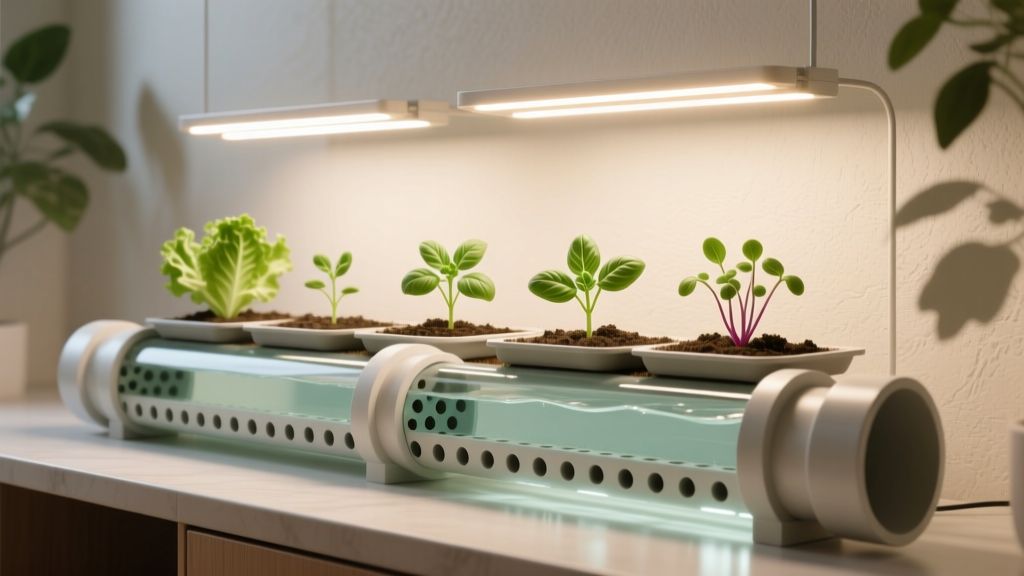
Seed Starting Under LEDs: 2026 Schedule & Drainage Pipe Hacks
James MillerPublished
Revolutionizing Indoor Seed Starting in 2026
As we move through the 2026 growing season, indoor seed starting has evolved far beyond simple fluorescent shop lights and plastic trays. Today's horticulturalists and home gardeners are leveraging advanced full-spectrum LED grow lights and innovative DIY irrigation techniques to achieve near-perfect germination rates. One of the most groundbreaking, cost-effective methods gaining traction this year involves repurposing corrugated landscape drainage pipe to create a sub-irrigation reservoir system. When paired with a precise LED grow light schedule, this setup eliminates damping-off disease, prevents seed displacement, and ensures your seedlings receive the exact Daily Light Integral (DLI) they need to thrive.
The Problem with Traditional Top Watering
According to the University of Minnesota Extension, damping-off—a fatal fungal disease that causes seedlings to collapse at the soil line—is primarily triggered by excess moisture on the foliage and soil surface. Traditional top watering not only disturbs delicate, newly sprouted roots but also creates the humid surface conditions that fungal pathogens love. Furthermore, under the intense canopies of modern 2026 LED grow lights, surface water can evaporate rapidly, leading to a cycle of extreme wetness followed by drought stress. To combat this, commercial greenhouses use sub-irrigation tables, but these can cost hundreds of dollars. Enter the landscape drainage pipe.
Why Landscape Drainage Pipe?
Corrugated, slotted landscape drainage pipe (typically made from high-density polyethylene, or HDPE) is designed to collect and redirect subsurface water in outdoor landscaping. However, its physical properties make it an accidental masterpiece for indoor seed starting. The 4-inch slotted pipe features hundreds of narrow, precision-cut slits. When capped at both ends and used as a water reservoir beneath a capillary mat, these slits act as perfect, evenly distributed water emitters. Unlike a standard PVC pipe that would require you to drill dozens of holes, the landscape drainage pipe comes pre-slotted, ensuring uniform wicking across your entire seed tray.
Building Your DIY Drainage Pipe Sub-Irrigation Reservoir
Creating this system for your 2026 seed starting rack requires minimal tools and a quick trip to your local hardware store.
- Materials Needed: 4-inch slotted corrugated landscape drainage pipe, two 4-inch PVC end caps (or heavy-duty silicone sealant), a heavy-duty capillary mat, and a shallow watertight grow tray or plastic tote.
- Step 1: Measure and Cut. Measure the interior length of your seed tray. Using a fine-toothed saw, cut the landscape drainage pipe to fit snugly inside the tray. You can run two parallel pipes for wider trays to ensure maximum mat coverage.
- Step 2: Seal the Ends. Attach the PVC end caps to both sides of the cut pipe. If you cannot find snap-on caps, generously apply waterproof marine silicone to seal the corrugated ends completely. This turns the pipe into a horizontal water bladder.
- Step 3: Create the Fill Port. Using a hole saw, cut a 1-inch hole at the very top-center of the pipe. This is where you will pour water and liquid nutrients.
- Step 4: Lay the Capillary Mat. Place the sealed pipe(s) at the bottom of your watertight tray. Drape a high-quality capillary mat over the pipe so it touches the bottom of the tray on both sides. The mat will wick water up from the slits and the tray floor.
- Step 5: Add Seed Cells. Place your seed starting flats directly on top of the wet mat. The soil will draw moisture upward via capillary action, keeping the roots perfectly hydrated while the surface remains dry.
The Ultimate 2026 LED Grow Light Schedule for Seedlings
While the drainage pipe handles hydration, your 2026 LED grow lights handle photosynthesis. Modern LEDs, such as the latest Barrina V3 series or the Mars Hydro FC-E4800, offer unprecedented energy efficiency and spectral tuning. However, leaving lights on for 24 hours is a common mistake that stresses plants. Seedlings require a dark period for cellular respiration and root development. The University of Wisconsin-Madison Extension emphasizes that managing the Daily Light Integral (DLI)—the total amount of photosynthetically active radiation a plant receives in a day—is far more important than simply blasting seedlings with light.
Below is the optimized 2026 LED schedule tailored for common garden vegetables and flowers, designed to work in tandem with your sub-irrigation setup.
| Growth Stage | Target DLI (mol/m²/d) | LED Hours On/Off | Canopy Distance | PPFD Target (µmol/m²/s) |
|---|---|---|---|---|
| Germination (Days 1-7) | 5 - 8 | 14 Hours On / 10 Off | 24 - 30 Inches | 100 - 150 |
| Cotyledon Emergence | 10 - 12 | 14 Hours On / 10 Off | 18 - 24 Inches | 200 - 250 |
| First True Leaves | 12 - 15 | 16 Hours On / 8 Off | 12 - 18 Inches | 300 - 400 |
| Vegetative Growth | 15 - 20 | 16 Hours On / 8 Off | 8 - 12 Inches | 400 - 500 |
| Hardening Off Prep | 20 - 25 | 16 Hours On / 8 Off | 6 - 8 Inches | 500 - 600 |
Synchronizing Light Heat with the Drainage Pipe Reservoir
Even though 2026 LED models run significantly cooler than legacy HPS or fluorescent fixtures, the sheer intensity required for the vegetative growth stage (400+ PPFD) still drives transpiration. As your seedlings pull water from the soil, the capillary mat immediately replaces it from the landscape drainage pipe reservoir. A standard 4-inch HDPE pipe holds approximately 0.65 gallons of water per linear foot. A 3-foot run beneath your seed tray holds nearly 2 gallons of water, ensuring that even under the most intense LED schedules, your mat never dries out during the 16-hour photoperiod.
Nutrient Management and Flushing the Pipe System
One critical aspect of using a closed-loop sub-irrigation system is salt buildup. When you add liquid fertilizers (like a diluted 2026 organic kelp and fish emulsion blend) to the reservoir, the water wicks up, but the salts are left behind in the mat and the pipe. To prevent nutrient lockout and root burn:
- Weekly Flushing: Once a week, remove the seed trays and flush the landscape drainage pipe with plain, pH-balanced water. Allow it to drain completely into a catch bucket before resetting the tray.
- Mat Washing: Every three weeks, rinse the capillary mat in a utility sink to remove accumulated mineral deposits and algae.
- Nutrient Strength: Because sub-irrigation delivers nutrients directly to the root zone with zero evaporation loss at the surface, you should use your liquid fertilizer at half the manufacturer's recommended strength to avoid overfeeding.
Troubleshooting Algae and Fungus Gnats
The slotted nature of landscape drainage pipe can occasionally invite algae growth inside the reservoir if exposed to ambient light. To combat this, ensure your capillary mat completely covers the pipe, blocking light from entering the slits. If fungus gnats become an issue—a common nuisance in indoor seed starting rooms—add a few drops of food-grade hydrogen peroxide (H2O2) to the water inside the drainage pipe. This oxygenates the reservoir, kills gnat larvae, and promotes explosive root growth without harming your delicate seedlings.
Conclusion: A Smarter Way to Start Seeds in 2026
Combining a precision LED grow light schedule with a DIY landscape drainage pipe sub-irrigation reservoir represents the pinnacle of modern, cost-effective home horticulture. By eliminating top watering, you eradicate damping-off and save countless hours of manual watering. By dialing in your DLI and PPFD targets, you ensure your tomatoes, peppers, and annual flowers develop stocky, vigorous stems ready for the outdoor garden. Grab some slotted HDPE pipe, calibrate your 2026 LEDs, and watch your seedlings thrive like never before.
