Lawn Care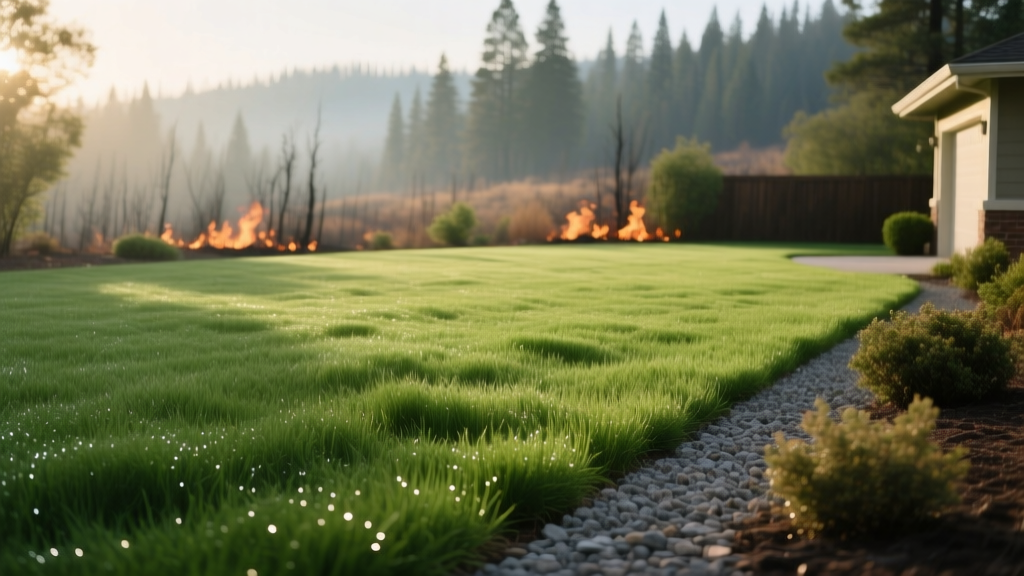
2026 Guide: Lime Application for Acidic Lawns & Fire Defense
Robert HayesPublished
The Hidden Fire Hazard Lurking in Acidic Soil
As wildfire seasons grow increasingly volatile and unpredictable in 2026, homeowners in fire-prone regions are heavily reevaluating their defensible space strategies. While clearing dead brush, installing hardscaping, and pruning trees are well-known tactics, one critical element of fire-resistant landscaping is frequently overlooked: soil chemistry. Specifically, the pH level of your lawn's soil plays a massive, indirect role in how well your landscape can resist the spread of flames and embers.
According to the NFPA's Firewise USA program, maintaining a well-irrigated, green, and healthy lawn in the immediate 5-to-30-foot zone around your home is one of the most effective ways to create a non-combustible buffer. However, if your soil is highly acidic (a pH below 6.0), your turfgrass cannot access the vital nutrients it needs to maintain that lush, moisture-rich density. Acidic soils lead to thin, patchy, and shallow-rooted grass that browns out early in the summer heat. This dead turf and accumulated thatch act as 'flash fuels'—fine, dry materials that can rapidly ignite and carry wind-blown embers directly to your home's foundation.
Furthermore, acidic, struggling lawns are highly susceptible to invasion by opportunistic, highly flammable weeds like cheatgrass and medusahead. These invasive annuals thrive in poor soil conditions, dry out completely by early summer, and create a continuous bed of fine kindling. By utilizing targeted lime application to raise soil pH on acidic lawns, you cultivate a thick, vigorous, and deeply rooted turf that stays green and hydrated, effectively serving as a living firebreak.
The Science of Soil pH and Turfgrass Fire Resistance
Most common fire-resistant turfgrasses, such as Tall Fescue, Kentucky Bluegrass, and Bermuda grass, thrive in a soil pH range of 6.2 to 7.0. When soil drops below this threshold, a chemical lockout occurs. Essential macronutrients like phosphorus, calcium, and magnesium become bound to soil particles and unavailable to the grass roots.
In 2026, climate models indicate longer, hotter dry spells in many transitional and western zones. A lawn suffering from nutrient lockout due to high acidity will undergo severe drought stress, losing its internal cellular water content much faster than a healthy lawn. Moisture is the primary enemy of fire. A dense, properly fertilized, and pH-balanced lawn retains water in its leaf blades and thatch layer, requiring immense thermal energy to ignite. Conversely, an acidic lawn dries out, dies back, and provides a continuous wick for surface fires.
Choosing the Right Lime Products in 2026
Not all lime is created equal. When shopping for soil amendments this year, you will primarily encounter three types of agricultural lime. Choosing the correct one depends on your specific soil test results and your fire-safety timeline.
1. Calcitic Lime (Calcium Carbonate)
This is the standard choice for raising soil pH and adding calcium to the soil profile. Calcium is vital for building strong cell walls in turfgrass, which improves the grass's overall drought tolerance and heat resistance during peak wildfire season. Products like Espoma Organic Garden Lime remain a top choice in 2026, retailing for approximately $18 to $22 per 40-pound bag.
2. Dolomitic Lime (Calcium-Magnesium Carbonate)
If your soil test indicates low magnesium alongside high acidity, dolomitic lime is required. Magnesium is the central atom in the chlorophyll molecule; without it, grass cannot photosynthesize efficiently or maintain its deep green, healthy state. A healthy, actively photosynthesizing lawn is a hydrated, fire-resistant lawn.
3. Fast-Acting Pelletized or Liquid Lime
Traditional pulverized lime can take 6 to 12 months to fully alter soil pH. If you are preparing your defensible space for an imminent dry season, fast-acting options like Jonathan Green Mag-I-Cal or liquid calcium carbonate suspensions work in a matter of weeks. While more expensive per square foot, they are invaluable for emergency landscape rehabilitation in high-risk fire zones.
Step 1: Soil Testing is Non-Negotiable
Blindly applying lime can be just as detrimental as ignoring acidic soil. Over-liming can push the pH into alkaline territory (above 7.5), causing iron chlorosis and weakening the turf, which again compromises its fire-resistant properties. In 2026, digital soil probes and rapid mail-in lab services make testing easier than ever. Contact your local university extension office or use a reputable mail-in service to get a precise pH reading and a buffer index, which tells you exactly how much lime your specific soil type requires to reach the target 6.5 pH.
Step 2: Lime Application Rates by Soil Type
Soil texture heavily dictates how much lime is needed to neutralize acidity. Clay soils have a high 'buffering capacity,' meaning they resist changes in pH and require significantly more lime than sandy soils. Below is the standard 2026 application chart for raising soil pH to 6.5.
| Current Soil pH | Sandy Soil (lbs / 1,000 sq ft) | Loamy Soil (lbs / 1,000 sq ft) | Heavy Clay Soil (lbs / 1,000 sq ft) |
|---|---|---|---|
| 5.0 - 5.4 | 30 - 40 | 50 - 60 | 70 - 85 |
| 5.5 - 5.9 | 20 - 25 | 30 - 40 | 50 - 60 |
| 6.0 - 6.1 | 10 - 15 | 15 - 20 | 25 - 35 |
Note: Never apply more than 50 lbs of lime per 1,000 square feet in a single application. If your soil requires more, split the application into two treatments spaced six months apart to prevent salt shock to the turf.
Step 3: Timing and Application Techniques
To ensure your lawn is fully established and fire-resistant before the peak summer danger months, timing is everything.
- Optimal Timing: Early Fall is the absolute best time to apply lime. The freeze-thaw cycles of winter and the spring rains help incorporate the calcium carbonate into the soil profile. By the time the 2026 summer fire season arrives, the grass will have fully benefited from the pH correction. Early Spring is the secondary window.
- Preparation: Before spreading lime, core aerate your lawn. Aeration relieves soil compaction, allows water to penetrate deeper, and creates direct channels for the lime to reach the root zone. Deep roots are essential for accessing subterranean moisture during droughts and surface fires.
- Spreading: Use a rotary broadcast spreader for even coverage. Pelletized lime is highly recommended for fire-prone areas because it produces zero dust. Pulverized lime dust can coat the leaf blades of existing grass, temporarily blocking sunlight and stressing the turf.
- Watering In: Immediately after application, irrigate the lawn with at least a quarter-inch of water. This washes the lime off the grass blades and into the soil, preventing foliar burn and activating the neutralization process.
Integrating Liming into a Broader Fire-Resistant Strategy
Correcting your soil pH is a foundational step, but it must be paired with proper cultural practices to maximize your property's defensible space. The UC Agriculture and Natural Resources' Defensible Space guidelines emphasize that a lawn is only fire-resistant if it is actively maintained.
Mowing Height and Moisture Retention
Once your lime application has taken effect and the turf is growing vigorously, adjust your mowing height. In 2026, turfgrass scientists strongly recommend maintaining a mowing height of 3.5 to 4 inches for cool-season grasses in fire zones. Taller grass shades the soil surface, drastically reducing evaporation rates and keeping the root zone cool and moist. Never scalp your lawn; a scalped, stressed lawn will quickly accumulate dead, combustible clippings and thatch.
Irrigation and Defensible Space Zoning
A pH-balanced lawn must be supported by smart irrigation. Utilize soil moisture sensors to ensure your lawn receives deep, infrequent watering, encouraging roots to grow 6 to 8 inches deep. In the event of a wildfire, a deeply rooted, well-hydrated lawn will absorb radiant heat and trap wind-blown embers without igniting. Ensure that your irrigation system is maintained and tested regularly, as power outages during fire events may require you to have a backup water source or rely on the deep soil moisture your healthy turf has stored.
Hardscaping and Plant Pairings
While your lime-amended lawn serves as an excellent green carpet in Zone 1 (0-5 feet from the home) and Zone 2 (5-30 feet), it should be bordered by fire-resistant hardscaping. Use gravel, decomposed granite, or stone pathways to break up the continuity of vegetation. If you are planting shrubs in the limed soil beds further out, choose high-moisture, low-resin, fire-resistant species like Aloe, Rockrose, or Ice Plant, all of which benefit from the neutral pH you have worked hard to achieve.
Conclusion: A Healthy Lawn is a Safe Lawn
Fire-resistant landscaping is not just about what you remove from your yard; it is fundamentally about what you cultivate. By addressing the invisible threat of acidic soil through precise, calculated lime applications, you transform a vulnerable, patchy, and dry landscape into a robust, moisture-rich defensive barrier. In 2026, take control of your soil chemistry, follow the testing and application guidelines outlined above, and ensure your lawn serves its highest purpose: keeping your home, your family, and your property safe from the unpredictable threat of wildfires.