Lawn Care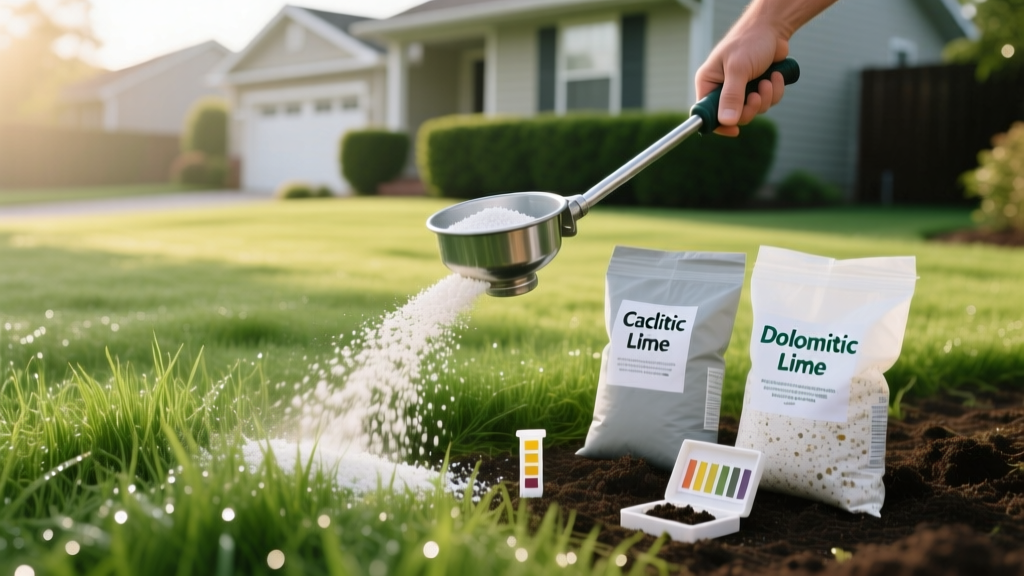
2026 Lime Application Guide for Acidic Lawn Soil pH
Sarah ChenPublished
Understanding Soil pH and the Role of Lime in 2026
As we navigate the 2026 lawn care season, achieving a lush, vibrant turf requires more than just throwing down nitrogen and water. The foundation of any successful fertilizer program lies beneath the surface: your soil's pH level. Soil pH measures the acidity or alkalinity of your soil on a scale from 0 to 14. Most turfgrasses, including Kentucky Bluegrass, Tall Fescue, and Bermudagrass, thrive in a slightly acidic to neutral range of 6.0 to 7.0. When your soil pH drops below 6.0, it becomes highly acidic, leading to a phenomenon known as nutrient lockout.
In highly acidic soils, essential macronutrients like nitrogen, phosphorus, and potassium become chemically bound to soil particles and unavailable to grass roots. Furthermore, acidic conditions increase the solubility of aluminum and manganese, which can become toxic to turfgrass root systems, stunting growth and causing severe yellowing. Applying lime—a soil amendment made from ground limestone—is the only effective way to raise your soil pH, neutralize acidity, and unlock the full potential of your 2026 fertilizer schedule.
Calcitic vs. Dolomitic Lime: Which Should You Choose?
Before purchasing lime, you must understand the two primary types available on the market. Your choice depends entirely on the specific mineral deficiencies identified in your soil test. Applying the wrong type can lead to nutrient imbalances that harm your lawn.
| Lime Type | Primary Composition | Best Used For | 2026 Average Cost (40lb Bag) |
|---|---|---|---|
| Calcitic Lime | Calcium Carbonate (CaCO3) | Soils with adequate magnesium but low calcium and low pH. | $12 - $16 |
| Dolomitic Lime | Calcium-Magnesium Carbonate | Soils deficient in both magnesium and calcium, alongside low pH. | $14 - $18 |
| Fast-Acting Lime | Calcium Carbonate + Humic Acid | Quick pH adjustments mid-season; requires less product per sq ft. | $25 - $38 |
According to soil science experts at Penn State Extension, dolomitic lime is frequently recommended in regions where intensive farming or heavy rainfall has leached magnesium from the soil profile. However, if your soil already has high magnesium levels, adding dolomitic lime can cause calcium-to-magnesium ratio imbalances, leading to soil compaction and poor water infiltration.
Soil Testing: The Mandatory First Step
Never apply lime based on guesswork or the general appearance of your grass. In 2026, professional soil testing is more accessible and affordable than ever. You must send a soil sample to a certified laboratory to determine your exact pH level and your soil's Buffer pH (often called the SMP buffer test). While your active pH tells you how acidic the soil is right now, the Buffer pH tells the lab how much lime is actually required to change that pH, based on your soil's cation exchange capacity (CEC) and clay content.
Heavy clay soils have a high buffering capacity and require significantly more lime to raise the pH by 0.5 points compared to sandy soils. Laboratories like the UMass Soil and Plant Nutrient Testing Laboratory provide comprehensive reports that dictate the exact pounds of lime needed per 1,000 square feet. Skipping this step risks over-liming, which pushes your soil into alkaline territory (pH above 7.5), causing iron chlorosis and severe turf thinning.
The 2026 Lime Application Schedule and Fertilizer Timing
Integrating lime into your annual fertilizer schedule requires strategic timing. Lime is not a fast-acting fertilizer; it is a slow-release soil amendment that takes anywhere from 6 to 12 months to fully react with the soil and alter the pH profile. Therefore, timing your applications around your nitrogen and weed control schedules is critical.
Spring vs. Fall Application
The absolute best time to apply lime is in the early fall (late August through October). Fall applications allow the freeze-thaw cycles of winter and the abundant moisture of the season to work the lime deep into the soil profile. By the time your grass enters its peak spring growing season, the pH will be corrected, and your spring fertilizer applications will be fully effective.
If you missed the fall window, early spring (March to April) is your secondary option. However, avoid applying lime during the peak heat of summer, as the combination of high soil temperatures, drought stress, and the salts in lime can burn your turf.
Coordinating Lime with Nitrogen Fertilizers
One of the most common and costly mistakes homeowners make is applying lime and nitrogen-based fertilizers on the same day. When lime (calcium carbonate) comes into direct contact with ammonium-based nitrogen fertilizers (like ammonium sulfate or urea), it causes a chemical reaction that converts the nitrogen into ammonia gas. This process, known as nitrogen volatilization, literally releases your expensive fertilizer into the atmosphere as a gas, wasting your money and failing to feed your lawn.
The Golden Rule for 2026: Always separate your lime and nitrogen fertilizer applications by a minimum of 3 to 4 weeks. If you must apply both in the same season, apply the lime first, water it in thoroughly, and wait at least a month before applying your granular or liquid nitrogen fertilizer.
Step-by-Step Application Guide and Costs
For residential lawns, pelletized lime is the superior choice over powdered (agricultural) lime. Powdered lime is incredibly messy, easily blown away by the wind, and poses an inhalation hazard. Pelletized lime is formed by binding fine lime dust into small, uniform prills that spread easily using a standard rotary broadcast spreader.
- Mow the Lawn: Cut your grass to its normal height and remove any excessive thatch to ensure the lime pellets make direct contact with the soil.
- Calibrate Your Spreader: Check the back of the lime bag for the 2026 manufacturer spreader settings. If your spreader model isn't listed, set the dial to a medium-low setting (usually around 3 or 4 on a 10-point scale) to avoid dumping too much product in one area.
- Apply in a Grid Pattern: Apply half of the recommended rate walking North-South, and the other half walking East-West. This crisscross pattern prevents striping and ensures even coverage.
- Water Thoroughly: Immediately after application, irrigate your lawn with at least 0.25 inches of water. This washes the lime pellets off the grass blades (preventing foliar burn) and begins the process of dissolving them into the soil profile.
Top Lime Product Recommendations for 2026
- Jonathan Green MAG-I-CAL Plus: A premium, fast-acting calcium humate product. While more expensive (approx. $45 per 45lb bag), it contains humic acids that stimulate soil biology and can be applied at much lower rates than traditional limestone. It is safe to apply on the same day as most fertilizers, making it ideal for tight schedules.
- Espoma Organic Garden Lime: A highly reliable, traditional pelletized calcitic lime. At roughly $15 per 40lb bag, it offers excellent value for standard fall soil corrections and is OMRI-listed for organic lawn care programs.
- Sta-Green Fast-Acting Lime: A widely available big-box store option that includes added calcium and humic acid. It bridges the gap between traditional agricultural lime and premium rapid-acting soil conditioners.
Common Mistakes to Avoid
Even with the best intentions, homeowners often sabotage their soil health. Avoid these critical errors in your 2026 lawn care routine:
- Over-Liming: Applying more lime than your soil test recommends will not speed up the process; it will only push your soil into an alkaline state, locking up iron and manganese.
- Ignoring Moss as a Symptom: While moss thrives in acidic soil, it also thrives in compacted, shaded, and poorly drained soil. Applying lime will not kill moss if the underlying issues of compaction and shade are not addressed via core aeration and tree pruning.
- Using Hydrated Lime: Never use hydrated lime (calcium hydroxide) or quicklime on an established lawn. These are highly caustic, fast-acting agricultural and construction products that will severely burn your grass and damage root systems. Always stick to calcitic or dolomitic limestone.
By treating lime application as a foundational pillar of your fertilizer schedule rather than an afterthought, you ensure that every pound of nitrogen, phosphorus, and potassium you apply in 2026 is actually absorbed by your turf. Test your soil, choose the right lime, respect the 3-week separation rule from nitrogen, and watch your lawn transform into a thick, resilient, and deeply green landscape.