Lawn Care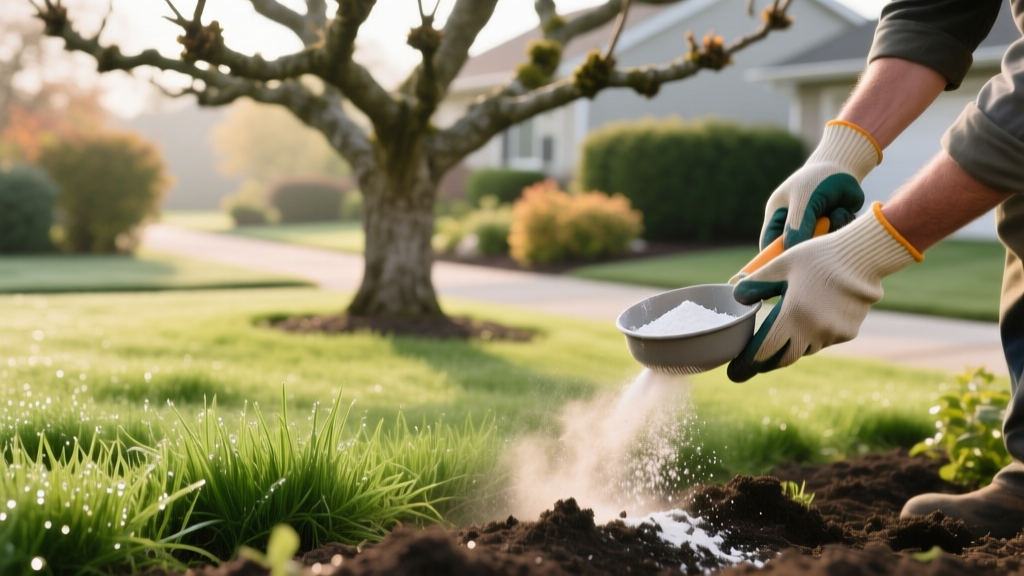
Fix Acidic Lawns in 2026: Pruning Timing & Lime Guide
Anna KowalskiPublished
The Hidden Connection: Tree Canopies and Soil Acidity
As we navigate the 2026 growing season, homeowners are increasingly recognizing that a struggling, yellowing lawn is rarely just a fertilization issue. Often, the root cause is highly acidic soil, which locks up essential nutrients and prevents grass roots from thriving. However, what many lawn care enthusiasts overlook is the direct relationship between the trees shading their lawn and the soil pH beneath them. Trees such as oaks, pines, hickories, and sweetgums naturally shed acidic needles, leaves, and tannins. Over time, this organic debris breaks down and drastically lowers the soil pH, creating an environment where moss thrives and turfgrass starves.
To truly correct an acidic lawn, you must attack the problem from both the ground up and the canopy down. This means combining precise lime application to raise soil pH with strategic pruning methods and timing to manage overhead shade and reduce the volume of acidic debris reaching your turf. In this comprehensive 2026 guide, we will explore how to integrate tree pruning and lime applications into a cohesive lawn care strategy.
Pruning Methods to Mitigate Acidic Buildup
Before you invest in bulk lime, you need to address the canopy. Dense shade not only drops acidic organic matter but also restricts sunlight and airflow, which weakens grass and promotes the growth of acid-loving moss. Implementing specific pruning methods will open the canopy, accelerate the decomposition of existing acidic thatch, and reduce future leaf litter.
Crown Thinning for Sunlight and Airflow
Crown thinning involves the selective removal of inner branches to allow more sunlight to penetrate to the lawn below. According to the University of Minnesota Extension, proper crown thinning should never remove more than 15% to 20% of a tree's live foliage in a single season. By selectively pruning crossing branches, deadwood, and weak crotches, you increase UV exposure to the soil. Sunlight naturally helps break down the acidic thatch layer left by oak and pine leaves, preventing the severe pH drops associated with heavy, unmanaged canopy cover.
Canopy Elevation (Crown Raising)
Crown raising involves removing the lower branches of a tree to provide vertical clearance over the lawn. This method is crucial for lawn health because it improves air circulation at the soil level. Better airflow reduces surface moisture, which in turn discourages the proliferation of moss and fungal diseases that frequently accompany acidic, poorly drained soils. When elevating a canopy, always use the three-cut method to prevent bark tearing: an undercut a few inches from the trunk, a top cut slightly further out to remove the branch weight, and a final clean cut just outside the branch collar.
Pruning Timing: When to Cut for Maximum Lawn Benefit
The timing of your pruning directly impacts both tree health and your lawn's soil chemistry. For most deciduous shade trees that contribute to soil acidity (like oaks and maples), the optimal pruning window is during the late winter dormant season, typically late February to early March in 2026, depending on your hardiness zone.
- Winter Dormancy Pruning: Pruning while the tree is dormant minimizes stress and reduces the risk of spreading diseases like oak wilt. Furthermore, removing branches before the spring canopy fills out maximizes the amount of early-spring sunlight that reaches your lawn, stimulating early turfgrass growth before acidic spring rains can compact the soil.
- Avoid Late Summer Pruning: Pruning in late summer stimulates new, tender growth that is susceptible to winter damage. It also leaves the tree with a dense canopy going into autumn, resulting in a heavier, more concentrated drop of acidic leaves onto your lawn.
- Pine and Evergreen Timing: For acidifying pines, prune or "candle" new growth in late spring or early summer to control size and reduce the volume of acidic needles dropped in the fall.
Soil Testing: The Mandatory First Step
Before applying any amendments in 2026, you must know your exact soil pH and buffer pH. Guesswork leads to over-liming, which can cause alkaline-induced iron chlorosis in your grass. Purchase a 2026-calibrated digital soil pH meter for a quick baseline, but always send a core sample to a local university extension lab for a comprehensive buffer pH test. The buffer pH tells the lab exactly how much lime your specific soil type (clay vs. loam vs. sand) requires to achieve the target pH of 6.5 to 7.0.
Choosing the Right Lime Product in 2026
Once your soil test confirms acidity, selecting the correct lime is paramount. Lime is not a one-size-fits-all product. The two primary types are Calcitic Lime (calcium carbonate) and Dolomitic Lime (calcium-magnesium carbonate). Your soil test will dictate which one you need based on your soil's magnesium levels.
| Lime Type | Primary Composition | Best Used When | 2026 Avg. Cost (40lb bag) |
|---|---|---|---|
| Calcitic Lime | Calcium Carbonate | Soil has adequate/high magnesium but low pH. | $6.00 - $8.00 |
| Dolomitic Lime | Calcium & Magnesium Carbonate | Soil is deficient in both magnesium and calcium. | $7.50 - $9.50 |
| Pelletized Lime | Calcitic or Dolomitic (bonded) | Easy spreading with standard rotary broadcast spreaders; dust-free. | $8.00 - $12.00 |
| Pulverized Lime | Calcitic or Dolomitic (powder) | Fastest acting, but requires specialized drop spreaders; very dusty. | $5.00 - $7.00 |
| Liquid Lime | Suspended Calcium Carbonate | Quick pH bump for small lawns or spot treatments; requires hose-end sprayer. | $25.00 - $35.00 |
For most residential lawns in 2026, pelletized dolomitic or calcitic lime is the preferred choice due to its ease of application with standard fertilizer spreaders and minimal dust drift onto nearby homes and vehicles.
Lime Application Rates and Timing
Applying lime is a slow-acting process. Unlike nitrogen fertilizers that green up a lawn in days, lime takes months to fully react with the soil profile. As noted by Clemson University's Home & Garden Information Center, lime must be physically incorporated into the soil or watered in deeply to reach the root zone where it can neutralize hydrogen ions.
Calculating Your Application Rate
Never apply more than 50 pounds of lime per 1,000 square feet in a single application. If your soil test recommends 100 pounds per 1,000 square feet to correct severe acidity, you must split the application into two separate treatments spaced at least six months apart. Over-applying lime can create a hardpan crust on the soil surface and induce severe micronutrient deficiencies.
Optimal Timing for Lime Application
The absolute best time to apply lime is in the late fall, just before the ground freezes. The natural freeze-thaw cycles of winter, combined with snowmelt and winter rains, help work the lime deep into the soil profile. By the time the 2026 spring growing season arrives, the pH will be stabilized, and your spring fertilizer applications will be fully bioavailable to the grass.
If you missed the fall window, the secondary best time is early spring, ideally a few weeks after your late-winter tree pruning. This allows the newly opened canopy to let spring rains wash the pelletized lime into the soil just as the grass breaks dormancy.
Step-by-Step Lime Application Guide
- Mow and Dethatch: Mow your lawn slightly shorter than usual and remove heavy thatch. This ensures the lime makes direct contact with the soil rather than getting trapped in the thatch layer.
- Aerate (Optional but Recommended): Core aeration pulls plugs of soil from the ground, creating perfect channels for lime to reach the deeper root zones where acidity often hides.
- Calibrate Your Spreader: Set your rotary broadcast spreader according to the settings on the 2026 lime product packaging. Walk at a steady, consistent pace.
- Apply in a Grid Pattern: Apply half the required lime walking North-to-South, and the other half walking East-to-West. This crisscross pattern prevents striping and ensures uniform coverage.
- Water it In: Immediately after application, irrigate the lawn with about 1/4 inch of water. This washes the lime dust off the grass blades (preventing leaf burn) and begins the process of moving the calcium carbonate into the soil.
Integrated 2026 Lawn Care Calendar: Pruning & pH
To maintain a lush, dark-green lawn, synchronization is key. Here is how to align your pruning methods with your lime application schedule for the 2026 calendar year:
- February (Late Winter): Perform dormant pruning on deciduous shade trees. Focus on crown thinning and removing deadwood to prepare the canopy for spring light penetration.
- March (Early Spring): Conduct a comprehensive soil test. If pH is below 6.0, apply the first half of your required pelletized lime. Overseed any bare patches exposed by winter.
- May (Late Spring): Candle or prune new growth on acid-dropping pines and evergreens to control needle volume.
- August (Late Summer): Rake and remove early-dropping acidic leaves or pine needles before they decompose and release tannins into the topsoil.
- November (Late Fall): Apply the second half of your lime requirement (if a split application was advised by your soil test). The winter freeze-thaw cycle will integrate the lime perfectly for the 2027 spring green-up.
Conclusion
Raising the soil pH on an acidic lawn is not a one-and-done chemical fix; it is an ongoing ecological balancing act. By mastering the timing of your canopy pruning, you actively reduce the influx of acidic organic matter while maximizing the sunlight your turf needs to outcompete moss. When you pair these arboricultural practices with scientifically calculated, properly timed lime applications, you create an optimal soil environment. Follow this integrated 2026 strategy, and your lawn will develop the deep root system and vibrant color that only a perfectly balanced soil pH can provide.