
Landscaping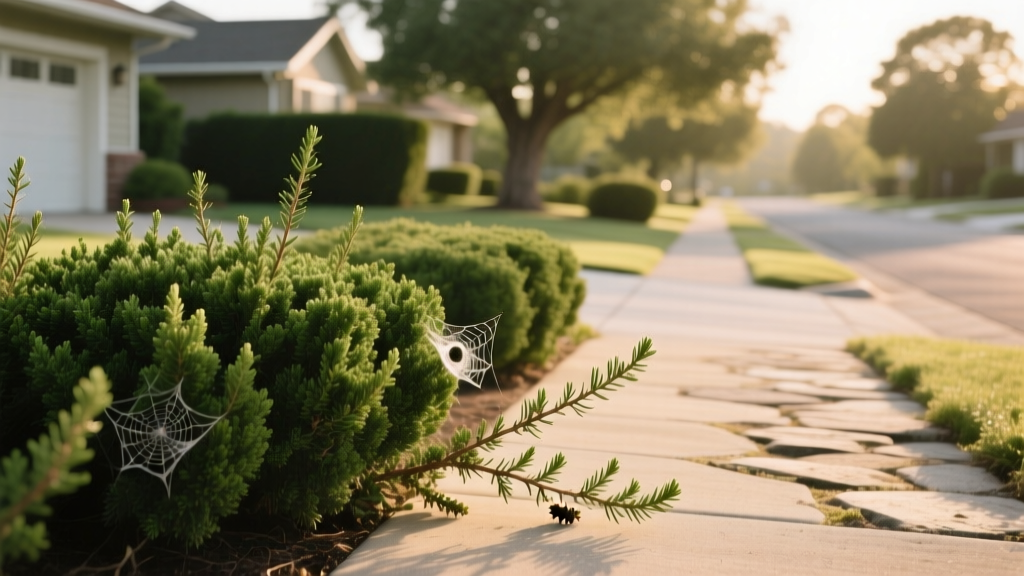
2026 Driveway Border Landscaping: Juniper Webworm Fix
David ParkPublished
The Driveway Webworm Dilemma in 2026
If your driveway is lined with deciduous trees or susceptible shrubs, late summer and early autumn can turn your property's entrance into a frustrating mess. The fall webworm (Hyphantria cunea) is a notorious landscape pest that targets hardwood species such as cherry, ash, pecan, walnut, and birch. According to Penn State Extension, these caterpillars construct large, unsightly silk tents in the outer branches of host trees. While the defoliation is rarely fatal to mature trees, the secondary nuisance is severe for homeowners.
When these host trees are planted as driveway borders, the consequences are highly disruptive. Caterpillar frass (feces) rains down onto parked vehicles, walkways, and hardscaping, leaving stubborn stains. Furthermore, the sprawling silk webs catch falling leaves and debris, creating an eyesore right at the curb appeal focal point of your home. In 2026, modern landscaping trends heavily favor proactive, cultural pest control methods over reactive chemical spraying. This means rethinking your driveway border plantings entirely by replacing susceptible hosts with non-host, low-growing evergreen alternatives.
Why Low-Growing Juniper is the Ultimate Webworm-Proof Border
The most effective long-term strategy for tree webworm control near high-traffic hardscapes is to eliminate the host plants in the immediate vicinity. Enter the low-growing juniper. As conifers, junipers are completely ignored by fall webworms and eastern tent caterpillars, which strictly target broadleaf deciduous trees. By establishing a driveway border of creeping or low-growing juniper, you create a beautiful, non-host buffer zone that naturally breaks the webworm life cycle right where it annoys you most.
Beyond pest immunity, junipers are uniquely suited for the harsh microclimate of a driveway edge. They tolerate the reflected heat from asphalt and concrete during the peak of summer. More importantly, as noted by North Carolina State Extension, many Juniperus horizontalis cultivars exhibit excellent tolerance to the salt and de-icing chemicals that inevitably wash off driveways during winter storms. This dual resistance to both biological pests and chemical stressors makes low-growing juniper the premier driveway border choice for 2026.
Top Low-Growing Juniper Varieties for Driveway Edges
Selecting the right cultivar is critical for maintaining sightlines, preventing overgrowth onto the asphalt, and ensuring winter hardiness. Below is a comparison of the best low-growing junipers for driveway borders.
| Variety | Botanical Name | Mature Height | Spread | Salt Tolerance | Foliage Color |
|---|---|---|---|---|---|
| Blue Rug | Juniperus horizontalis 'Wiltonii' | 4-6 inches | 6-8 feet | High | Silver-Blue |
| Bar Harbor | Juniperus horizontalis 'Bar Harbor' | 6-12 inches | 6-8 feet | Moderate-High | Blue-Green (Plum winter tint) |
| Andorra Compact | Juniperus horizontalis 'Plumo' | 1-2 feet | 4-6 feet | Moderate | Gray-Green (Bronze winter tint) |
| Prince of Wales | Juniperus horizontalis 'Prince of Wales' | 4-6 inches | 4-6 feet | High | Bright Green |
Strategic Selection Tips
- For narrow borders (under 3 feet wide): Choose Prince of Wales to prevent the foliage from creeping onto the asphalt, reducing the need for seasonal edging.
- For salt-heavy climates: Blue Rug is the undisputed champion, handling both direct salt spray and soil salinity better than almost any other groundcover.
- For year-round color contrast: Bar Harbor provides a stunning purplish-plum hue in the winter, offering visual interest when the rest of the landscape is dormant.
Step-by-Step Installation Guide for Driveway Borders
Transitioning from a webworm-infested shrub border to a pristine juniper edge requires proper soil preparation and hardscape integration. Junipers despise 'wet feet' and will succumb to root rot if planted in compacted, poorly draining soil often found near driveway gravel bases.
1. Removal and Soil Prep
Begin by removing any existing webworm-prone shrubs or small trees. Grind the stumps to prevent regrowth and eliminate decaying organic matter that could harbor fungal pathogens. Excavate the border trench to a depth of 12 inches. If the native soil is heavy clay, amend it with a 50/50 mix of native soil and coarse builder's sand or pine bark fines to guarantee rapid drainage.
2. Installing a Physical Barrier
To keep your junipers from rooting into the driveway cracks or sprawling over the asphalt, install a heavy-duty steel landscape edging barrier. Steel edging is preferred in 2026 over plastic, as it will not warp under the intense summer heat radiating from the driveway. Set the edging so that the top lip is roughly half an inch below the final grade level to allow for mulch or rock coverage.
3. Planting and Spacing
Space your juniper plugs or gallon-container plants according to their mature spread, typically 3 to 4 feet apart for most creeping varieties. Dig the planting hole exactly as deep as the root ball but twice as wide. Crucial step: Plant the juniper slightly elevated (about 1 inch above grade) to encourage water to run away from the crown, preventing collar rot.
4. Mulching with Inorganic Material
Avoid traditional hardwood mulch near junipers, as it retains too much moisture and can harbor fungal spores. Instead, use a 2-inch layer of washed river rock or crushed gravel. This inorganic mulch reflects light back into the dense foliage, deters fungal growth, and prevents weed seeds from germinating near the driveway edge.
Managing Existing Webworms During the Transition
If you are keeping larger deciduous shade trees further back in your yard (away from the driveway border), you may still need to manage fall webworms to prevent them from migrating or dropping debris. The most effective, eco-friendly treatment in 2026 remains Bacillus thuringiensis var. kurstaki (Btk). This naturally occurring soil bacterium specifically targets caterpillars and is completely harmless to beneficial insects, pets, and your new juniper plantings.
Apply Btk via a hose-end sprayer directly onto the foliage of the host trees as soon as you notice the small, initial silk tents forming in mid-to-late summer. The caterpillars will ingest the bacteria while feeding, stopping their damage within 48 hours. For small, accessible webs on lower branches of remaining trees, simply use a long-handled pruner to snip out the webbed branch tips and dispose of them in sealed bags.
Long-Term Maintenance and 2026 Climate Resilience
Once established, a low-growing juniper driveway border requires minimal maintenance, freeing up your weekends and eliminating the need for messy chemical webworm sprays. During the first growing season, provide deep, infrequent watering (about 1 inch per week) to encourage deep root development. By the second year, your junipers will be highly drought-tolerant, thriving on natural rainfall even during late-summer dry spells.
In early spring, inspect the border for any winter damage caused by heavy snow plows or salt accumulation. While junipers are salt-tolerant, a heavy crust of de-icing salt can cause localized foliage burn. A quick rinse with a garden hose in early March will wash accumulated salts off the foliage and dilute the soil concentration. Lightly prune any wayward tips that reach toward the driveway using sterilized bypass shears to maintain a crisp, manicured edge.
By rethinking your landscape design and utilizing low-growing junipers, you achieve a dual victory: a striking, modern driveway border that boosts curb appeal, and a permanent, natural solution to the frustrating mess of tree webworms.

