Lawn Care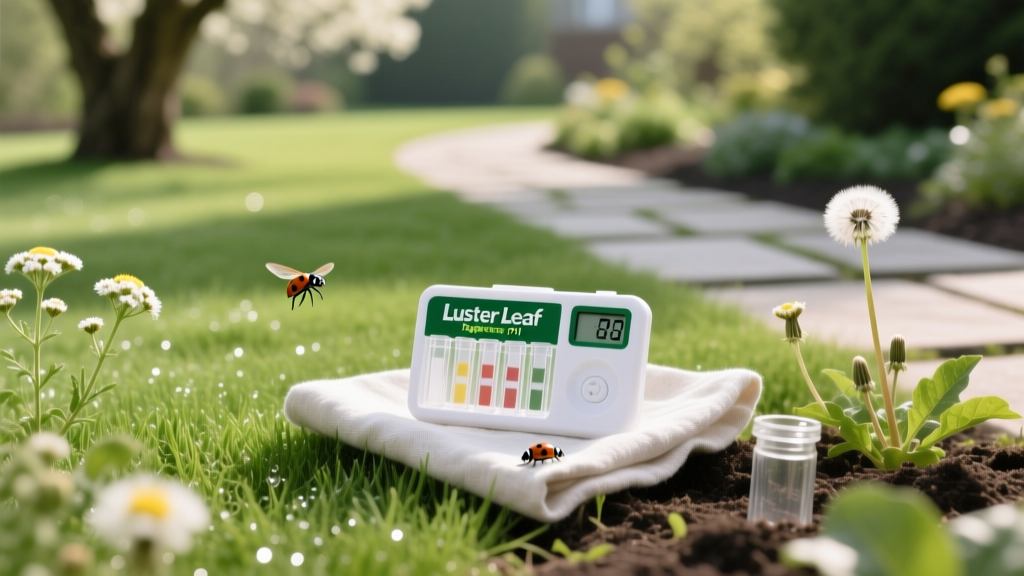
Soil pH for Beneficial Insects: Luster Leaf Rapitest 2026
Anna KowalskiPublished
The Hidden Link Between Soil pH and Biological Pest Control
As we navigate the 2026 lawn care season, the shift away from synthetic neonicotinoids and broad-spectrum chemical pesticides has never been more pronounced. Homeowners and turf professionals alike are embracing Integrated Pest Management (IPM) and biological controls to manage grubs, chinch bugs, and armyworms. However, a critical factor often overlooked in the success of these bio-control agents is soil chemistry—specifically, soil pH. While most gardeners understand that pH affects grass nutrient uptake, fewer realize that it dictates the survival, reproduction, and efficacy of the beneficial insects and microscopic predators we rely on to protect our lawns.
Biological control agents, ranging from entomopathogenic nematodes to predatory ground beetles and beneficial fungi, are living organisms. They possess specific environmental thresholds for survival. When your soil pH drifts too far into the acidic or alkaline extremes, it doesn't just lock up nitrogen and iron; it actively creates a hostile environment for the very predators you are introducing or trying to attract. To harness the full power of bio-controls in 2026, precise and regular soil pH monitoring is non-negotiable. This is where the trusted Luster Leaf Rapitest kit proves its enduring value.
Why the Luster Leaf Rapitest Kit Remains a 2026 Staple
In an era of smart-home irrigation and drone lawn mapping, the analog simplicity of the Luster Leaf Rapitest Soil Test Kit (Model 1601) remains a cornerstone of practical turf management. Priced affordably at around $19.99 in 2026, this colorimetric test kit offers a rapid, reliable method for determining soil pH without the multi-week wait times and high costs associated with commercial laboratory soil analysis.
For the bio-control practitioner, speed is essential. If you are preparing to apply a dose of Heterorhabditis bacteriophora (beneficial nematodes) to combat a white grub infestation in late summer, you need to know your soil's pH immediately to ensure the application won't be wasted. The Rapitest kit utilizes a patented color comparator system and pre-measured reagent capsules that react with your soil sample, providing a visual pH reading in under 60 seconds. While digital probes (like the Luster Leaf 1663) are also available, the classic capsule-based 1601 model is favored by IPM professionals because it is immune to the calibration drift and battery failures that often plague cheap digital meters in high-moisture turf environments.
Step-by-Step: Testing for Bio-Control Readiness
To accurately assess whether your lawn is primed to support a thriving population of beneficial predators, follow this rigorous testing protocol using the Rapitest kit:
- Step 1: Strategic Sampling. Do not just scrape the surface. Bio-control agents like nematodes and predatory mites operate in the thatch and upper soil profile. Use a soil probe or trowel to extract samples from a depth of 3 to 4 inches. Take 5 to 10 random cores across your lawn and mix them in a clean plastic bucket to get a representative composite sample.
- Step 2: Debris Removal and Drying. Remove any living grass blades, thatch chunks, or pebbles. Allow the soil to air-dry for a few hours if it is heavily saturated, as excess surface water can dilute the reaction.
- Step 3: The Rapitest Chamber. Open the green pH test chamber from the Rapitest kit. Carefully twist open a green pH reagent capsule and pour the powder into the chamber. Add your soil sample up to the first fill line.
- Step 4: Distilled Water Addition. This is a critical step. You must use distilled water, not tap water. Municipal tap water in 2026 is often treated with alkaline buffers or chlorine that will instantly skew your pH reading. Add distilled water to the top fill line.
- Step 5: Agitate and Settle. Seal the chamber and shake vigorously for 10 seconds. Allow the mixture to settle for 60 seconds. The liquid will change color as the reagent binds to the hydrogen ions in your soil solution.
- Step 6: Color Matching. Compare the color of the liquid against the green pH chart provided in the kit. A dark green indicates high alkalinity (pH 7.5+), a bright green indicates neutral (pH 7.0), and yellow/gold indicates acidity (pH 5.0-6.0).
Bio-Control Agents and Their pH Sweet Spots
Understanding your Rapitest reading requires knowing how different biological agents react to soil chemistry. Below is a breakdown of common bio-controls and their ideal pH parameters.
| Bio-Control Agent | Target Pests | Ideal Soil pH | Consequence of pH Imbalance |
|---|---|---|---|
| Heterorhabditis bacteriophora (Hb Nematodes) | White grubs, Japanese beetle larvae | 6.0 - 7.5 | In soils below 5.5, the nematode's protective cuticle degrades, and their symbiotic bacteria (Photorhabdus) fail to reproduce, leading to rapid mortality before they can infect a host. |
| Beauveria bassiana (Entomopathogenic Fungus) | Chinch bugs, ticks, billbugs | 6.2 - 7.0 | Highly alkaline soils (pH > 7.8) inhibit spore germination and hyphal growth, rendering the fungal application completely ineffective against turf pests. |
| Bacillus thuringiensis (Bt kurstaki/galleriae) | Sod webworms, armyworms, crane flies | 6.0 - 8.0 | Bt is generally hardy, but extreme acidity accelerates the breakdown of the crystalline proteins (Cry toxins) that paralyze the digestive tracts of target caterpillars. |
| Ground Beetles (Carabidae) | Slugs, cutworms, insect larvae | 6.5 - 7.2 | Acidic soils leach calcium, which is essential for the exoskeleton development of predatory beetles and their primary prey, earthworms. Low pH drastically reduces ground beetle populations. |
The Science of Nematode Survival in Acidic Soils
According to Penn State Extension's guide on beneficial nematodes, these microscopic worms are among the most effective biological controls for soil-dwelling turf pests. However, their efficacy is entirely dependent on soil moisture, temperature, and pH. When the Luster Leaf Rapitest reveals a pH below 5.5, the soil contains high levels of soluble aluminum and manganese. These heavy metals are directly toxic to the infective juvenile stage of beneficial nematodes. Furthermore, the symbiotic bacteria that nematodes release into the grub's hemolymph to cause septicemia require a near-neutral pH environment to multiply. If you apply nematodes to uncorrected acidic soil, you are essentially releasing them into a toxic wasteland, resulting in a 90% or higher mortality rate within 48 hours.
Adjusting Your Lawn's pH to Support Predators
Once you have established your baseline using the Rapitest kit, you must take corrective action to build a bio-control haven. The goal for a turfgrass ecosystem that supports both deep-rooted cool-season grasses and a robust food web of beneficial insects is a pH between 6.5 and 7.0.
Raising pH (Correcting Acidity)
If your Rapitest liquid turns yellow or gold, indicating a pH of 5.8 or lower, you must apply agricultural lime. In 2026, pelletized calcitic lime is preferred over powdered lime for ease of application and reduced dust. Apply 25 to 50 pounds of pelletized lime per 1,000 square feet, ideally after core aeration so the lime can reach the root zone and the deeper soil horizons where nematodes hunt. Note that lime takes 3 to 6 months to fully react and alter soil chemistry, so test in the fall and amend for spring bio-control applications.
Lowering pH (Correcting Alkalinity)
If your test yields a dark green color indicating a pH above 7.5, your soil is too alkaline for optimal fungal bio-controls and earthworm activity. To lower the pH, apply elemental sulfur. The University of Maryland Extension's soil pH resource notes that elemental sulfur relies on soil bacteria (Thiobacillus) to oxidize the sulfur into sulfuric acid. Because this is a biological process itself, sulfur applications are most effective when soil temperatures are above 55°F and the soil is moist. Apply 1 to 2 pounds of elemental sulfur per 1,000 square feet and retest with your Rapitest kit in 60 days.
Pro-Tip for 2026: Never apply elemental sulfur and beneficial nematodes on the same day. The localized, temporary acidification caused by sulfur oxidation can shock and kill nematodes. Always adjust your pH at least 4 weeks prior to introducing live bio-control agents.
Integrating pH Management into Your 2026 IPM Strategy
The foundation of any successful lawn care program is observation and adaptation. The EPA's Integrated Pest Management principles emphasize that biological control should be the first line of defense against turf pests, but this is only viable when the habitat is conducive to the predators' survival. By incorporating the Luster Leaf Rapitest kit into your seasonal maintenance calendar—testing once in early spring and again in early fall—you create a feedback loop that informs your entire IPM strategy.
When you align your soil chemistry with the biological needs of beneficial insects, you reduce the need for rescue chemical treatments, lower your long-term lawn care costs, and foster a resilient, self-regulating turf ecosystem. The Rapitest kit is not just a tool for measuring dirt; in the modern era of bio-control, it is the diagnostic key to unlocking a naturally pest-resistant lawn.