Lawn Care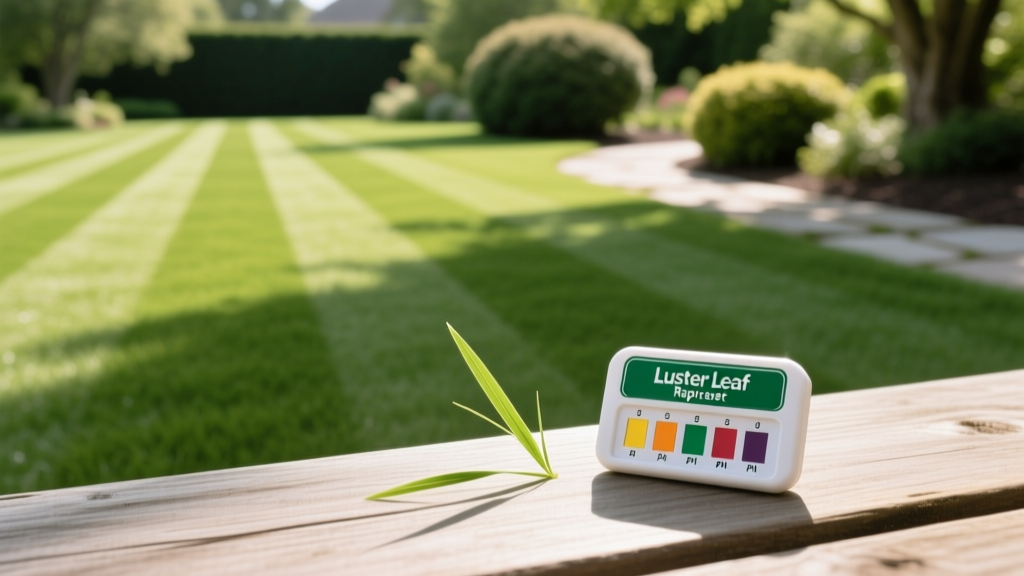
Mowing Patterns 2026: Fix Grass pH with Luster Leaf Rapitest Kit
Emily WatsonPublished
The Secret to Perfect Mowing Patterns in 2026
There is nothing quite like the satisfaction of looking out over a freshly mowed lawn adorned with crisp, professional-grade stripes or a complex checkerboard pattern. In 2026, the pursuit of the perfect lawn stripe has become a hallmark of dedicated turf enthusiasts. However, many homeowners invest heavily in premium mower roller attachments, zero-turn mowers, and striping kits, only to find that their grass simply will not hold the pattern. Instead of reflecting light to create those beautiful alternating dark and light bands, the grass blades snap, bruise, or brown at the crease. While mowing technique and equipment play a role, the hidden culprit behind poor grass recovery and weak striping is almost always improper soil pH. If your soil pH is unbalanced, your grass cannot absorb the vital nutrients required to build strong, flexible cell walls. This is where the Luster Leaf Rapitest Soil Test Kit becomes an indispensable tool for any serious lawn care enthusiast focused on mowing patterns and turf health.
The Science of Striping: Turgor Pressure and Soil pH
To understand why soil pH dictates the success of your mowing patterns, you must first understand the physics of lawn striping. Stripes are not created by cutting the grass at different heights; they are created by bending the grass blades in opposite directions using a roller or the weight of the mower deck. When grass is bent away from you, the top of the blade reflects light, appearing lighter. When bent toward you, the underside absorbs and scatters light, appearing darker.
For grass to bend without breaking or suffering cellular damage, it requires immense turgor pressure and robust cell walls. Calcium and magnesium are the primary building blocks for these cell walls. According to the USDA Natural Resources Conservation Service, soil pH directly controls the bioavailability of these critical nutrients. If your soil is too acidic (below 5.5) or too alkaline (above 7.5), calcium and magnesium become chemically locked in the soil matrix. The grass starves, the cell walls weaken, and when your mower roller presses down to create a checkerboard pattern, the blades crush and brown instead of bending gracefully.
Why Your Mowing Patterns Are Failing
If you notice that your lawn stripes fade within hours, or if the grass in the wheel tracks of your turning zones turns yellow and dies, your soil pH is likely out of balance. Furthermore, the Penn State Extension Green Industry Program notes that soil compaction from repetitive mowing patterns exacerbates pH imbalances by restricting root respiration and altering the soil's buffering capacity. When you repeatedly turn your mower in the same corners to execute a diamond or concentric circle pattern, you compact the soil, driving out oxygen and increasing localized acidity. Testing your soil is the only way to break this cycle.
Using the Luster Leaf Rapitest Kit for pH Analysis
The Luster Leaf Rapitest Soil Test Kit (Model 1601) remains the gold standard for at-home turf diagnostics in 2026. Priced affordably at around $18, it uses a colorimetric capsule system that provides lab-comparable pH readings in minutes. Here is how to use it specifically to diagnose pattern-failing turf:
- Step 1: Strategic Core Sampling. Do not just test the center of the lawn. Take 4-inch deep soil cores from the high-traffic turning zones where your mower pivots, as well as the straightaway striping zones. Mix these cores in a clean plastic bucket to get a representative sample of how your mowing patterns are affecting soil chemistry.
- Step 2: Preparation. Remove any thatch, debris, or large stones from the sample. The Rapitest kit requires fine, loose soil for accurate chemical reactions.
- Step 3: The pH Chamber. Open the green-capped pH capsule from the Rapitest kit and empty the powder into the designated testing chamber. Fill the chamber with your soil sample up to the first indicator line.
- Step 4: Distilled Water Addition. Add distilled water (never use tap water, as its own pH and mineral content will skew the results) up to the top fill line. Cap the chamber and shake vigorously for 60 seconds.
- Step 5: Color Comparison. Let the soil settle for another 60 seconds. Compare the color of the liquid to the Rapitest pH chart. Ideal pH for cool-season grasses (Kentucky Bluegrass, Fescue) is 6.0 to 7.0. For warm-season grasses (Bermuda, Zoysia), aim for 5.8 to 6.5.
Mowing Pattern Rotation to Mitigate pH-Locked Compaction
While you wait for your pH amendments to take effect, you must adjust your mowing techniques to prevent further damage to pH-stressed grass. Rotating your patterns is critical. Below is a breakdown of how different patterns interact with soil stress and pH deficiencies.
| Mowing Pattern | Stress Factor on Grass | pH & Compaction Impact |
|---|---|---|
| Classic Stripes | Low (straight lines) | Minimal turning compaction; allows weak grass to recover if pH is being corrected. |
| Checkerboard | High (90-degree pivots) | Severe corner compaction locks out nutrients; requires frequent aeration and lime applications. |
| Diamond | Medium (acute angle turns) | Edges suffer from cell-wall snapping if calcium is deficient due to low pH. |
| Concentric Circles | High (continuous turning) | Creates a spiral of compaction; drastically alters soil buffering and lowers localized pH. |
Correcting pH for the Ultimate 2026 Lawn Stripes
Once your Luster Leaf Rapitest reveals your pH levels, you can begin the correction process to restore the turgor pressure needed for flawless mowing patterns.
Raising pH (For Acidic Soils Below 6.0)
If your test shows acidic soil, apply pelletized dolomitic lime. Dolomitic lime is preferred over calcitic lime because it supplies both calcium and magnesium—the exact nutrients your grass needs to reinforce cell walls for bending. Apply in early spring or late fall. It takes roughly 60 to 90 days for lime to fully react with the soil, so be patient. During this window, stick to simple straight-line striping to avoid stressing the grass in the corners.
Lowering pH (For Alkaline Soils Above 7.5)
If your soil is too alkaline, apply elemental sulfur. Alkaline soils lock out iron and manganese, leading to chlorosis (yellowing) that completely ruins the visual contrast of your mowing patterns. Sulfur works slowly as soil bacteria convert it to sulfuric acid. Apply in small, frequent doses rather than one heavy application to avoid burning the turf.
Integrating Soil Health into Your Mowing Routine
Achieving stadium-quality mowing patterns is a holistic endeavor. The roller on your mower is merely the brush; the soil is the canvas, and the grass is the paint. By utilizing the Luster Leaf Rapitest Soil Test Kit at the beginning and end of the 2026 growing season, you ensure that your turf has the chemical foundation required to withstand the physical manipulation of striping. Remember to always keep your mower blades razor-sharp; a dull blade will tear weak, pH-stressed grass regardless of how perfectly balanced your soil chemistry is. Test your soil, amend with purpose, rotate your patterns, and watch your lawn transform into a masterpiece of light and shadow.