Lawn Care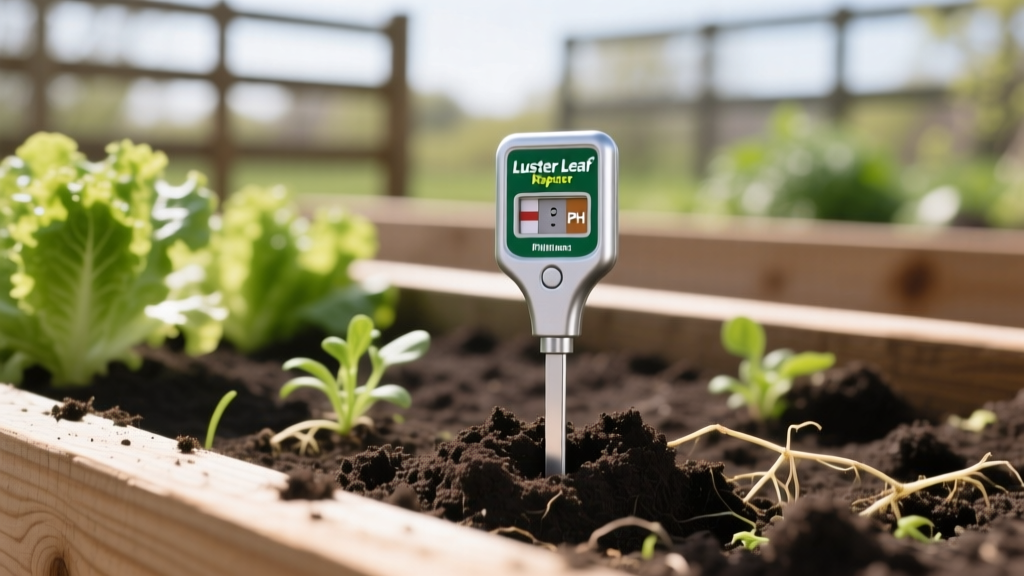
Testing Raised Bed Soil pH with Luster Leaf Rapitest 2026
James MillerPublished
The Unique Soil Dynamics of Raised Beds in 2026
Raised bed vegetable gardening continues to dominate home food production in 2026, offering superior drainage, earlier soil warming, and complete control over the growing medium. However, this control comes with a hidden responsibility: managing soil chemistry. Unlike native in-ground soils that benefit from deep mineral buffering, raised beds are typically filled with imported topsoil, compost, and organic amendments. Over time, the rapid decomposition of this organic matter releases organic acids, which can steadily lower your soil pH and lock out vital nutrients.
Understanding your soil's pH is the single most critical step in maximizing your vegetable harvest. If the pH is too high or too low, your plants cannot absorb nitrogen, phosphorus, or potassium, regardless of how much premium 2026 organic fertilizer you apply. To combat this, home gardeners need a reliable, immediate, and cost-effective testing solution. Enter the Luster Leaf Rapitest Soil Test Kit (Model 1601), a staple in the gardening community that remains highly relevant and accurate for raised bed applications today.
Why the Luster Leaf Rapitest Kit is Ideal for Raised Beds
While digital soil probes have flooded the market, many experienced raised bed gardeners still prefer the colorimetric chemical testing provided by the Luster Leaf Rapitest 1601. Digital probes often struggle in the loose, highly aerated, and sometimes dry soil mixes found in raised beds, leading to erratic readings. The Rapitest kit, on the other hand, uses a water-extraction method that ensures intimate contact between the soil particles and the testing reagent.
Furthermore, the Rapitest kit doesn't just test pH; it also measures Nitrogen (N), Phosphorus (P), and Potassium (K). For the 2026 growing season, where the cost of specialized organic amendments continues to fluctuate, knowing your exact N-P-K and pH levels prevents wasteful over-application and saves money. The pH test specifically utilizes a specialized reagent powder that changes color based on the hydrogen ion concentration in your soil slurry, providing a clear visual match against the included chart.
Step-by-Step: Testing Raised Bed pH with Rapitest
Accuracy in soil testing is entirely dependent on your methodology. Follow these precise steps to ensure your Luster Leaf Rapitest results reflect the true root-zone environment of your raised beds.
Step 1: Proper Soil Sampling
Do not simply scrape the top inch of your raised bed. The surface layer is often dried out and heavily influenced by recent mulch or compost applications. Instead, use a trowel to take 5 to 6 core samples from various spots in your bed at a depth of 4 to 6 inches. This represents the primary root zone for most annual vegetables. Mix these cores thoroughly in a clean plastic bucket. Remove any large rocks, undecomposed wood chips, or heavy root masses.
Step 2: Preparing the Rapitest Chamber
The Luster Leaf Rapitest kit features a dual-chamber plastic comparator. For the pH test, focus on the chamber marked with the pH color chart. Carefully scoop your mixed raised bed soil into the lower portion of the chamber until it reaches the embossed 'SOIL' fill line. Avoid packing the soil down; a loose, level fill ensures the correct soil-to-water ratio.
Step 3: Adding the Reagent and Distilled Water
Open one of the green-capped pH reagent capsules from the kit. Carefully twist and pull the capsule apart, emptying the entire powder contents directly onto the soil in the chamber. Next, fill the chamber with distilled water up to the 'LIQUID' fill line. Using distilled water is absolutely non-negotiable; tap water or filtered drinking water has its own pH and mineral content that will instantly skew your results. Cap the chamber, shake vigorously for 60 seconds, and let it sit undisturbed for about one minute until the soil settles and the colored liquid becomes visible at the top. Compare the liquid's color against the pH chart provided in the kit.
Ideal pH Ranges for Popular Raised Bed Crops
Most vegetables thrive in a slightly acidic to neutral pH range, where essential micronutrients like iron, manganese, and zinc remain soluble and available to plant roots. According to extensive agricultural data compiled by The Old Farmer's Almanac, maintaining the correct pH is directly correlated to disease resistance and fruit set. Below is a target chart for standard raised bed crops in 2026:
| Vegetable Crop | Ideal pH Range | Notes for Raised Beds |
|---|---|---|
| Tomatoes | 6.2 - 6.8 | Prevents blossom end rot by ensuring calcium uptake. |
| Peppers (Bell & Hot) | 6.0 - 6.8 | Slightly acidic soil promotes heavy flowering. |
| Carrots | 6.0 - 6.8 | Crucial for straight taproot development in loose beds. |
| Brassicas (Kale, Broccoli) | 6.5 - 7.0 | Higher pH helps suppress clubroot disease. |
| Blueberries | 4.5 - 5.5 | Requires dedicated acidic beds; highly sensitive to lime. |
| Leafy Greens (Lettuce, Spinach) | 6.0 - 7.0 | Broad tolerance, but prefers neutral for rapid nitrogen uptake. |
Amending Raised Bed Soil Based on Rapitest Results
If your Luster Leaf Rapitest reveals a pH imbalance, you must correct it before planting your 2026 spring or fall crops. Because raised beds contain a finite volume of soil, calculating amendments is much more precise than treating an open field. A standard 4x8-foot raised bed that is 12 inches deep holds roughly 32 cubic feet (about 1.2 cubic yards) of soil.
Lowering pH (Making Soil More Acidic)
If your test shows a pH above 7.0 and you are growing acid-loving crops or general vegetables that are experiencing micronutrient lockout, you need to lower the pH. The safest and most effective method for raised beds is applying elemental sulfur. Avoid aluminum sulfate, as repeated use can lead to toxic aluminum buildup in the confined soil volume of a raised bed. According to soil management guidelines from Clemson University Extension, elemental sulfur relies on soil bacteria to convert it into sulfuric acid, meaning it should be applied 3 to 6 months before planting. For a 4x8 raised bed, applying roughly 1/4 to 1/2 pound of elemental sulfur will typically lower the pH by one full point, depending on the soil's buffering capacity.
Raising pH (Making Soil More Alkaline)
Over time, the heavy use of nitrogen-rich organic fertilizers, peat moss, and pine bark in raised beds will naturally acidify the soil. If your Rapitest shows a pH below 6.0 for crops like brassicas or tomatoes, you need to raise it. Garden lime (calcium carbonate) or dolomitic lime (which also adds magnesium) are the standard choices. Dolomitic lime is often preferred in raised beds because magnesium is frequently leached out of highly drained container and bed mixes. To raise the pH of a 4x8 raised bed by one point, you will generally need to incorporate 2 to 3 pounds of dolomitic lime. Always mix lime thoroughly into the top 6 inches of the bed, as it is relatively immobile in the soil profile.
Maintaining pH Throughout the 2026 Season
Testing your soil is not a one-and-done chore. The intensive nature of raised bed gardening—frequent watering, heavy feeding, and rapid plant turnover—means your soil chemistry is in a constant state of flux. Make it a habit to test your raised bed soil with the Luster Leaf Rapitest at least twice a year: once in early spring before amending and planting, and again in late autumn after the final harvest.
Additionally, be mindful of your irrigation water. If you are using municipal tap water, it is often treated to be slightly alkaline to prevent pipe corrosion. Over a single growing season, watering a raised bed daily with alkaline tap water can incrementally raise your soil pH. If you notice a persistent upward drift in your Rapitest results despite adding sulfur, consider testing your irrigation water or utilizing rainwater harvesting systems, which provide naturally soft, slightly acidic water that is ideal for raised bed vegetables.
Final Thoughts on Soil Health
Mastering your raised bed soil pH using the Luster Leaf Rapitest kit transforms you from a passive gardener into an active soil manager. By combining the immediate, visual feedback of chemical colorimetric testing with the targeted amendment strategies outlined above, you ensure that every ounce of compost and fertilizer you add in 2026 is fully utilized by your crops. For more detailed information on how soil texture and organic matter interact with pH buffering, consult the comprehensive soil guides provided by Gardeners Supply Company. Healthy soil chemistry is the invisible foundation of a bountiful raised bed harvest.