Lawn Care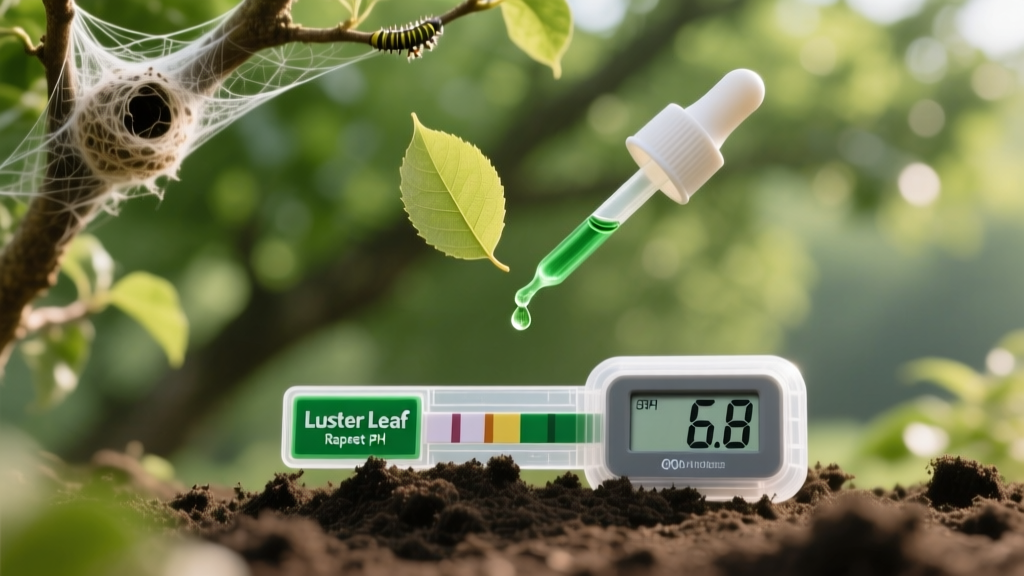
Tree Web Worm Control 2026: Luster Leaf Rapitest Soil pH Guide
Robert HayesPublished
The Hidden Link Between Soil pH and Tree Web Worms
When homeowners spot the unsightly, silken tents of fall webworms (Hyphantria cunea) expanding across their shade trees, the immediate instinct is to reach for chemical sprays or pruning shears. However, as we navigate the 2026 growing season, arborists and lawn care professionals are increasingly focusing on a subterranean factor: soil pH. Tree webworms are opportunistic pests that heavily target stressed, nutrient-deficient trees. When your soil pH is unbalanced, essential macronutrients and micronutrients become chemically locked in the soil, unavailable to the tree's root system. A tree suffering from nutrient lockout lacks the metabolic energy to produce the defensive tannins and volatile organic compounds (VOCs) that naturally deter insect infestations. By utilizing the Luster Leaf Rapitest Soil Test Kit to monitor and correct your soil's pH, you can dramatically improve tree vigor, making your landscape far less hospitable to webworms.
Why Tree Vigor is Your Best Defense in 2026
The 2026 climate patterns have brought extended periods of late-summer heat and fluctuating autumn moisture, creating an ideal breeding ground for second and even third generations of fall webworms. According to Penn State Extension, fall webworms can defoliate entire branches late in the season, and while they rarely kill a healthy tree outright, the aesthetic damage and subsequent stress can invite secondary borers and fungal pathogens. A robust, well-nourished tree can easily push out new foliage and compartmentalize damage. Conversely, a tree starved of phosphorus and potassium due to improper soil pH will struggle to recover from defoliation, leading to severe dieback. Testing your soil with the Luster Leaf Rapitest kit is the most cost-effective, immediate way to diagnose these hidden nutritional bottlenecks before the webworms even hatch.
Step-by-Step: Using the Luster Leaf Rapitest Kit for Tree Zones
The Luster Leaf Rapitest Soil Test Kit (specifically the classic 1601 series and the updated 2026 digital comparator models) uses a water-soluble capsule system that provides rapid, highly accurate pH readings without the need to mail samples to a lab. Because tree root systems interact with the soil differently than turfgrass, sampling requires a specific approach.
Gathering Your Soil Samples
Do not sample the soil right against the tree trunk, as this area is often compacted and devoid of active feeder roots. Instead, collect soil from the 'drip line'—the outer edge of the tree's canopy where rainwater naturally drips and feeder roots are most active. Using a clean trowel, dig down 4 to 6 inches, brushing away surface mulch, leaf litter, and turfgrass. Collect 3 to 4 sub-samples from around the drip line and mix them in a clean plastic bucket to get a representative composite sample. Allow the soil to air-dry in the shade for a few hours before testing.
Running the Rapitest pH Test
The Rapitest kit relies on a colorimetric reaction. To ensure accuracy in 2026, always use distilled water rather than tap water, as municipal water often contains alkaline buffers that will skew your pH results. Fill the Rapitest test chamber to the designated fill line with your dried soil. Open the green-coded Rapitest pH capsule and empty the powder into the chamber. Add distilled water to the top fill line, cap the chamber, and shake vigorously for 60 seconds. Allow the soil to settle for another 60 seconds, then compare the color of the liquid against the updated Rapitest pH color chart. The liquid will range from bright yellow (highly acidic) to deep green (neutral) to dark blue/green (alkaline).
Interpreting Your Results: The Ideal pH for Webworm-Prone Trees
Most turfgrasses thrive in a slightly acidic to neutral pH range of 6.0 to 7.0. However, many shade trees that are highly susceptible to webworm damage prefer a more acidic environment. When lawn care routines inadvertently push tree-zone soil into the alkaline range through excessive liming, trees suffer from iron and manganese chlorosis, severely weakening their pest defenses.
| Tree Species | Ideal Soil pH | Webworm Susceptibility | Key Nutrient at Risk if pH is High |
|---|---|---|---|
| Red Oak | 5.5 - 6.5 | High | Iron (Causes severe chlorosis) |
| Persimmon | 6.0 - 6.5 | High | Zinc and Manganese |
| Walnut | 6.0 - 7.0 | Moderate | Phosphorus lockout |
| Cherry / Plum | 6.0 - 6.8 | Very High | Potassium and Boron |
| Hickory | 5.5 - 6.5 | Moderate | Iron and Magnesium |
As noted by the University of Minnesota Extension, soil pH dictates the chemical availability of vital macronutrients and micronutrients. If your Rapitest kit shows a pH of 7.5 or higher around your Red Oaks or Cherry trees, you have identified the root cause of their vulnerability to webworms.
The Lawn vs. Tree Bed pH Conflict
One of the most common challenges in integrated landscape management is the conflict between lawn grass and shade trees. Homeowners frequently apply pelletized lime to their lawns in the spring to green up their turf, unaware that the lime washes into the tree's drip line, slowly raising the soil pH to alkaline levels. Over a few seasons, this renders the soil toxic to acid-loving trees. By utilizing the Luster Leaf Rapitest kit to map the pH gradients from the middle of your lawn out to the tree's drip line, you can establish 'no-lime zones' around susceptible trees. In 2026, precision lawn care means treating the landscape as a mosaic of different micro-environments rather than a single monoculture.
Correcting Soil pH to Deter Webworm Damage
If your Rapitest results indicate that the soil around your webworm-prone trees is too alkaline (above 7.0), you must lower the pH to unlock trapped nutrients. The safest and most effective way to do this is by applying elemental sulfur or aluminum sulfate. For established trees, apply elemental sulfur at a rate of 1 to 2 pounds per 100 square feet of the drip-line area in the early spring or late fall. Water it in deeply. Because sulfur relies on soil bacteria to convert it into sulfuric acid, it works slowly, taking several months to shift the pH. Conversely, if your soil is excessively acidic (below 5.0), which can lead to aluminum toxicity and stunt root growth, apply dolomitic lime according to the Rapitest chart's recommendations, being careful not to overshoot the 6.5 mark.
Integrating pH Management with Direct Webworm Control
Correcting your soil pH is a long-term, systemic defense strategy. It must be paired with short-term, direct control methods to manage active 2026 webworm outbreaks. When you spot the early-stage silken tents forming at the tips of branches, prune them out immediately and destroy them. If the infestation is too high in the canopy to reach, apply a biological insecticide containing Bacillus thuringiensis var. kurstaki (Btk). Btk is highly effective against young webworm caterpillars and is completely safe for beneficial insects, earthworms, and your turfgrass. However, Btk only works when ingested by the feeding larvae. A tree that is severely stressed due to pH-induced nutrient lockout may drop its leaves prematurely or produce tough, unpalatable foliage that alters the feeding patterns of the pests, reducing the efficacy of the Btk. Therefore, the synergy between a properly balanced soil pH and targeted biological sprays creates an impenetrable defense.
Post-Webworm Recovery Fertilization
Once the webworms have been eradicated and the pH has been verified and corrected via the Luster Leaf Rapitest kit, it is time to support the tree's recovery. Avoid high-nitrogen synthetic fertilizers immediately after a defoliation event, as this can force the tree to push out tender, weak growth that will not harden off before winter. Instead, rely on the pH-balanced soil to uptake slow-release organic nutrients. Top-dressing the tree's drip line with a half-inch of premium compost will introduce beneficial mycorrhizal fungi. These fungi act as an extension of the root system, further enhancing the tree's ability to absorb water and phosphorus, ensuring it enters the winter dormancy period with the carbohydrate reserves necessary to survive the next year's pest pressures.
Conclusion
Tree web worm control is not just about what you spray on the canopy; it is fundamentally about what you feed the roots. The 2026 landscape requires a proactive, science-backed approach to tree health. By investing a few minutes and a few dollars into testing your soil with the Luster Leaf Rapitest Soil Test Kit, you can uncover the hidden pH imbalances that are silently sabotaging your trees' natural defenses. Correcting these imbalances ensures your shade trees remain vigorous, resilient, and capable of shrugging off webworm damage, keeping your lawn and garden beautiful and structurally sound for decades to come.