Pest Control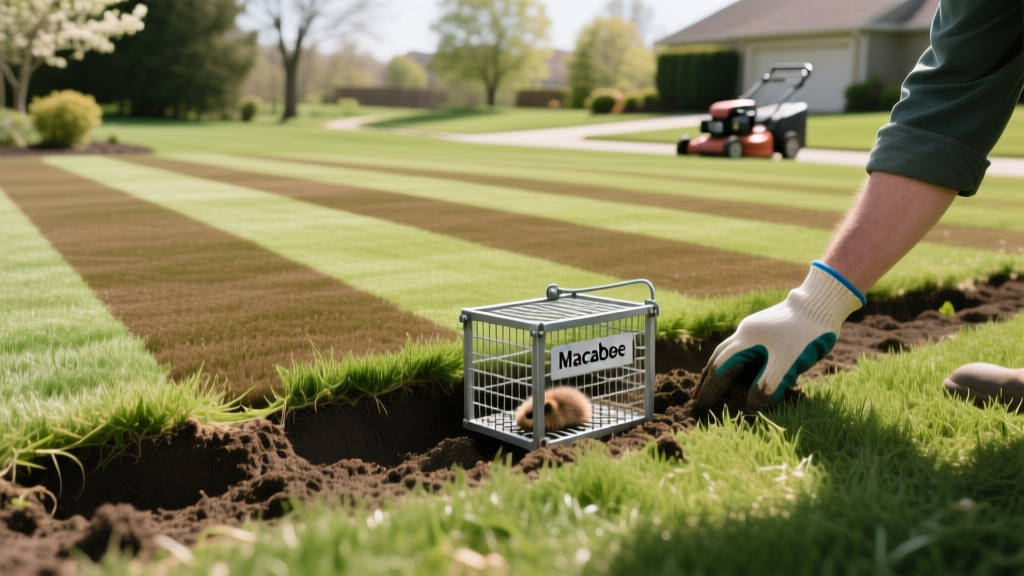
Restore Lawn Stripes 2026: Macabee Gopher Trap Placement
Sarah ChenPublished
The Intersection of Lawn Aesthetics and Pest Control
Lawn striping is the pinnacle of turf aesthetics. By bending grass blades in alternating directions with a mower and striping kit, you create a visual masterpiece of light and dark bands that elevates any landscape. However, achieving these pristine geometric patterns requires a perfectly level, healthy turf canopy. Nothing destroys a meticulously striped lawn faster than the sudden appearance of crescent-shaped soil mounds caused by pocket gophers. As of 2026, high-end turf managers and lawn care enthusiasts face a unique challenge: how do you eliminate these destructive pests without tearing up the very sod you have worked so hard to perfect?
Traditional gopher removal often involves massive excavation, toxic baits that risk secondary poisoning, or bulky trap systems that require removing large squares of sod. For those dedicated to lawn striping and aesthetic patterns, these methods are unacceptable. The solution lies in precision pest control—specifically, the strategic placement of the Macabee wire trap. This guide will walk you through the exact techniques for deploying the Macabee trap to eradicate gophers while preserving your lawn's striping patterns and minimizing turf disruption.
Why Gophers Destroy Lawn Striping Patterns
Before diving into trap placement, it is essential to understand the specific damage pocket gophers inflict on striped lawns. According to the UC Agriculture and Natural Resources, a single pocket gopher can create several mounds a day, pushing up to 15 pounds of soil to the surface. This soil smothers the grass blades, blocking sunlight and preventing the grass from standing upright, which is a prerequisite for effective striping.
Furthermore, gophers feed on grass roots and crown tissue. When the root system is compromised, the grass loses its turgor pressure and structural integrity. Even if you mow over the area, the damaged grass will not bend cleanly under the striping roller, resulting in dull, broken, or uneven lines in your pattern. To restore the aesthetic, you must eliminate the gopher and repair the root zone with surgical precision.
The Macabee Wire Trap: The 2026 Standard for Precision
Invented over a century ago, the Macabee wire trap remains the undisputed gold standard for precision gopher control in 2026. While newer plastic box traps and tunnel traps have entered the market, they are simply too bulky for aesthetic turf management. The Macabee trap features a slim, low-profile wire design that allows it to be inserted directly into the main gopher tunnel with minimal soil removal.
Current 2026 pricing for a pair of authentic Macabee traps averages between $18 and $24. When used correctly, the Macabee trap requires a "keyhole" excavation rather than a massive trench. This means you only need to lift a tiny flap of sod—barely larger than a golf ball—to access the tunnel, set the trap, and replace the grass. Once the gopher is caught, the sod flap knits back together seamlessly, leaving your striping patterns virtually uninterrupted.
Locating the Main Tunnel Without Ruining Your Stripes
The most critical step in preserving your lawn's aesthetic is locating the main gopher tunnel without leaving a trail of ugly probe holes across your striped bands. Gophers create a main tunnel roughly 4 to 12 inches below the surface, with lateral tunnels branching out to form the visible mounds.
To find the main tunnel, use a slender steel gopher probe. Instead of probing randomly across the lawn, which leaves visible puncture marks that disrupt the visual flow of your stripes, employ the "shadow-probing" technique. Insert your probe only within the dark bands of your stripe pattern. The dark bands are created by grass blades bending away from you, exposing the soil and creating natural shadows. Any minor surface disruption from the probe will be completely hidden within these dark, shadowed lines.
When the probe suddenly drops 4 to 8 inches with a distinct "pop," you have found the main tunnel. Mark the spot with a small, discreet flag or a golf tee, ensuring you note the angle of the tunnel to align your trap correctly.
Step-by-Step Macabee Trap Placement for Aesthetic Lawns
Once you have located the main tunnel, follow these precise steps to set your Macabee trap while protecting the surrounding turf canopy.
- Step 1: Cut a Precision Sod Flap. Using a sharp, narrow trowel or a specialized sod knife, cut a U-shaped or three-sided flap of sod directly over the tunnel. Keep the flap as small as possible—ideally 3 inches wide by 4 inches long. Do not sever the fourth side; leave it attached as a hinge so the grass remains connected to the surrounding root network.
- Step 2: Excavate the Tunnel Opening. Gently lift the hinged sod flap and use a small hand scoop to clear the loose soil from the tunnel opening. You need to expose the tunnel clearly enough to slide the Macabee trap inside, but avoid digging deeper than the tunnel floor.
- Step 3: Prepare and Set the Macabee Trap. Compress the springs of the Macabee trap and secure them with the safety catch. Attach a long, brightly colored string or wire to the trap's base. This tether prevents the gopher from dragging the trap deep into the burrow and makes retrieval easy.
- Step 4: Insert and Camouflage. Slide the trap into the tunnel opening, ensuring the trigger pan faces inward. Gently lower your hinged sod flap back over the excavation. Press down firmly to ensure the soil makes contact with the roots. The trap is now hidden beneath the turf, completely invisible from the surface and entirely out of the way of your mower and striping kit.
Trap Comparison for Aesthetic Turf Management
Choosing the right trap is vital for minimizing recovery time. Below is a comparison of popular 2026 gopher traps based on their impact on lawn aesthetics and striping patterns.
| Trap Model | Excavation Size | Stripe Disruption Level | Turf Recovery Time |
|---|---|---|---|
| Macabee Wire Trap | 3x4 inches | Minimal (Keyhole) | 5-7 Days |
| Blackhole Tunnel Trap | 8x8 inches | Moderate to High | 14-21 Days |
| Gophinator Trap | 6x6 inches | Moderate | 10-14 Days |
| Cinch Wire Trap | 4x5 inches | Low | 7-10 Days |
Turf Repair and Stripe Restoration Post-Trapping
After successfully trapping and removing the gopher, your focus must shift to turf recovery. Because you used the Macabee trap and the keyhole sod flap method, the damage is minimal. However, a few post-trapping steps will ensure the grass blades in that specific area regain their structural integrity for your next striping session.
First, gently firm the soil around the sod flap using your foot or the back of a rake. This eliminates air pockets that can dry out the roots. Next, apply a light, localized application of a high-quality, fast-release liquid nitrogen fertilizer. According to the Oregon State University Extension Service, targeted nitrogen application stimulates rapid root regeneration and blade growth in damaged turf zones. Water the area deeply but infrequently to encourage the roots to knit back into the underlying soil profile.
Wait approximately 5 to 7 days before mowing over the repaired area. When you do mow, ensure your mower blades are freshly sharpened. A clean cut reduces stress on the recovering grass. Finally, engage your striping kit. Because the root system was largely preserved by the hinged sod flap, the grass blades will bend uniformly, and your alternating light and dark patterns will seamlessly bridge the repair zone.
Preventative Measures to Keep Your Patterns Pristine
Maintaining a flawless striped lawn in 2026 requires proactive pest management. Once you have eradicated the immediate gopher threat, implement preventative strategies to protect your aesthetic investment. Consider installing underground wire mesh barriers around the perimeter of your most prized turf areas, particularly near garden beds where gophers often originate. Additionally, maintain a strict mowing schedule; gophers are less likely to establish territories in lawns that are frequently mowed and heavily trafficked, as the vibrations and lack of tall cover deter them from settling.
By combining the surgical precision of the Macabee wire trap with advanced turf repair techniques, you can successfully defend your lawn against subterranean pests. You no longer have to choose between a pest-free yard and a beautifully striped landscape. With patience, the right tools, and an eye for detail, your lawn will remain the envy of the neighborhood, boasting crisp, unbroken lines and a lush, healthy canopy all season long.