Pest Control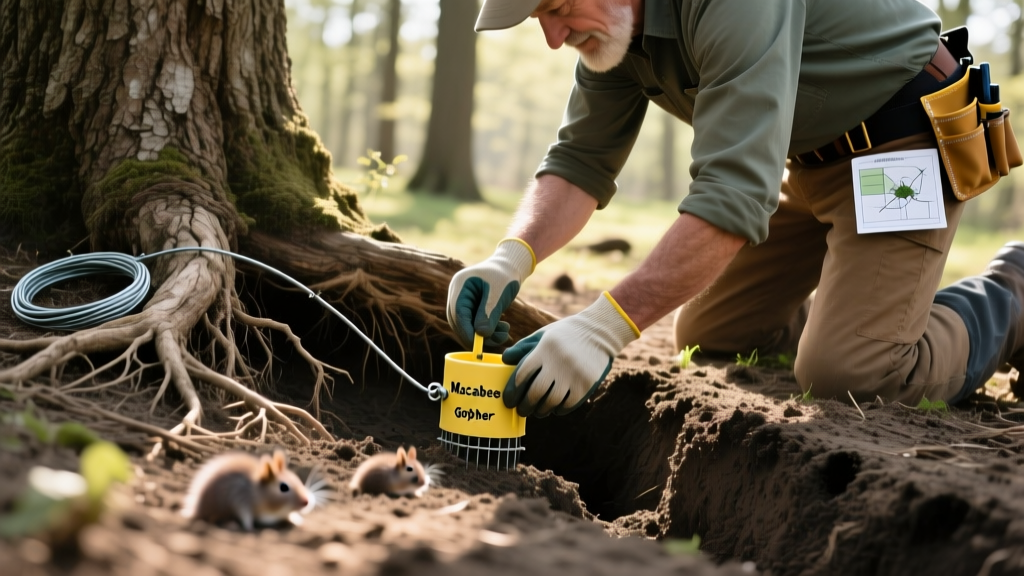
Macabee Gopher Trap Placement 2026: Protect Tree Roots
Lisa ThompsonPublished
The Holistic Approach: Canopy Webworms and Subterranean Gophers
When homeowners and arborists think of tree pest control, their eyes naturally drift upward. In 2026, managing canopy pests like the fall webworm (Hyphantria cunea) remains a top priority for maintaining aesthetic landscapes and preventing severe defoliation. However, a truly integrated pest management (IPM) strategy requires looking beneath the soil. As specialists in holistic tree pest control, we frequently diagnose trees suffering from canopy webworm infestations that are actually symptoms of a deeper, subterranean issue: pocket gopher damage.
Subterranean pests, specifically pocket gophers, silently sever a tree's vital root system, inducing severe drought stress and nutrient deficiency. This stress weakens the tree's natural chemical defenses, making it exponentially more susceptible to canopy infestations, including webworms and boring beetles. Stressed trees emit specific volatile organic compounds (VOCs) that act as a beacon to airborne pests. Therefore, mastering gopher trap placement with the Macabee wire trap is not just about protecting your lawn; it is a foundational step in comprehensive tree web worm control and overall tree health preservation.
Why the Macabee Wire Trap is the 2026 Standard
Despite the introduction of various electronic and gas-based gopher control systems over the last decade, the mechanical Macabee wire trap remains the undisputed gold standard in 2026. According to the University of California Statewide Integrated Pest Management Program, trapping remains the most effective, environmentally safe, and cost-efficient method for controlling pocket gophers in residential landscapes.
The Macabee trap utilizes a highly sensitive, V-shaped spring mechanism that requires minimal force to set but delivers a lethal, instantaneous strike. In 2026, a standard pair of galvanized Macabee traps retails for approximately $24 to $28, making it an incredibly economical solution compared to recurring chemical bait applications or professional gas treatments. Furthermore, because it is a mechanical trap, it poses zero risk of secondary poisoning to local wildlife, pets, or the beneficial insects that help keep canopy pests like webworms in check.
Essential Tools for Macabee Trap Placement
Before heading out to the tree drip line, gather the following tools to ensure a safe and successful trapping session:
- Macabee Wire Traps: Always set traps in pairs to cover both directions of the tunnel.
- Gopher Probe: A specialized T-handle steel probe to locate the main runway.
- Narrow Trowel or Gopher Spade: For carefully excavating the tunnel opening.
- Heavy Leather Gloves: To protect your hands from sharp wires and to prevent leaving human scent on the trap.
- Wire Flags or Stakes: To mark trap locations and tether the traps.
- 5-Gallon Bucket or Dirt Clods: To cover the excavation site and block out light.
Step-by-Step Macabee Gopher Trap Placement Guide
Step 1: Locating the Main Tunnel
Gophers create a complex network of tunnels, but they primarily travel through a main runway that typically runs parallel to the surface, about 6 to 12 inches deep. Look for fresh, fan-shaped dirt mounds near the base of your trees. The plugged side of the mound indicates the direction of the tunnel. Insert your gopher probe about 8 to 10 inches away from the plug side. When the probe suddenly drops 2 to 3 inches, you have found the main tunnel.
Step 2: Excavating and Preparing the Tunnel
Using your narrow trowel, carefully dig down to the tunnel you just located. Excavate a hole wide enough to comfortably insert two Macabee traps facing opposite directions. It is crucial to clear away all loose dirt from the tunnel floor. Gophers have highly sensitive whiskers; if they feel loose dirt or debris blocking their path, they will simply plug the tunnel and dig a bypass, rendering your traps useless.
Pay special attention to the root zones of mature trees. Gophers often use the soft, aerated soil surrounding established tree roots as their primary highways. When excavating near a tree's drip line, use a hand trowel rather than a sharp spade to avoid slicing through vital feeder roots. If you encounter a root crossing the tunnel, gently clear the dirt beneath it to create a flat surface for the Macabee trap to rest on. A trap that is tilted or resting on a curved root will often misfire when the gopher nudges it.
Step 3: Setting the Macabee Trap
Put on your leather gloves. Pinch the V-shaped spring of the Macabee trap together until the catch loop slips over the trigger plate. The trap is now set and extremely sensitive. Attach a wire flag or a sturdy string tied to a wooden stake to the small ring at the base of the trap. This tether prevents a wounded gopher from dragging the trap deep into the burrow system where you cannot retrieve it. Slide one trap into the left side of the tunnel and the second trap into the right side.
Step 4: Securing and Covering the Trap
Gophers are highly sensitive to light and drafts. If they detect an open hole, they will push dirt to seal it, potentially tripping the trap prematurely or avoiding it entirely. You must block out all light. The best method in 2026 is to place a 5-gallon bucket over the excavation site, securing it with a heavy rock. Alternatively, you can carefully place a large piece of sod or a flat dirt clod over the hole, sealing the edges with loose soil to ensure an airtight, light-proof barrier.
Soil and Depth Placement Matrix
Tunnel depth varies based on soil composition and moisture levels. Adjust your probing and trap placement according to the following 2026 soil matrix:
| Soil Type | Average Tunnel Depth | Probe Technique | Macabee Trap Adjustment |
|---|---|---|---|
| Sandy Loam | 6 - 10 inches | Push straight, twist slightly | Standard set; ensure dirt wall is firm to prevent cave-ins. |
| Heavy Clay | 4 - 8 inches | Pre-water soil; use heavy steel probe | Clear loose clay thoroughly to prevent misfires from debris. |
| Compacted Urban | 8 - 14 inches | Use T-handle probe near irrigation lines | Set slightly deeper; check for tree root interference. |
Integrating Subterranean and Canopy Pest Control
As mentioned, the UC Davis Pest Notes on Fall Webworm highlight that environmental stress is a primary catalyst for severe canopy infestations. When a gopher severs a major lateral root, the corresponding quadrant of the tree canopy experiences immediate hydraulic failure. The leaves in that quadrant will wilt, turn brown, and emit distress signals. Fall webworms, which typically target already weakened branches, will aggressively colonize these stressed areas.
By systematically eliminating the gopher population around the tree's drip line using the Macabee trap, you restore the root system's integrity. A fully hydrated, vigorous tree can produce the necessary tannins and defensive enzymes required to naturally repel webworms and other defoliators. In modern arboriculture, trapping subterranean pests is the first line of defense in canopy pest management.
Monitoring and Safety Precautions
Check your traps every 24 to 48 hours. If a trap has been sprung, safely dispatch the gopher, reset the trap, and move it to a fresh mound. If a trap remains unsprung after three days, the gopher has likely abandoned that specific tunnel or bypassed it; relocate your traps to a newer, more active mound. Always keep pets and children away from the trapping area, and never place your fingers into a tunnel to retrieve a sprung trap without heavy leather gloves, as the Macabee's strike force is strong enough to cause severe bruising or lacerations.
Furthermore, maintain a detailed log of your trapping efforts. Note the date, the location of the mound relative to the tree trunk, and the success rate. Over the course of the 2026 season, this data will reveal the primary migration routes of the local gopher population, allowing you to place preventative traps before they reach the critical root zones of your most valuable landscape trees. Remember, consistent vigilance below ground is the secret to a pristine, pest-free canopy above.