Pest Control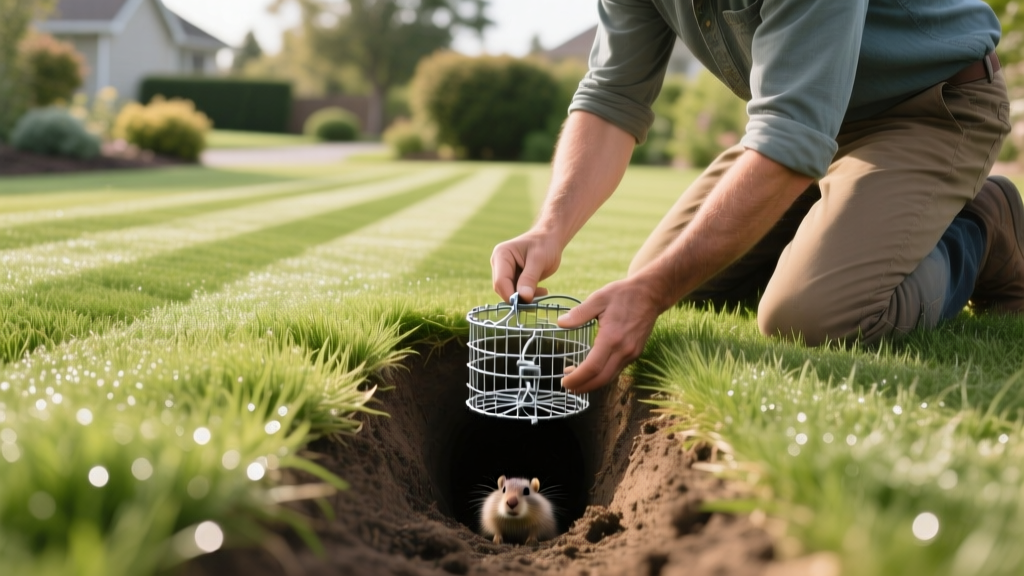
2026 Macabee Gopher Trap Placement & Mowing Patterns
David ParkPublished
The Intersection of Precision Mowing and Gopher Control
When homeowners think of lawn pest control, they rarely consider their mowing routine as a primary diagnostic tool. However, in 2026, integrated pest management (IPM) relies heavily on early detection, and your mowing techniques play a pivotal role in spotting subterranean invaders. Pocket gophers are notorious for destroying turf root systems from below, leaving behind unsightly mounds and hazardous depressions. While chemical baits and repellents offer temporary fixes, mechanical trapping remains the gold standard for eradication. Specifically, the Macabee wire trap has maintained its reputation as the most effective, reliable tool for gopher removal.
But setting the trap is only half the battle; finding the active tunnel is where most homeowners fail. This is where your mowing patterns and grass management strategies become your greatest asset. By understanding how light, shadow, and turf density interact with soil disturbances, you can transform your weekly mowing routine into a highly effective gopher-detection grid. In this guide, we will explore how to leverage advanced mowing techniques to locate gopher runs and execute flawless Macabee trap placements.
How Mowing Patterns Reveal Hidden Gopher Tunnels
Most lawn care enthusiasts mow their grass in the same direction every week, often following the perimeter and then moving inward in concentric circles. While this is efficient, it trains the grass blades to lean in a single direction, effectively masking minor topographical changes in the soil. Gophers often create shallow lateral tunnels just beneath the surface before pushing up a visible dirt mound. These tunnels cause micro-depressions in the soil that are virtually invisible to the naked eye if the grass is leaning uniformly.
The Science of Lawn Striping and Soil Depressions
By adopting alternating mowing patterns—such as diagonal stripes, checkerboards, or diamond grids—you manipulate the way sunlight reflects off the grass blades. When you mow perpendicular to your previous cut, the light and shadow contrasts are amplified. In 2026, turf managers are increasingly using these high-contrast striping techniques not just for aesthetic appeal, but as a functional way to spot the subtle, linear depressions of a gopher's lateral runway. When the sun hits a checkerboard-patterned lawn at an angle, a shallow tunnel will cast a distinct, dark shadow line across the stripes, alerting you to subterranean activity days before a fresh mound appears.
Furthermore, alternating your mowing pattern prevents soil compaction along specific wheel tracks. Compacted soil is harder for your gopher probe to penetrate when you are searching for the main run. By keeping the soil evenly aerated through varied mower paths, you ensure that your probing rod will slide smoothly through the earth, giving you accurate tactile feedback when you strike a hollow tunnel.
Optimal Mowing Heights for Trap Visibility in 2026
The height at which you set your mower deck directly impacts your ability to spot gopher mounds and safely place your Macabee traps. Scalping your lawn might expose the dirt, but it severely damages the turf's photosynthetic capacity and invites weed invasions. Conversely, letting the grass grow too tall will completely hide fresh soil plugs and make setting traps a frustrating endeavor.
| Mowing Height | Turf Health Impact | Gopher Mound Visibility | Trap Concealment & Safety |
|---|---|---|---|
| 1.5 - 2.0 Inches | Poor; high stress, weed prone | Excellent; soil fully exposed | Poor; traps visible to predators |
| 2.5 - 3.0 Inches | Optimal for most cool/warm grasses | Very Good; mounds break the canopy | Good; grass hides trap from above |
| 3.5 - 4.5 Inches | Excellent drought resistance | Fair; small mounds hidden | Excellent; deep concealment |
For the best balance of lawn health and pest detection in 2026, maintain a mowing height between 2.5 and 3.0 inches. At this height, the grass canopy is thick enough to hide the metallic gleam of a set Macabee trap from aerial predators like hawks and owls, but short enough that the distinct, fan-shaped soil mounds of a pocket gopher will push through the turf, immediately catching your eye.
Step-by-Step Macabee Wire Trap Placement
Once your mowing pattern has helped you identify a fresh mound or a linear depression, it is time to deploy the Macabee wire trap. According to the University of California Integrated Pest Management (UC IPM) program, mechanical trapping is one of the most environmentally responsible and effective methods for controlling pocket gopher populations without resorting to toxic baits that could harm local wildlife.
- Locate the Main Run: Fresh mounds are merely lateral offshoots. The main tunnel is typically 8 to 12 inches deep and runs parallel to the surface, about 12 to 18 inches away from the mound. Use a sturdy metal gopher probe to locate the main runway. You will feel a distinct 'drop' or give when the probe pierces the hollow tunnel.
- Excavate the Access Hole: Using a narrow trowel, carefully dig down to the tunnel. Create an opening just large enough to insert the trap, ensuring you do not collapse the tunnel walls. Gophers are highly sensitive to drafts and foreign debris; excessive digging will cause them to plug the tunnel and bypass your trap.
- Set the Macabee Trap: Compress the twin springs of the Macabee trap together. Engage the safety hold-back rod over the trigger pan. The Macabee Trap Company designs these traps with a highly sensitive trigger pan that requires minimal pressure to snap shut, ensuring a swift, lethal catch when the gopher investigates the breach.
- Secure and Place: Tie a length of baling wire or heavy-duty paracord to the trap's anchor ring, and stake the other end securely to the surface. This prevents the gopher from dragging the trap deep into its burrow system. Slide the set trap into the tunnel, facing the open runway.
- Block the Light: Gophers will immediately push dirt to block any light entering their tunnel. Place a clod of dirt or a small dark bucket over the access hole to block sunlight while still allowing the gopher to approach the trap. The grass clippings from your recent mowing can be used to gently camouflage the surface disturbance.
Navigating Your Mower Around Active Trap Zones
Safety and turf preservation are critical when mowing a lawn with active Macabee traps. Modern 2026 zero-turn mowers offer incredible maneuverability, but their heavy decks can easily crush a trap, collapse a tunnel, or sever your safety tether if you are not careful.
Always mark your trap locations with highly visible, tall fiberglass stakes or brightly colored flags that extend well above your mowing height. When approaching a marked zone, disengage the PTO (power take-off) to stop the blades, and carefully navigate around the depression. Never drive the mower wheels directly over the suspected main runway, as the weight of the machine will compact the soil and collapse the tunnel roof, effectively sealing the gopher away from your trap.
Furthermore, the EPA's Safe Pest Control guidelines emphasize the importance of mechanical controls in reducing chemical exposure in residential areas. By carefully managing your mowing route to avoid active trap zones, you maintain a safe environment for your family and pets while allowing the mechanical traps to do their work undisturbed.
Post-Catch Turf Recovery and Pattern Restoration
Once you have successfully caught a gopher, the removal process and subsequent lawn repair will temporarily disrupt your pristine mowing patterns. Remove the trap, collapse the tunnel by stepping on it or using the handle of a garden rake to break the soil roof, and fill the access hole and the original mound with a 50/50 mix of native soil and topdressing sand.
Do not immediately resume your heavy striping patterns over the repaired area. The soil needs time to settle, and the grass roots need to re-establish. Mow the repaired patch in a simple, circular pattern for the next two to three weeks to avoid stressing the recovering turf. Once the grass canopy has thickened and the soil has firmed up, you can seamlessly reintegrate the area into your alternating diagonal or checkerboard mowing grid.
Ultimately, mastering gopher control is about observation and precision. By treating your mowing routine as an active component of your pest management strategy, you ensure that no tunnel goes unnoticed and no Macabee trap is placed blindly. In 2026, the most successful lawns are those where cultural practices and mechanical controls work in perfect, striped harmony.