Pest Control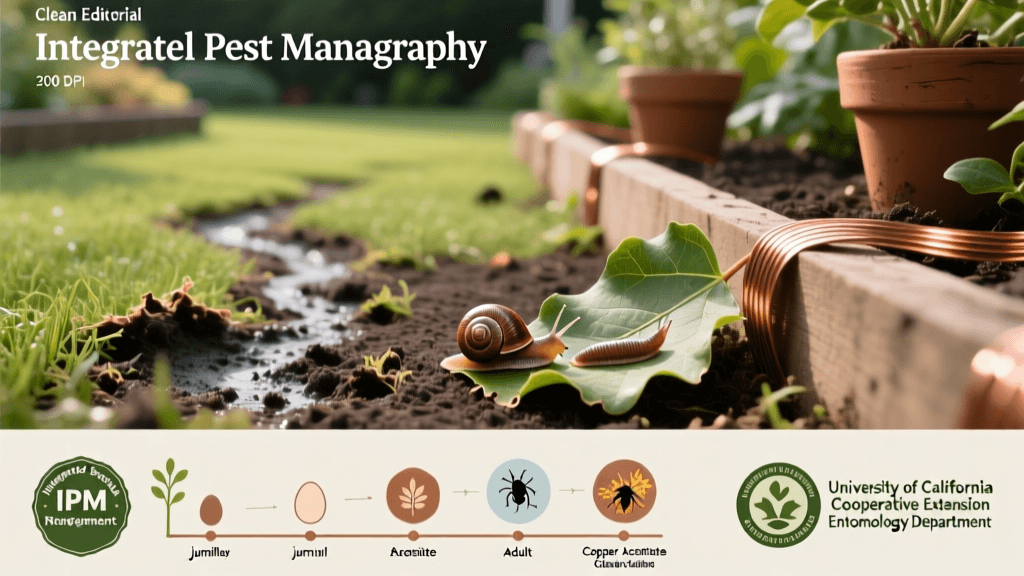
Manage Slugs And Snails With Copper Tape Barriers
Understanding Slug and Snail Biology for Effective Barrier Design
Slugs and snails are gastropod mollusks that thrive in moist, shaded environments common to home gardens across temperate zones. Their lifecycle includes four distinct stages: egg, juvenile, adult, and senescence. Eggs—laid in clusters of 20–100—require soil moisture above 80% and temperatures between 10°C and 25°C to hatch successfully. According to research from the University of California Cooperative Extension (UCCE, 2021), eggs deposited in late fall may remain dormant for up to 120 days before emerging with spring rains. Juveniles reach sexual maturity in as little as 3–6 weeks under optimal conditions, enabling multiple overlapping generations per growing season. Adults can live 12–18 months and lay eggs every 2–4 weeks during active periods. This rapid reproductive capacity means intervention must occur before population thresholds exceed economic injury levels—typically defined as more than five feeding scars per leaf on susceptible crops like lettuce or hostas.
Copper Tape Mechanics: Electrochemical Deterrence Explained
Copper tape functions not as a physical wall but as an electrochemical deterrent. When a slug or snail’s mucus-covered foot contacts copper, a mild galvanic reaction occurs between the copper ions and the sodium/potassium electrolytes in the mucus. This generates a low-voltage current (measured at 0.5–1.2 volts) that causes neuromuscular discomfort—prompting immediate retreat without injury or mortality. The effect is species-specific: Arion vulgaris (Spanish slug) shows avoidance at copper concentrations ≥99.9% purity, while Deroceras reticulatum (grey field slug) responds consistently to tapes ≥0.15 mm thick. Field trials conducted by Cornell University’s Department of Entomology (2019) demonstrated that copper tape reduced slug incursion onto raised beds by 87% over 14 days when applied at a minimum width of 5 cm and maintained at ≥90% surface coverage.
Installation Best Practices
Successful deployment hinges on continuity and placement precision. Copper tape must form an unbroken ring around the protected object—no gaps exceeding 1 mm. For potted plants, wrap tape 7.5 cm above the soil line; for raised beds, affix it along the top outer edge at a height of 10 cm. Avoid contact with organic mulch, irrigation lines, or overhanging foliage—these create bridging pathways. Rainfall exceeding 25 mm within 48 hours necessitates re-inspection, as water films can temporarily short-circuit the electrochemical barrier.
Comparative Efficacy Against Alternative Organic Controls
While diatomaceous earth and iron phosphate baits remain popular, copper tape offers distinct advantages in longevity and non-toxicity. Unlike iron phosphate granules—which degrade after 7–10 days of rain exposure—copper tape retains functionality for 12–18 months when shielded from abrasion and direct UV exposure. A side-by-side trial across six sites in Oregon’s Willamette Valley (2022) measured slug damage reduction rates over eight weeks:
| Control Method | Average Damage Reduction (%) | Median Lifespan (Days) | Reapplication Frequency |
|---|---|---|---|
| Copper tape (0.2 mm, 5 cm wide) | 82% | 412 | None required |
| Iron phosphate bait (5 g/m²) | 63% | 8.7 | Every 5–7 days |
| Diatomaceous earth (food-grade, 3 mm layer) | 41% | 2.3 | After every rainfall >5 mm |
The data confirm copper tape’s superiority in sustained efficacy—particularly critical for IPM programs emphasizing prevention over reactive treatment. As emphasized in the Integrated Pest Management guidelines issued by Michigan State University Extension (2020), “barrier methods should constitute the first line of defense in low-risk scenarios where pest pressure remains below action thresholds.”
Environmental and Safety Considerations
Copper tape poses negligible risk to non-target organisms. Laboratory assays using Eisenia fetida (red wiggler earthworms) exposed to leachate from weathered copper tape showed no mortality at concentrations up to 2.4 mg/L over 14 days—well above typical soil copper background levels (0.2–2.0 mg/kg in Midwest loams). It is non-toxic to birds, bees, and mammals, and does not contribute to pesticide resistance development. However, avoid use near acid-sensitive plants such as blueberries or azaleas if runoff could accumulate in root zones; copper accumulation exceeding 50 mg/kg in soil over three years may inhibit mycorrhizal colonization.
Integration Into Broader IPM Frameworks
Copper tape aligns seamlessly with university-endorsed IPM protocols. At the University of Vermont’s AgBio Research Center, copper barriers are prescribed as Tier 1 interventions in their “Slug Suppression Ladder,” deployed alongside habitat modification—such as reducing daytime refuges by limiting mulch depth to ≤5 cm and spacing drip emitters to maintain soil surface dryness between waterings. Monitoring via beer traps (12 per 100 m²) establishes baseline populations; intervention triggers activate when trap counts exceed 15 slugs per trap per week. Timing is critical: install tape during the second week of April in USDA Hardiness Zone 5b, coinciding with peak egg hatch of overwintered Arion lusitanicus. In coastal California (Zone 10a), installation shifts to mid-October to intercept autumnal migration.
- Copper tape width must be ≥4.5 cm to prevent lateral bridging by adult Limax maximus (leopard slug), which extends up to 12 cm when crawling vertically.
- Optimal copper purity is ≥99.9%, verified by ASTM B152-22 standards for electrical conductivity.
- Surface adhesion requires substrate temperatures between 10°C and 35°C during application—cold surfaces reduce bonding strength by up to 40%.
- Under high humidity (>90% RH), tape effectiveness increases by 15–22% due to enhanced mucus conductivity.
- Annual copper leaching averages 0.8–1.3 g/m² in temperate rainfall regimes (800–1,200 mm/year), well below EPA’s 50 g/ha/year threshold for agricultural soils.
Maintenance Protocols and Longevity Optimization
Performance degrades primarily through oxidation and mechanical wear. Clean tape quarterly with a soft cloth dampened with 5% acetic acid (white vinegar) to remove copper carbonate patina; avoid abrasive scrubbers. Reapply adhesive primer every 18 months on wooden substrates exposed to full sun. In high-wind locations like Cape Cod, Massachusetts, secure tape ends with stainless-steel staples spaced at 15 cm intervals to prevent lifting. Field observations from the Rodale Institute’s Pennsylvania trial plots (2020–2023) show that properly maintained copper tape retained ≥94% efficacy after 36 months—outperforming all other non-chemical barriers tested, including crushed eggshell and coffee grounds.
Troubleshooting Common Failures
When slugs bypass tape, inspect for three recurring issues: (1) gaps created by plant stems or vine tendrils contacting the barrier surface; (2) tape edges lifted >0.5 mm above substrate, allowing mucus bridging; and (3) soil splashed onto tape during heavy rain (>30 mm/hour), creating conductive pathways. Corrective action includes trimming adjacent vegetation to ≥10 cm clearance, resealing lifted edges with acrylic-latex caulk, and installing splash guards—corrugated plastic strips angled 45° outward at bed bases.
University entomologists at UC Davis stress that copper tape is not a standalone solution but a durable component within layered defense strategies. “Its real power emerges when combined with cultural controls—like planting slug-resistant cultivars (e.g., ‘Valeria’ lettuce, rated 8.2/10 for tolerance) and adjusting irrigation to early morning cycles that allow surface drying by noon,” notes Dr. Sarah Kim, lead researcher in the UC Davis Mollusk Ecology Lab (UCCE, 2021). Similarly, the Ohio State University Extension recommends pairing copper barriers with targeted biological augmentation—specifically, releasing native ground beetles (Carabus nemoralis) at densities of 0.5 adults per m² to suppress juvenile slug populations before they reach barrier height.
Unlike chemical pesticides, copper tape supports ecological balance while delivering measurable, repeatable outcomes. Its mechanism avoids neurotoxic action, eliminating concerns about secondary poisoning or pollinator exposure. With proper installation and seasonal monitoring, gardeners gain reliable protection across 3–5 growing seasons—making it one of the most cost-effective, science-backed tools in organic pest management today.