Pest Control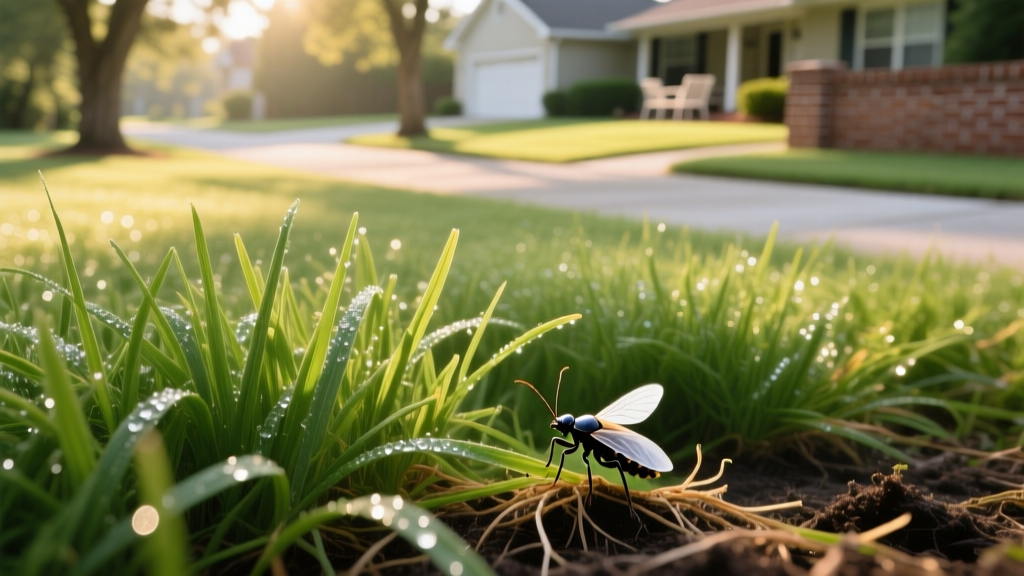
Managing Chinch Bugs in Southern Warm-Season Lawns
Emily WatsonPublished
The Southern Climate Threat: Why Chinch Bugs Thrive
For homeowners in the Deep South, the Gulf Coast, and the Transition Zone, maintaining a lush, warm-season lawn is a battle against both the elements and the pests they attract. The Southern chinch bug (Blissus insularis) is arguably the most destructive insect pest of St. Augustinegrass, and it also frequently attacks Zoysiagrass, Bermudagrass, and Centipedegrass. Unlike northern pests that are limited by freezing winters and short growing seasons, the Southern chinch bug leverages the region's intense heat, high humidity, and prolonged warm seasons to produce anywhere from three to seven generations a year, depending on your exact latitude.
In states like Florida and Texas, the warm season can stretch from early March well into November. This extended window allows chinch bug populations to explode exponentially. Furthermore, the Southern climate is characterized by periods of intense drought interspersed with heavy humidity. Chinch bugs thrive in hot, dry, sunny areas, particularly where soil is compacted or where thatch has accumulated. According to the University of Florida IFAS Extension, the combination of heat-radiating concrete surfaces (like driveways and sidewalks) and water-stressed grass creates the perfect microclimate for chinch bug eggs to hatch and nymphs to feed aggressively.
Identifying Chinch Bug Damage in Warm-Season Grasses
Chinch bug damage is notoriously difficult to diagnose early on because it closely mimics drought stress, fungal diseases like brown patch, or simple irrigation failure. Both adult and nymph chinch bugs cause damage by piercing the grass blades with their needle-like mouthparts, sucking out the plant juices, and injecting a toxic saliva that blocks the grass's vascular system. This prevents water and nutrients from moving through the plant, causing the turf to yellow, then brown, and eventually die.
Visual Symptoms and the Heat Zone Effect
Damage typically first appears as irregular, yellowing patches that quickly turn brown and die. A hallmark of chinch bug activity in the South is the "heat zone effect." Because chinch bugs prefer hot, dry environments, infestations almost always begin near concrete surfaces, south-facing slopes, or areas with poor irrigation coverage. If your lawn is dying near the driveway but remains green in the shaded, well-watered center of the yard, chinch bugs should be your primary suspect.
The "Tin Can" Flotation Test
Because the insects are small (adults are about 1/5 inch long, black with white wings, while nymphs are bright red or orange with a white band), visual inspection of the grass blades is often insufficient. The most reliable method for confirmation is the tin can flotation test, recommended by the Texas A&M Agrilife Extension.
- Take a standard metal coffee can and remove both the top and bottom lids.
- Locate the margin of a damaged patch where dying green grass meets brown, dead grass.
- Push the can about two inches deep into the soil to seal the bottom edge.
- Fill the can with water and wait for three to five minutes.
- Count the chinch bugs that float to the surface.
Treatment Threshold: If you count 20 to 25 chinch bugs per square foot (or roughly 4 to 5 per can), chemical or biological intervention is immediately necessary to prevent widespread lawn death.
Climate-Specific Prevention Strategies (IPM)
Integrated Pest Management (IPM) in the South requires adapting cultural practices to the local soil and climate. Southern soils range from the deep, fast-draining sands of coastal Florida to the heavy, alkaline clays of Central Texas. Your prevention strategy must account for these variables.
Watering and Thatch Management in the Heat
Chinch bugs despise moisture. A well-hydrated lawn can tolerate higher pest populations without showing severe damage. In sandy Southern soils, water leaches rapidly. Instead of applying one inch of water all at once, split your irrigation into two half-inch applications per week to ensure the root zone remains consistently moist without waterlogging. Conversely, in Texas clay soils, deep, infrequent watering prevents surface pooling while encouraging deep root growth.
Thatch management is equally critical. St. Augustinegrass is a vigorous grower that produces a thick layer of thatch (a tangled mat of dead and living roots/stems). A thatch layer thicker than 0.5 inches provides an ideal, humid sanctuary for chinch bugs to hide from predators and sunlight, while simultaneously blocking water and insecticides from reaching the soil. Annual core aeration and vertical mowing (dethatching) in the late spring are mandatory IPM practices for Southern lawns.
Choosing Resistant Warm-Season Cultivars
If you are establishing a new lawn or repairing large dead patches, consider planting chinch bug-resistant cultivars. Historically, 'Floratam' St. Augustinegrass was the gold standard for resistance. However, recent decades have seen chinch bug populations in Florida adapt and overcome this resistance. Today, newer dwarf and semi-dwarf cultivars like 'Captiva' and 'Palmetto' offer improved, though not absolute, resistance to the pest, according to data from Clemson University HGIC.
Treatment Options: Organic and Chemical Controls
When cultural controls fail and populations breach the threshold, targeted treatments are required. The intense Southern heat degrades many organic compounds quickly, so timing and product selection are vital.
Biological Controls and Beneficial Insects
The Southern ecosystem is rich in natural predators. The big-eyed bug (Geocoris species) is a primary natural enemy of the chinch bug and is frequently found in healthy, untreated lawns. Predatory earwigs and lacewings also consume chinch bug eggs and nymphs. To boost biological control, homeowners can apply beneficial entomopathogenic nematodes, specifically Steinernema scapterisci or Steinernema feltiae. These microscopic worms hunt chinch bug nymphs in the soil. Apply nematodes in the late afternoon or early evening to avoid UV degradation, and irrigate immediately to wash them into the thatch and upper soil layers.
Chemical Interventions and Combating Resistance
Chemical control in the South is complicated by severe insecticide resistance. Because Southern chinch bugs reproduce so rapidly, relying on a single chemical class will result in a resistant super-population within a few seasons. You must rotate Insecticide Resistance Action Committee (IRAC) modes of action.
- Neonicotinoids (IRAC Group 4A): Products containing Imidacloprid (e.g., Merit 75 WP) are highly effective against early-stage nymphs. Apply in early spring or early summer as a preventive or early curative measure. Cost: Approx. $40-$60 per acre.
- Pyrethroids (IRAC Group 3A): Active ingredients like Bifenthrin (e.g., Talstar P) or Lambda-cyhalothrin provide rapid knockdown of adults. Apply at a rate of 0.1 to 0.2 oz per 1,000 sq ft. Cost: Approx. $30 for a concentrate that treats up to 10,000 sq ft.
- Oxadiazines (IRAC Group 22): Indoxacarb (e.g., Advion) is a newer chemistry that is highly effective against pyrethroid-resistant populations. It works via bio-activation inside the insect's gut.
Application Tip: Always water liquid insecticides into the soil and thatch layer with 1/4 inch of irrigation immediately after application. Chinch bugs feed at the base of the plant and in the thatch; leaving the chemical on the grass blade surface drastically reduces efficacy and increases environmental runoff.
Regional Treatment & Monitoring Calendar
| Season | Lawn Status | IPM Action & Monitoring | Chemical Strategy |
|---|---|---|---|
| Early Spring (March - April) | Grass breaks dormancy; overwintering adults become active. | Monitor sunny edges and concrete borders. Begin proper irrigation schedules. | Apply Imidacloprid (Group 4A) as a systemic preventive if historical pressure is high. |
| Early Summer (May - June) | Peak heat; rapid nymph development and first major generation. | Perform Tin Can tests weekly. Check for yellowing near driveways. | If threshold is met, apply Bifenthrin (Group 3A) for rapid knockdown. Rotate chemistry. |
| Late Summer (July - August) | Extreme heat and drought stress; overlapping generations. | Manage thatch. Ensure irrigation is delivering 1 inch/week. Deploy nematodes. | Use Indoxacarb (Group 22) or Clothianidin to combat resistant mid-summer populations. |
| Fall (September - October) | Temperatures cool; populations decline but prepare for overwintering. | Reduce nitrogen fertilization to prevent soft, vulnerable late-season growth. | Spot treat lingering hot spots with Pyrethroids. Avoid broad-spectrum sprays to protect overwintering beneficials. |
Conclusion
Managing chinch bugs in Southern warm-season lawns is not a one-and-done application; it is a season-long commitment to cultural vigilance and strategic chemistry. By understanding how the Southern climate accelerates pest life cycles, utilizing the tin can test for accurate scouting, maintaining rigorous thatch and irrigation standards, and rotating IRAC chemical groups, you can protect your St. Augustine or Zoysia lawn from devastation. Always prioritize the long-term health of your soil and turf ecosystem, as a resilient lawn remains your strongest defense against the relentless Southern chinch bug.