Pest Control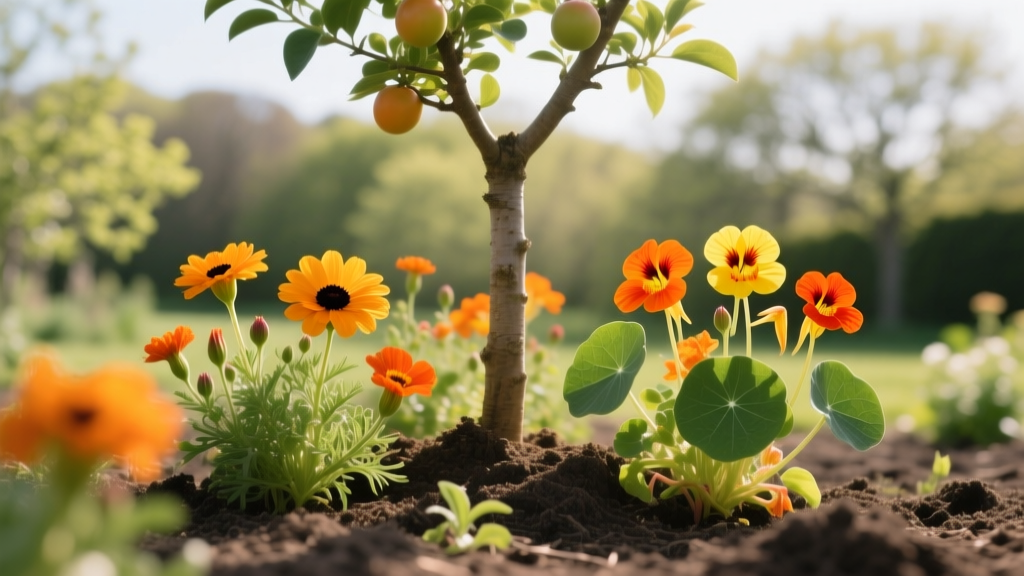
2026 Tree Planting: Marigold & Nasturtium Companions
Robert HayesPublished
The Evolution of Tree Planting Guilds in 2026
Tree selection and planting in 2026 goes far beyond simply digging a hole and dropping in a sapling. Modern arboriculture and landscape design heavily emphasize the 'tree guild'—a permaculture concept where a central tree is surrounded by a carefully selected understory of companion plants. As chemical pesticides face stricter environmental regulations and homeowners increasingly demand organic landscape solutions this year, biological pest control has become the gold standard. Among the most powerful, cost-effective, and visually striking companion plants for tree guilds are marigolds (Tagetes spp.) and nasturtiums (Tropaeolum majus).
Integrating these pest-resistant plant varieties into your tree planting strategy not only reduces the need for synthetic interventions but also builds a resilient, self-sustaining ecosystem. According to the Environmental Protection Agency (EPA) IPM Principles, utilizing biological controls and cultural practices is a foundational pillar of modern Integrated Pest Management. By pairing young or established trees with specific floral companions, you create a micro-environment that repels destructive insects, attracts beneficial predators, and improves soil biology.
Marigolds: The Subterranean Nematode Shield
When discussing pest-resistant plant varieties, the marigold is arguably the most heavily researched and widely utilized companion plant in global agriculture. However, not all marigolds are created equal. For tree planting guilds, French marigolds (Tagetes patula) and African marigolds (Tagetes erecta) are the primary choices for 2026 due to their robust root systems and high production of alpha-terthienyl.
Alpha-terthienyl is a naturally occurring photoactive compound that acts as a potent nematicide. When French marigolds are grown densely around the base of fruit and ornamental trees, their roots release this compound into the soil, effectively suppressing root-knot nematodes (Meloidogyne spp.). These microscopic soil pests are notorious for stunting the growth of young trees by destroying their fine feeder roots. The University of California Statewide Integrated Pest Management Program frequently highlights the use of specific marigold cultivars as a vital cultural control method for managing nematode populations in high-value crops and home orchards.
Top 2026 Marigold Varieties for Tree Guilds
- French Marigold 'Nemagold': Specifically bred for high alpha-terthienyl output. Ideal for planting around peach, plum, and citrus trees.
- French Marigold 'Petite Harmony': A compact variety that won't compete with the lower canopy of dwarf fruit trees while providing dense soil coverage.
- African Marigold 'Crackerjack': Taller and more robust, suitable for larger shade trees like maples and oaks where a taller understory plant is needed to compete with aggressive grasses.
Nasturtiums: The Ultimate Aerial Trap Crop
While marigolds work below the soil surface, nasturtiums (Tropaeolum majus) provide critical above-ground pest management. In the context of tree selection and planting, young saplings are highly vulnerable to sap-sucking insects like aphids, whiteflies, and scale insects. Nasturtiums serve as a highly effective 'trap crop.' Aphids are strongly attracted to the succulent, peppery leaves of the nasturtium, drawing them away from the tender new growth of your fruit and ornamental trees.
Furthermore, nasturtiums act as a 'living mulch.' Their broad, overlapping leaves shade the soil around the tree's root flare, retaining crucial spring moisture, suppressing competitive weeds, and regulating soil temperature. As the nasturtium flowers, they also produce abundant nectar, attracting hoverflies and parasitic wasps—beneficial insects that actively hunt and destroy any aphids that attempt to colonize your trees.
Recommended Nasturtium Cultivars for Tree Bases
- 'Alaska' Series: Features variegated leaves and a mounding habit, making it an excellent ground cover for apple and pear tree guilds.
- 'Jewel Mix': A compact, bushy variety that stays close to the ground, preventing it from climbing up the trunks of young trees.
- Trailing 'Empress of India': Best used on the outer edges of the tree's drip line to create a pest-repellent perimeter barrier.
Strategic Tree Pairings: What to Plant and Where
Proper spacing and selection are critical. You must plant companions far enough from the main trunk to avoid girdling the tree or creating a moist environment that encourages crown rot, yet close enough to influence the immediate soil and aerial environment. Below is the definitive 2026 companion planting matrix for common landscape and orchard trees.
| Tree Species | Primary Pest Threat | Companion Strategy | Planting Distance from Trunk |
|---|---|---|---|
| Apple & Pear | Codling Moth, Aphids | Nasturtium trap crop for aphids; Marigold to deter soil-borne fungal vectors. | 18 - 24 inches |
| Peach, Plum & Cherry | Peach Tree Borer, Nematodes | Dense French Marigold ring to suppress nematodes and mask tree scent from borers. | 24 - 36 inches |
| Citrus (Lemon, Orange) | Root-Knot Nematodes, Leafminers | African Marigolds for deep nematode control; Nasturtium as a living mulch. | 36 - 48 inches |
| Dogwood & Redbud | Dogwood Borer, Scale | Marigold perimeter to attract beneficial predatory wasps that hunt scale insects. | 24 - 30 inches |
| Oak & Maple (Young) | Gall Wasps, Aphids | Trailing Nasturtiums to shade roots and act as an aphid sink. | 36 - 48 inches |
Step-by-Step Implementation Guide for 2026
To successfully integrate these pest-resistant plant varieties into your tree planting designs this season, follow these actionable steps:
1. Site Preparation and Soil Health
Before sowing your companions, clear the area within the tree's drip line of aggressive turfgrass. Turfgrass competes heavily with young trees for water and nutrients. Do not till deeply near the tree trunk, as this will sever vital feeder roots. Instead, apply a 2-inch layer of aged compost over the soil surface.
2. Sowing Timing and Depth
In most temperate zones, wait until the danger of the last spring frost has passed and the soil temperature has reached at least 60°F (15°C). Sow marigold seeds 1/4 inch deep and nasturtium seeds 1/2 inch deep. Nasturtium seeds are large and should be soaked in warm water for 12 hours prior to planting to speed up germination.
3. Spacing and Thinning
Sow seeds in a ring around the tree, respecting the minimum planting distances outlined in the table above. Once seedlings emerge and develop their first true leaves, thin marigolds to 8-10 inches apart and nasturtiums to 12-15 inches apart. Overcrowding leads to poor air circulation, which can invite powdery mildew—a fungal issue you want to avoid in a tree guild.
4. Irrigation and Fertilization
Water the companion plants deeply but infrequently to encourage deep root growth. Avoid high-nitrogen fertilizers; excess nitrogen will cause nasturtiums to produce lush foliage at the expense of flowers, reducing their effectiveness as a trap crop and nectar source. Rely on the natural nutrient cycling of the tree guild.
Monitoring and Adapting Your IPM Strategy
Implementing companion plants is not a 'set it and forget it' solution. As part of your 2026 Integrated Pest Management routine, you must actively monitor the trap crops. When you notice aphid colonies building up on your nasturtiums, it is a signal that the trap crop is working. However, if the aphid population explodes and begins to produce winged offspring that could migrate to your tree canopy, you must intervene. Prune off the heavily infested nasturtium leaves and dispose of them in your municipal green waste bin, not your home compost pile, to prevent the pests from recycling back into your garden.
Similarly, observe the marigolds for signs of spider mites, which can occasionally become a problem during the hot, dry spells of late summer. Maintaining adequate soil moisture and avoiding broad-spectrum insecticides ensures that predatory mites remain in the guild to keep spider mite populations in check. This continuous cycle of observation, biological intervention, and cultural adjustment is the hallmark of a successful, modern landscape.
Long-Term Maintenance and Lifecycle Management
Both marigolds and nasturtiums are generally grown as annuals in most North American climates, though they can be perennial in frost-free zones. As the growing season progresses, practice the 'chop and drop' method. When marigold and nasturtium foliage begins to senesce in late summer or early autumn, cut the plants at the soil line and leave the organic matter on the surface as mulch. This returns trapped nutrients to the soil and leaves the roots in the ground to decompose, creating channels for water infiltration and releasing residual nematicidal compounds into the soil profile.
For nasturtiums, allow a few flowers to go to seed in the late summer. The seeds will drop and naturally reseed the area, providing a head start for your tree guild's pest defense system the following spring. By treating your tree planting not as a solitary event, but as the establishment of a complex, interactive ecosystem, you ensure the long-term health, vigor, and beauty of your landscape for years to come.
Conclusion
The 2026 approach to tree selection and planting recognizes that a tree is only as healthy as the ecosystem that supports it. By strategically utilizing marigolds and nasturtiums as companion plants, you harness the power of nature's own pest control mechanisms. You will spend less time and money on chemical interventions, foster a vibrant habitat for beneficial insects, and cultivate a thriving, resilient landscape that stands strong against environmental stressors.