Tree Care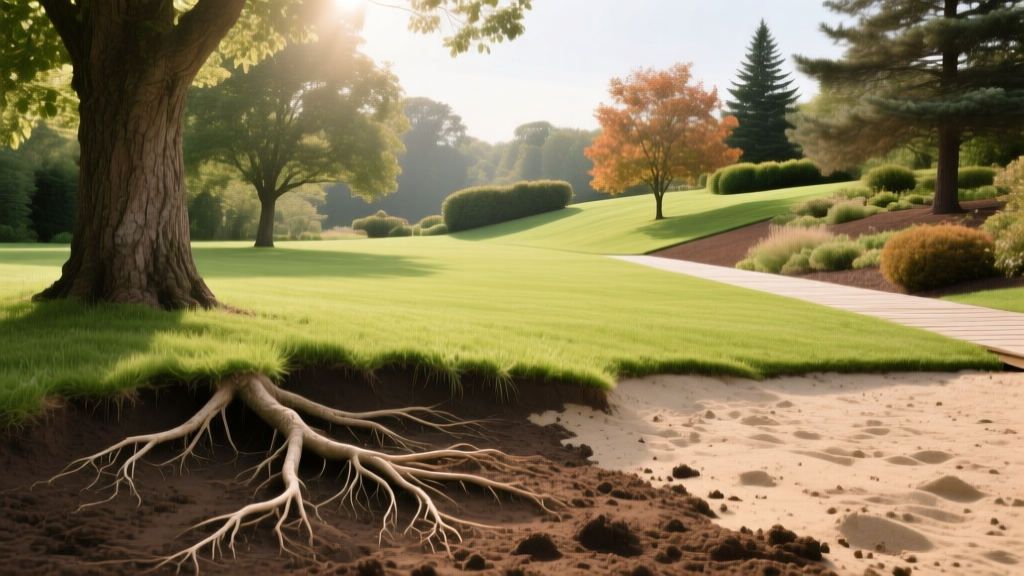
Matching Trees and Turf: The Ultimate Soil Type Guide
Mike RodriguezPublished
The Hidden Battle Beneath Your Lawn
When designing a lush, vibrant landscape, homeowners often envision majestic trees towering over a pristine, carpet-like lawn. However, beneath the surface, a silent biological battle is raging. Trees and turfgrass share the same topsoil ecosystem, competing fiercely for water, oxygen, and essential nutrients. If you plant a moisture-loving tree in a drought-tolerant lawn, or attempt to grow shade-intolerant grass beneath a dense canopy, one species will inevitably suffer. The secret to a harmonious landscape lies in understanding your soil profile and matching both your tree species and turfgrass varieties to its unique characteristics.
By aligning your tree care strategy with proper soil types and grass matching, you can eliminate resource competition, reduce fertilizer waste, and prevent the decline of your most valuable landscape assets. This guide will walk you through the exact steps to assess your soil, select compatible plant pairings, and manage the critical root zone interface.
Step 1: Accurate Soil Testing
Before purchasing a single sapling or bag of grass seed, you must understand your soil's texture (sand, silt, clay proportions), pH level, and Cation Exchange Capacity (CEC), which measures the soil's ability to hold onto nutrients. Guessing your soil type leads to costly mistakes, such as planting a Red Maple in highly alkaline clay, which triggers severe iron chlorosis.
According to the University of Minnesota Extension, a professional laboratory soil test is the only reliable way to uncover hidden deficiencies. You can order a soil testing kit from your local university extension office for approximately $15 to $30. Take core samples from the top 6 inches of soil across your yard, mix them in a clean plastic bucket, and send the composite sample to the lab. The resulting report will dictate your amendment strategy and plant selection.
Step 2: Soil Types, Tree Species, and Turfgrass Matching
Not all trees and grasses are created equal. Sandy soils drain rapidly and leach nutrients, requiring drought-tolerant, deep-rooted species. Clay soils retain water but suffer from severe compaction and poor oxygenation, demanding resilient, shallow-rooted adaptors. Below is a comprehensive matching chart to guide your landscape planning.
| Soil Type | Drainage & Traits | Ideal Tree Species | Compatible Turfgrass | Amendment Strategy |
|---|---|---|---|---|
| Sandy | Fast drainage, low nutrient retention, warms quickly in spring. | Bur Oak, Eastern Redcedar, Loblolly Pine. | Bermudagrass (e.g., TifTuf), Zoysiagrass (e.g., Meyer). | Apply 2 inches of compost before planting; use slow-release nitrogen fertilizers. |
| Clay | Poor drainage, high compaction, alkaline pH, slow to warm. | Red Maple, Honeylocust, Swamp White Oak. | Tall Fescue (e.g., Titan Rx), Kentucky Bluegrass. | Core aeration annually; apply liquid gypsum to improve flocculation. |
| Loam | Balanced drainage, high CEC, rich in organic matter. | Flowering Dogwood, River Birch, Japanese Maple. | Perennial Ryegrass, Fine Fescue blends. | Maintain with standard NPK ratios; top-dress with compost bi-annually. |
Managing Sandy Soils
In sandy environments, water and water-soluble nutrients wash away before tree roots can absorb them. When planting trees like the Bur Oak in sandy soil, avoid amending the backfill with heavy peat moss, which creates a 'bathtub effect' that dries out faster than the surrounding native sand. Instead, rely on the University of Minnesota Extension recommendation to plant the tree at the correct depth in native soil and rely on surface mulch to retain moisture. For the turf, choose warm-season grasses like Bermudagrass, which thrive in heat and tolerate the rapid drying cycles of sandy soils.
Managing Heavy Clay Soils
Clay soils are notoriously hostile to tree roots due to a lack of pore space for oxygen. Trees like the Honeylocust and Red Maple have evolved to tolerate these hypoxic conditions. However, clay also suffocates turfgrass roots, leading to shallow root systems and summer dormancy. To support both, you must alleviate compaction. Rent a core aerator (typically $50-$80 per day) to pull 3-inch soil plugs from the lawn every fall. For the tree's root zone, apply a liquid gypsum product like Soil Logic Liquid Gypsum at a rate of 2 ounces per 1,000 square feet to help bind clay particles into larger aggregates, improving water infiltration without the need for disruptive tilling.
Step 3: The Drip Line Rule and Root Zone Interface
The most common mistake in tree care is attempting to grow turfgrass directly up to the trunk of a maturing tree. As the tree canopy expands, it intercepts rainfall and blocks sunlight, causing the grass below to thin and die. Bare, compacted soil around a tree trunk invites disease and lawnmower damage.
The Actionable Solution: Establish a 'Drip Line Rule'. Measure the distance from the tree trunk to the outer edge of its longest branches (the drip line). Remove all turfgrass within at least half of this radius, and ideally out to the full drip line as the tree matures. Replace the removed turf with a 3-inch layer of organic hardwood mulch. This eliminates competition for water and creates a dedicated zone for tree root expansion.
Step 4: Mulching as a Soil Mediator
Mulch is the ultimate referee in the tree-versus-turf conflict. It mimics the natural forest floor, regulating soil temperature, retaining moisture, and slowly adding organic matter to the soil profile as it decomposes. However, improper mulching can kill both the tree and the adjacent lawn.
According to guidelines on proper landscape mulching from the University of Minnesota Extension, you should maintain a mulch ring that is 3 to 4 inches deep. Crucially, you must keep the mulch at least 3 inches away from the actual tree trunk to prevent bark rot and rodent damage—a mistake commonly known as 'volcano mulching.' By maintaining a clean, mulched border between the tree's root flare and the lawn's edge, you prevent string trimmers from girdling the tree's vital cambium layer while providing a clean edge for turfgrass maintenance.
Step 5: Resolving the Fertilization Conflict
Trees and grass have vastly different nutritional requirements, which creates a massive conflict when they share the same soil. Turfgrass requires high levels of Nitrogen (N) to maintain its green color and density, often demanding 2 to 4 pounds of Nitrogen per 1,000 square feet annually. Trees, conversely, do not need high Nitrogen; excessive Nitrogen forces trees to produce rapid, weak, sappy growth that is highly susceptible to aphids, borers, and wind damage.
If you broadcast a high-nitrogen turf fertilizer like Scotts Turf Builder UltraFeed over a tree's root zone, you risk compromising the tree's structural integrity and defense mechanisms.
The Deep Root Injection Strategy
To resolve this, separate your fertilization protocols. For the lawn, use slow-release, granular fertilizers applied specifically to the sunlit turf areas. For the trees, utilize deep root liquid injection. This process involves using a soil probe to inject a balanced, low-nitrogen, high-phosphorus and potassium fertilizer (such as a 1-2-1 NPK ratio with micronutrients) directly into the root zone at a depth of 6 to 8 inches, bypassing the turfgrass roots entirely.
- Timing: Perform deep root fertilization in late fall (after leaf drop) or early spring (before bud break).
- Cost: Professional arborists typically charge $12 to $18 per inch of trunk caliper (measured at 4.5 feet above grade). A 10-inch caliper Oak will cost approximately $120-$180 to treat, a worthy investment compared to the cost of tree removal.
- Placement: Inject the fertilizer in a grid pattern starting 2 feet from the trunk and extending 3 feet past the drip line, where the tree's most active feeder roots are located.
Conclusion: Harmony Through Soil Science
Matching trees and turfgrass to your specific soil type is not just an aesthetic choice; it is a fundamental requirement for long-term landscape health. By investing $20 in a professional soil test, selecting species adapted to your native dirt, and establishing physical boundaries through proper mulching and deep-root fertilization, you can end the underground war. When trees and turf are matched correctly to their soil environment, both will thrive, providing your home with enduring shade, beauty, and ecological value.