Tree Care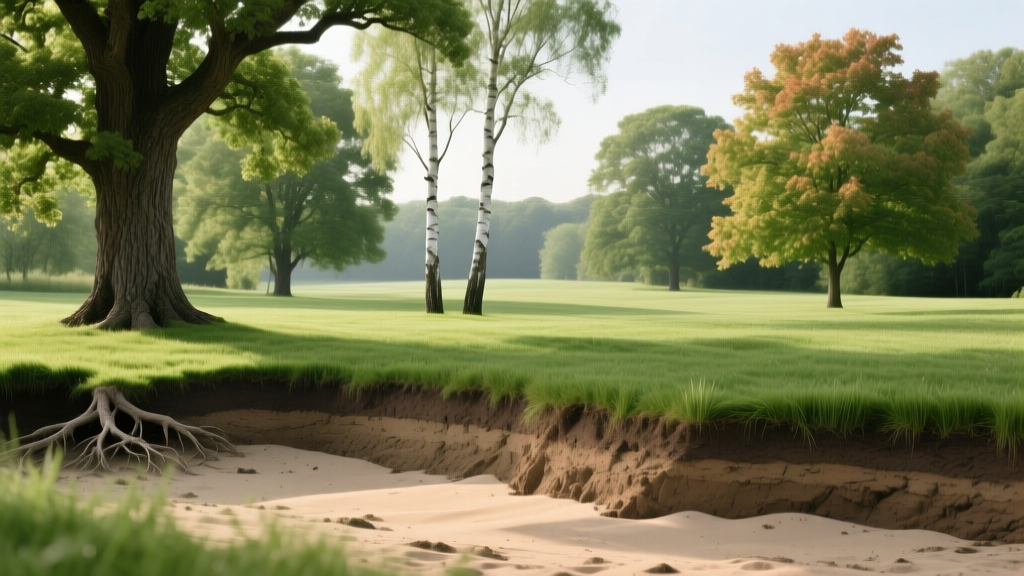
How to Match Trees and Turfgrass to Your Soil Type
Emily WatsonPublished
The Hidden Battle Beneath Your Lawn
When designing a landscape, homeowners often focus on the visual harmony between towering trees and lush, green lawns. However, beneath the surface, a silent war for resources is constantly unfolding. Trees and turfgrass are natural competitors. In a wild forest ecosystem, trees dominate, shading out grasses and creating a woodland floor. In a manicured lawn, turfgrass is given the advantage through constant mowing, watering, and fertilizing. When you force these two distinct plant types to share the same space, the soil becomes the ultimate mediator.
Matching the right tree species and the right turfgrass cultivar to your specific soil type is not just an aesthetic choice; it is a fundamental requirement for long-term landscape health. By understanding your soil's texture, drainage, and nutrient-holding capacity, you can minimize root competition, reduce maintenance costs, and cultivate a thriving tree-grass interface.
Understanding the Tree-Grass Root Interface
To successfully match plants to your soil, you must first understand root architecture. Turfgrass roots are incredibly dense but relatively shallow, typically occupying the top 2 to 6 inches of the soil profile. Tree roots, contrary to popular belief, do not mirror the tree's canopy in a deep taproot system. While anchor roots go deep, the vast majority of a tree's critical feeder roots—responsible for absorbing water and nutrients—are located in the top 12 to 18 inches of soil.
The greatest mistake in landscape design is treating the tree and the lawn as separate entities. Beneath the surface, they are engaged in a silent war for resources, and the soil is their battlefield.
Because both plants are drawing from the same shallow soil horizon, selecting species that are naturally adapted to your native soil type reduces the need for intensive, conflicting maintenance routines.
Clay Soils: Managing Compaction and Moisture
Clay soils are characterized by tightly packed, microscopic particles. They hold water and nutrients exceptionally well but suffer from poor drainage, low oxygen levels, and severe compaction. Turfgrass often struggles in clay because shallow roots can drown during heavy rains or bake into a concrete-like surface during summer droughts. Trees planted in clay can suffocate if their root flares are buried or if the soil is compacted by foot traffic.
Best Tree and Grass Matches for Clay
- Trees: Bald Cypress (Taxodium distichum), River Birch (Betula nigra), Willow Oak (Quercus phellos), and Red Maple (Acer rubrum). These species are highly tolerant of periodic waterlogging and heavy soils.
- Turfgrass: Tall Fescue (cool-season) and Zoysiagrass (warm-season). Tall Fescue develops deeper roots than most cool-season grasses, allowing it to penetrate dense clay, while Zoysia forms a thick, wear-resistant mat that handles heavy soil well.
Actionable Management Strategy
For clay soils, aeration is your best defense. Perform core aeration on your lawn in the early fall, charging between $15 to $25 per 1,000 square feet if hiring a professional. Around the tree's drip line, avoid using heavy mechanical aerators that could sever shallow tree roots. Instead, use a broadfork or an AirSpade service to gently alleviate compaction. Never add topsoil or mulch directly over the root flare of a tree planted in clay, as this traps moisture and invites fatal root rot.
Sandy Soils: Overcoming Nutrient Leaching
Sandy soils feature large particle sizes, resulting in rapid drainage and low Cation Exchange Capacity (CEC). This means water and essential nutrients leach away quickly before plant roots can absorb them. While trees and grasses in sandy soil rarely suffer from root rot, they frequently face drought stress and nutrient deficiencies.
Best Tree and Grass Matches for Sand
- Trees: Eastern Redcedar (Juniperus virginiana), Loblolly Pine (Pinus taeda), Ginkgo (Ginkgo biloba), and Crape Myrtle (Lagerstroemia). These species are highly drought-tolerant and adapted to low-fertility environments.
- Turfgrass: Bermudagrass and Centipedegrass. Both are aggressive, warm-season grasses that thrive in well-draining, slightly acidic sandy soils and possess excellent drought recovery.
Actionable Management Strategy
The key to managing sandy soil is 'spoon-feeding' nutrients and utilizing slow-release products. Instead of applying a heavy dose of synthetic fertilizer that will wash away with the next rain, use organic or slow-release nitrogen sources like Milorganite or Espoma Organic Tree-tone. Apply fertilizers in smaller, more frequent doses. For watering, turfgrass requires light, frequent irrigation to keep the shallow root zone moist, whereas trees benefit from deep, infrequent soaking. Installing a sub-surface drip irrigation line specifically for the tree's root zone beneath the grass canopy is a highly effective, albeit costly ($500-$1,500), solution to this watering paradox.
Loamy Soils: The Ideal but Competitive Environment
Loam is the 'Goldilocks' of soil types—a balanced mixture of sand, silt, and clay that offers excellent drainage, moisture retention, and nutrient availability. Because loam is an ideal growing medium, both trees and turfgrass will grow vigorously, leading to intense competition for sunlight and space.
Best Tree and Grass Matches for Loam
- Trees: White Oak (Quercus alba), Tulip Poplar (Liriodendron tulipifera), Sugar Maple (Acer saccharum), and American Linden (Tilia americana).
- Turfgrass: Kentucky Bluegrass and Perennial Ryegrass. These grasses form dense, lush carpets that maximize the potential of loamy soils.
Actionable Management Strategy
In loamy soils, the primary management strategy is establishing strict physical boundaries between the tree and the grass. Turfgrass should never be allowed to grow directly up to the trunk of a tree. String trimmers and lawnmowers cause mechanical damage to tree bark, creating entry points for pests and diseases. Establish a dedicated mulch ring around every tree to eliminate grass competition in the most critical root zone.
Soil and Species Matching Chart
| Soil Type | Drainage Profile | Recommended Trees | Matching Turfgrass | Key Maintenance Focus |
|---|---|---|---|---|
| Clay | Poor / Slow | River Birch, Willow Oak | Tall Fescue, Zoysia | Core aeration, preventing grade changes over roots |
| Sandy | Excessive / Fast | Loblolly Pine, Ginkgo | Bermuda, Centipede | Slow-release fertilizers, deep drip irrigation |
| Loam | Moderate / Ideal | White Oak, Sugar Maple | Kentucky Bluegrass | Strict mulch rings, managing canopy shade |
| Silt | Moderate / Poor | Sycamore, Green Ash | Perennial Ryegrass | Erosion control, avoiding soil crusting |
The pH Factor: Finding the Overlap
Soil texture is only half the equation; soil pH dictates nutrient availability. Most turfgrasses prefer a slightly acidic to neutral pH range of 6.0 to 7.0. However, many popular landscape trees, such as Pin Oaks, Pines, and Magnolias, prefer more acidic conditions (pH 5.0 to 6.0). If you plant an acid-loving tree in a lawn optimized for grass, the tree may develop iron chlorosis, characterized by yellowing leaves with green veins.
To manage this, aim for a compromise pH of 6.0 to 6.5. You can determine your exact soil pH and texture by utilizing the USDA NRCS Web Soil Survey or by sending a sample to your local university extension office. If the soil is too alkaline for your trees, apply elemental sulfur or iron sulfate to the soil surface, though be aware that altering the pH of an established lawn is a slow, multi-year process.
Best Practices for the Tree-Grass Boundary
The 3-3-3 Mulching Rule
Proper mulching is the single most effective way to protect trees from grass competition and lawnmower damage. According to the Arbor Day Foundation, you should follow the 3-3-3 rule: apply a mulch ring that is 3 inches deep, extends 3 feet out from the trunk, and is kept 3 inches away from the actual bark of the tree. Never pile mulch against the trunk in a 'volcano' shape, as this traps moisture and encourages rot.
Smart Watering Techniques
Trees and grass have vastly different watering requirements. A mature lawn generally requires about 1 to 1.5 inches of water per week, applied in short bursts. Conversely, trees require deep, infrequent watering to encourage structural root growth. As noted by the University of Minnesota Extension, a good rule of thumb for trees is to provide 10 to 15 gallons of water per inch of trunk diameter each week during the growing season. Relying solely on your lawn's sprinkler system will keep tree roots near the surface, making them vulnerable to drought and windthrow during storms. Use a soaker hose coiled around the tree's drip line for 2 to 3 hours once a week to ensure deep soil penetration without waterlogging the turfgrass.
Fertilizing with Caution
Turfgrass fertilizers are typically high in nitrogen to promote rapid blade growth. If you apply heavy lawn fertilizers over a tree's root zone, you may force the tree to produce excessive, weak top growth that is highly susceptible to wind damage and sap-sucking insects like aphids. When feeding the lawn near mature trees, use a balanced, slow-release fertilizer, and rely on the natural decomposition of fallen leaves and mulch to provide the tree with necessary micronutrients.
Conclusion
Achieving a picturesque landscape where majestic trees and pristine lawns coexist requires more than just hard work; it requires ecological strategy. By identifying your native soil type and carefully selecting tree species and turfgrass cultivars that share similar environmental preferences, you can drastically reduce the friction at the tree-grass interface. Implement targeted aeration for clay, slow-release feeding for sand, and strict mulch boundaries for loam. When you work with your soil rather than against it, both your trees and your turf will thrive for decades to come.
