Tree Care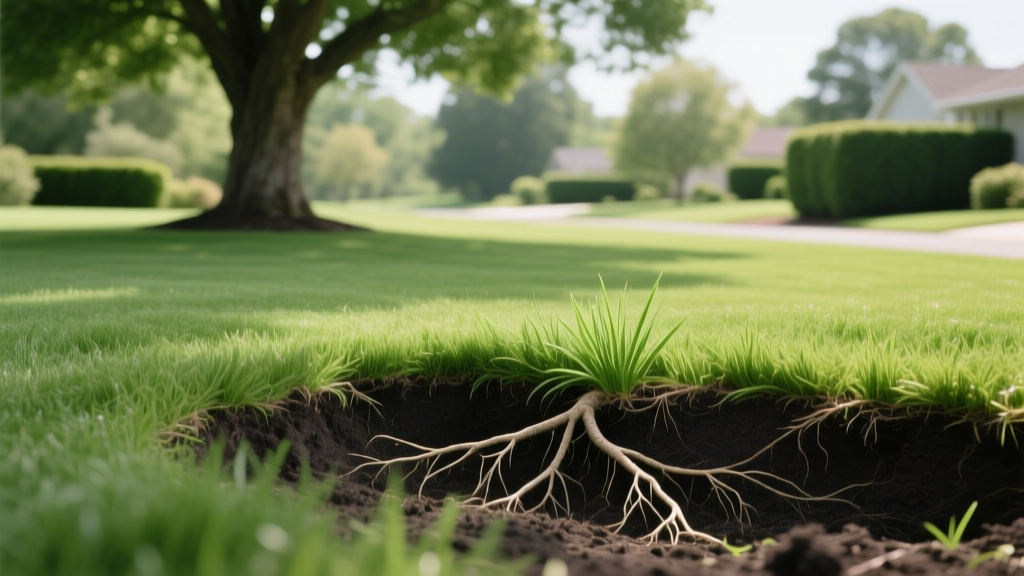
How To Match Turfgrass And Soil Types For Tree Health
Lisa ThompsonPublished
The Hidden Battle Beneath Your Lawn: Trees vs. Turfgrass
When homeowners design their landscapes, they often view trees and turfgrass as complementary features. However, from an arboricultural perspective, trees and grass are natural competitors. Trees evolved in forest ecosystems characterized by deep, fungal-rich, shaded soils covered in decaying leaf litter. In contrast, turfgrasses evolved in open prairies with full sun exposure, frequent ecological disturbances, and bacterial-rich topsoil. When we plant grass right up to the trunk of a tree, we force two disparate ecosystems to compete for the same top six inches of soil, leading to severe root competition, water stress, and nutrient deficiencies.
The key to mitigating this conflict lies in understanding your soil type. Soil texture—whether it is predominantly clay, sand, or loam—dictates water holding capacity, aeration, and nutrient availability. By matching the correct turfgrass species to your specific soil type, you can minimize competition, reduce the need for excessive irrigation, and promote the long-term health of your trees. This guide will walk you through assessing your soil and selecting the best understory grass to support your tree's root zone.
The Ecological Mismatch: Why Soil Type Matters
The majority of a tree's fine, water-absorbing feeder roots are located in the top 12 to 18 inches of soil, directly overlapping with the primary root zone of most turfgrasses. If you plant a water-thirsty grass in heavy clay soil beneath a shallow-rooted tree like a Norway Maple, the frequent, shallow watering required by the grass will cause the clay to become waterlogged. This displaces vital oxygen in the soil pores, effectively suffocating the tree's feeder roots and leading to canopy dieback.
Conversely, if you have sandy soil and plant a drought-intolerant grass beneath a deep-rooted Oak, the rapid drainage will force you to overwater the lawn, which can lead to shallow root development in the tree and increase susceptibility to windthrow during storms. Matching your grass to your soil type ensures that the watering and maintenance schedules required for the lawn align with the physiological needs of the tree.
How to Test Your Soil in the Tree Root Zone
Before selecting a grass seed or sod, you must accurately determine the soil texture within the tree's drip line (the area directly beneath the outer circumference of the tree's branches). While professional laboratory testing is always recommended for precise pH and nutrient data, you can determine your soil texture at home using the Mason Jar Test. According to soil scientists at the University of Minnesota Extension, understanding your soil's physical composition is the first step in proper landscape management.
The Mason Jar Soil Test
- Step 1: Dig a small hole about 6 inches deep within the tree's drip line and extract a soil sample. Avoid the very top layer of organic mulch or thatch.
- Step 2: Place one cup of the soil into a large, clear mason jar.
- Step 3: Fill the jar with water, leaving an inch of space at the top. Add a teaspoon of dish soap or water softener to help separate the particles.
- Step 4: Shake vigorously for three minutes, then let the jar sit undisturbed for 24 to 48 hours.
- Step 5: Observe the layers. Sand will settle at the bottom within minutes, silt will form the middle layer over a few hours, and clay will remain suspended at the top before finally settling. The relative thickness of each layer reveals your soil type.
Matching Grass Varieties to Soil Types for Tree Health
Once you have identified your soil type, you can select a turfgrass that thrives in those conditions while minimizing negative impacts on the tree. Here is how to match grass to the three primary soil types.
1. Clay Soils: The Compaction Challenge
Clay soils consist of microscopic, plate-like particles that pack tightly together. They hold water and nutrients exceptionally well but suffer from poor drainage and severe compaction. Tree species that tolerate clay include Oaks, Maples, and Ash. However, their roots require periods of dry soil to access oxygen.
The Grass Match: Avoid Kentucky Bluegrass, which requires frequent, shallow watering that will keep clay soils perpetually saturated. Instead, plant Tall Fescue (Festuca arundinacea) or Fine Fescue blends. Tall Fescue features deep, extensive root systems that can penetrate compacted clay and requires deeper, less frequent watering. This watering schedule allows the clay soil to dry out slightly between irrigations, restoring oxygen to the tree's root zone. Cultivars like 'Defiance XRE' or 'Titan Ultra' offer excellent shade tolerance and drought resistance.
2. Sandy Soils: The Drainage Dilemma
Sandy soils have large pore spaces, resulting in rapid drainage and poor nutrient retention. Trees adapted to sandy soils, such as Pines, Birches, and Cedars, often develop deep taproots to chase the water table. The challenge here is that turfgrass in sandy soil requires frequent, light watering, which rarely penetrates deep enough to benefit the tree and encourages the tree to develop surface roots to compete for the moisture.
The Grass Match: Choose grasses with high drought tolerance and low water requirements so you are not forced to constantly irrigate the surface. Zoysiagrass (Zoysia japonica) is an excellent warm-season option that forms a dense mat, suppressing weeds and requiring minimal water once established. For cool-season climates, Creeping Red Fescue (Festuca rubra) is ideal. It thrives in the shade of pine canopies, requires very little supplemental irrigation, and does not compete aggressively for water, allowing moisture to percolate down to the tree's deeper roots.
3. Loam Soils: The High-Competition Zone
Loam is a balanced mixture of sand, silt, and clay. It offers ideal drainage, moisture retention, and aeration. Because loam is the "perfect" soil, both trees and grasses will grow vigorously, leading to intense competition for nutrients and space.
The Grass Match: In loam soils, the goal is to choose a grass that is less aggressive and requires lower nitrogen inputs. High-nitrogen lawn fertilizers can stimulate excessive, weak top-growth in trees, making them susceptible to pests and storm damage. Opt for Supina Bluegrass (Poa supina) or Hard Fescue. These grasses are highly shade-tolerant, form a lower-growing canopy that reduces moisture evaporation from the soil, and thrive on minimal fertilization, keeping the nutrient balance in favor of the tree.
Data Table: Soil-Tree-Grass Matching Matrix
| Soil Type | Characteristics | Compatible Tree Species | Recommended Turfgrass | Watering Strategy for Tree Health |
|---|---|---|---|---|
| Heavy Clay | Poor drainage, high compaction, low oxygen | Oak, Maple, Ash, Linden | Tall Fescue, Fine Fescue | Deep, infrequent watering (1 inch every 10 days) to allow soil aeration. |
| Sandy | Fast drainage, low nutrients, drought-prone | Pine, Birch, Cedar, Spruce | Zoysiagrass, Creeping Red Fescue | Infrequent, targeted deep-root watering via soaker hoses at the drip line. |
| Loam | Balanced texture, high biological activity | Most ornamental and shade trees | Supina Bluegrass, Hard Fescue | Moderate watering; reduce nitrogen fertilizer to prevent tree weak-growth. |
The Role of Allelopathy and Soil Chemistry
When matching grass to soil, you must also consider allelopathy—a biological phenomenon where certain trees release biochemicals into the soil to inhibit the growth of competing plants. The Black Walnut (Juglans nigra) is the most famous example, releasing a chemical called juglone from its roots, leaves, and nut husks.
Soil type heavily influences allelopathic toxicity. In heavy clay soils, juglone binds to clay particles and persists in the root zone for years, making it nearly impossible for standard turfgrasses to survive. In sandy soils, juglone is more easily leached away by rainfall. If you have a Black Walnut or Tree of Heaven growing in clay soil, abandon the idea of planting turfgrass entirely. Instead, utilize a 3-inch layer of organic wood chip mulch, which mimics the natural forest floor and prevents soil compaction without introducing a competing plant species.
Best Practices for Managing the Tree Root Zone
Even with the perfect grass-to-soil match, the immediate area surrounding the tree trunk requires special care. Turfgrass should never be allowed to grow directly against the tree trunk. The constant moisture trapped by grass against the bark can lead to fungal infections, root rot, and provide a hiding place for bark-gnawing rodents.
According to the Arbor Day Foundation, proper mulching is one of the most beneficial practices for tree health, but it must be done correctly to avoid suffocating the root flare. Follow these actionable steps to manage the transition zone between your lawn and your tree:
- The 3-3-3 Rule: Create a mulch ring around the tree that is 3 inches deep, 3 feet in radius (minimum), and kept 3 inches away from the actual trunk. This eliminates grass competition in the most critical root zone while preventing trunk rot.
- Edge Carefully: When edging the lawn near trees, never use a mechanical edger or trenching shovel within the drip line. Slicing through the soil severs the tree's vital lateral roots. Use a flexible steel spade to manually cut a clean edge without deep trenching.
- Aerate with Caution: If your lawn suffers from compaction, core aeration is generally beneficial. However, use a shallow aerator (no deeper than 2 inches) within the tree's drip line to avoid tearing the fine feeder roots located just below the surface.
Conclusion
Managing the intersection of trees and turfgrass requires a shift in perspective. Instead of treating your lawn as a uniform carpet, view it as a dynamic ecosystem that interacts directly with the trees above it. By taking the time to test your soil texture and matching it with a compatible, low-competition turfgrass variety, you can drastically reduce water waste, prevent root suffocation, and ensure your trees remain structurally sound and vibrant for decades. Remember that in many cases, the best grass for the area directly beneath a mature tree is no grass at all—replaced instead by a thoughtful, well-maintained mulch ring that honors the tree's natural forest origins.