Gardening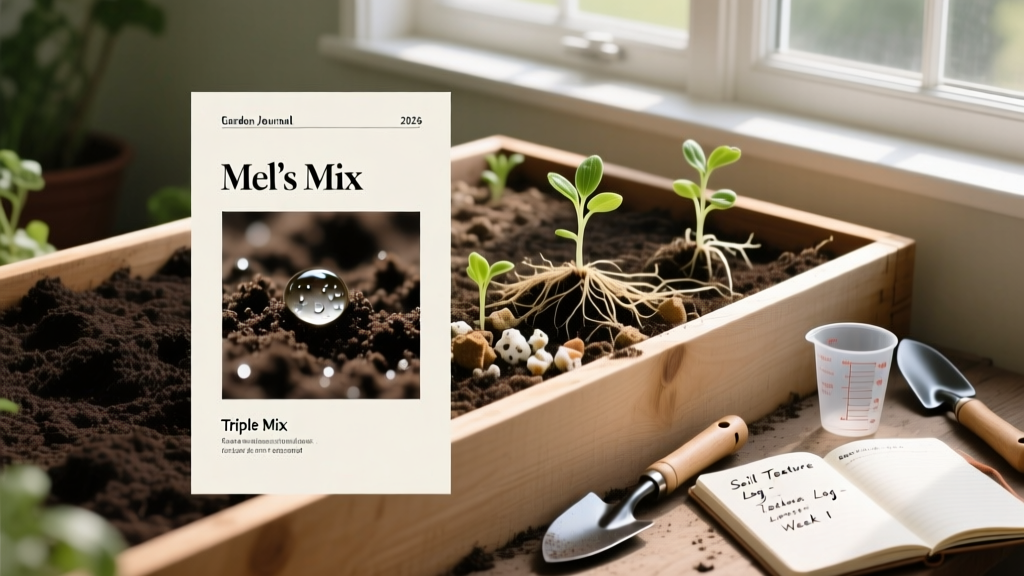
Mel's Mix vs Triple Mix: 2026 Visual Soil Journal Guide
Mike RodriguezPublished
Introduction to the 2026 Visual Soil Experiment
As gardeners, we often obsess over what goes into our raised beds, but we rarely take the time to visually document how those soil choices impact our plants over time. In 2026, the debate between Mel's Mix and Triple Mix remains at the forefront of raised bed gardening. Mel's Mix, the cornerstone of the Square Foot Gardening method, promises a lightweight, fluffy, and nutrient-dense environment. Triple Mix, a traditional blend of topsoil, compost, and organic matter, offers a heavier, more mineral-rich foundation. But how do they actually perform side-by-side?
Rather than relying solely on end-of-season harvest weights, modern gardeners are turning to garden photography and visual documentation to track soil health, moisture retention, and plant vigor. By treating your garden as a living laboratory and using your camera as a scientific tool, you can create a stunning visual soil journal. This guide will walk you through setting up a side-by-side raised bed experiment and using photography to capture the nuanced differences between these two legendary soil recipes throughout the 2026 growing season.
The Recipes: Mel's Mix vs. Triple Mix
Before we set up the cameras, we must understand the subjects of our visual study. Both mixes have evolved slightly by 2026, particularly regarding sustainability. The Square Foot Gardening Foundation continues to advocate for the original ratios, though modern gardeners heavily favor coco coir over peat moss to protect endangered peat bogs. Similarly, the University of Minnesota Extension notes that coco coir provides superior rewetting capabilities compared to traditional peat, making it the preferred choice for both mixes this year.
Mel's Mix Recipe
- 1/3 Blended Compost (ideally from 5+ different sources for microbial diversity)
- 1/3 Coarse Vermiculite (for aeration and water retention)
- 1/3 Coco Coir (rehydrated and buffered)
Triple Mix Recipe
- 1/3 High-Quality Topsoil (mineral-rich, screened)
- 1/3 Compost (well-rotted manure or municipal compost)
- 1/3 Coco Coir or Peat Moss (for organic matter and moisture)
| Feature | Mel's Mix | Triple Mix |
|---|---|---|
| Primary Texture | Fluffy, loose, uniform | Dense, structured, variable |
| Weight | Very Lightweight | Heavy |
| Drainage Speed | Rapid | Moderate to Slow |
| Best Photographic Subject | Macro root shots, seedling emergence | Soil structure, cracking, earthworm activity |
Setting Up Your Side-by-Side Photo Documentation
To accurately compare these soils, you need a controlled environment. Build two identical raised beds (4x4 feet is ideal) and place them in the exact same sunlight conditions. Fill Bed A with Mel's Mix and Bed B with Triple Mix. Plant the exact same varieties—such as 'Early Girl' tomatoes and 'Dragon Tongue' bush beans—in identical grid layouts.
The key to scientific garden photography is consistency. Establish a fixed camera station. Use a sturdy tripod with a heavy base to prevent wind shake, and mark the exact leg positions on the ground with garden stakes. This ensures that every weekly photo is taken from the exact same focal length, angle, and distance. In 2026, many gardeners use weatherproof outdoor camera enclosures paired with intervalometers to automate this process, but a dedicated weekly manual shoot with a mirrorless camera or a flagship smartphone with a 120mm equivalent macro lens works beautifully.
Crucially, use a color calibration card (like an X-Rite ColorChecker) in the corner of your first shot each session. Soil colors can look vastly different under the warm light of the golden hour versus the harsh blue light of midday. Calibrating your white balance in post-processing ensures that the dark, rich hues of the compost and the lighter, mineral tones of the topsoil are represented accurately in your final journal.
Photographing Soil Texture and Structure
The most immediate visual difference between Mel's Mix and Triple Mix is texture. Mel's Mix looks almost like a dark, fluffy cake batter, while Triple Mix has visible aggregates, small clods, and mineral particles. To capture this, you need to dive into macro photography.
Equip a 90mm or 100mm macro lens. Set your aperture to f/8 or f/11 to ensure a deep depth of field, keeping both the foreground vermiculite flakes and the background compost particles in sharp focus. Use a ring flash or a small off-camera LED panel with a diffuser to eliminate harsh shadows in the soil crevices.
Document the dry soil before the first watering, then photograph it again immediately after a deep soak. You will visually capture how Mel's Mix absorbs water instantly like a sponge, while Triple Mix may exhibit slight hydrophobic pooling on the surface before the topsoil aggregates break down and accept the moisture. These side-by-side macro shots are incredibly valuable for understanding your soil's physical mechanics.
Tracking Moisture Retention Through Time-Lapse
Moisture retention is where the vermiculite in Mel's Mix and the heavy topsoil in Triple Mix diverge wildly. To document this, set up a time-lapse camera. The Brinno TLC200 Pro or modern 2026 smartphone time-lapse rigs are perfect for this. Position the camera at a 45-degree angle, capturing a 2-foot square section of bare soil in both beds.
Water both beds deeply at 8:00 AM, and set the camera to take one frame every 10 minutes until sunset. When you compile the video, the visual data is striking. You will see the surface of the Triple Mix dry out, lighten in color, and potentially develop micro-cracks as the clay and topsoil components shrink. Conversely, the Mel's Mix will maintain a consistent, dark, matte finish for a much longer period, proving its superior moisture-holding capabilities without the structural shrinking seen in topsoil-heavy blends. Adding a polarizing filter to your lens during these shoots will help cut the glare of the morning sun off the wet soil, revealing the true color of the moisture beneath.
Documenting Plant Vigor and Root Development
Above ground, your fixed-tripod weekly shots will reveal the impact of soil aeration on plant growth. Mel's Mix, being completely free of compaction-prone topsoil, often results in faster early-season root expansion. You can document this by photographing the base of the stems. Plants in Mel's Mix often show thicker, more robust basal stems early on due to the lack of physical resistance in the soil.
However, Triple Mix contains trace minerals and cation exchange capacity (CEC) that soilless Mel's Mix sometimes lacks. By mid-summer, your photographic journal may show plants in Triple Mix developing deeper, richer green foliage, provided the compost quality was high.
The ultimate photographic payoff comes at the end of the 2026 season during the root wash. Carefully excavate a bean plant from each bed. Use a gentle spray nozzle to wash the soil away over a mesh screen. Lay the bare root systems on a contrasting background (a bright white or vivid blue tarp works best) and photograph them from directly above with a scale ruler placed next to them. The root architecture will tell the final story: Mel's Mix typically yields dense, fibrous, highly branched root balls, while Triple Mix produces deeper, more plunging taproots that navigated the heavier soil structure.
Creating Your 2026 Garden Soil Archive
A visual experiment is only as good as its archive. As the Royal Horticultural Society (RHS) frequently highlights, keeping detailed records of soil amendments and their outcomes is vital for long-term garden success. In 2026, digital garden journaling apps allow you to tag photos with metadata including soil temperature, ambient humidity, and exact NPK fertilizer applications.
Create a dedicated digital folder for your 'Mel's Mix vs Triple Mix' study. Organize your images chronologically and use star ratings to flag the most dramatic visual comparisons—such as the time-lapse drying frames or the final root wash. By sharing this visual data with local gardening clubs or online horticultural forums, you move beyond anecdotal advice and provide your community with hard, visual evidence of how these two foundational soil recipes perform in your specific microclimate. Your camera is not just a tool for capturing beauty; it is an instrument of horticultural science.
