Gardening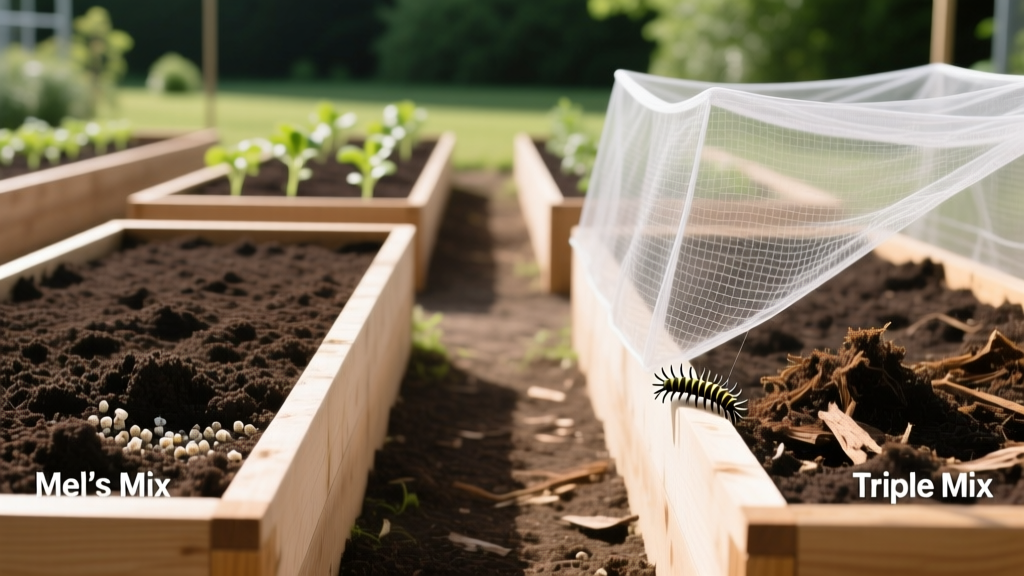
Mel's Mix vs Triple Mix 2026: Web Worm Safe Soil Guide
David ParkPublished
Introduction: Gardening Under the Canopy in 2026
Building raised beds in a yard with mature trees presents a unique set of challenges, particularly when those trees are susceptible to seasonal pests. In 2026, one of the most common inquiries we receive at Lawns Guide revolves around the intersection of canopy pests and soil health—specifically, how to choose between Mel's Mix and Triple Mix when dealing with tree web worm infestations. While fall webworms (Hyphantria cunea) and Eastern tent caterpillars primarily target the leaves of deciduous trees, the resulting debris, frass, and webbing inevitably rain down onto the garden beds below. If you are constructing new raised beds or refreshing your soil this season, understanding how your chosen soil recipe interacts with this pest cycle is critical for long-term garden resilience.
Both Mel's Mix and Triple Mix rely heavily on compost, which is the primary vector for introducing overwintering pests into your pristine raised beds. In this comprehensive 2026 guide, we will compare these two legendary soil recipes, analyze their susceptibility to web worm contamination, and provide actionable steps to ensure your garden soil remains a safe, vigorous environment for your vegetables and flowers.
The Tree Web Worm Problem: Frass, Webs, and Contaminated Compost
Fall webworms are notorious for creating large, unsightly silken webs in the branches of pecan, walnut, sweetgum, and fruit trees. While they rarely kill healthy trees, the sheer volume of defoliation means thousands of insect casings, frass (caterpillar droppings), and pupae drop to the ground below. According to Penn State Extension, these pests overwinter as pupae in the leaf litter and top layers of soil.
For the raised bed gardener, the danger arises during autumn leaf collection and composting. If you gather infested leaves and add them to a passive, cold compost pile, the pupae will survive the winter. When you scoop that finished compost into your raised beds the following spring, you are inadvertently inoculating your soil with pests. Furthermore, heavy web worm debris can alter the carbon-to-nitrogen ratio of your compost, leading to nitrogen tie-up in your soil mix. Therefore, the source and processing method of the compost in your soil recipe is the single most important factor in maintaining a web worm-safe garden.
Mel's Mix: The Original Raised Bed Recipe
Developed by Mel Bartholomew, Mel's Mix is the gold standard for square foot gardening. The classic recipe calls for equal parts (by volume) of three ingredients: one-third blended compost, one-third coarse vermiculite, and one-third peat moss or coconut coir. The Square Foot Gardening Foundation continues to endorse this recipe in 2026 for its superior drainage, aeration, and moisture retention.
Web Worm Risk Factors for Mel's Mix
- The Compost Component: Because Mel's Mix contains 33% compost, the risk of introducing web worm pupae is entirely dependent on your compost sourcing. If you use a diverse, commercially hot-composted blend, the risk is virtually zero. If you use homemade, cold-composted yard waste, the risk is high.
- Moisture Retention: Vermiculite and peat moss hold moisture exceptionally well. While this is great for plant roots, damp, shaded soil under a defoliated tree canopy can create a hospitable environment for secondary fungal issues if the tree's web worm infestation has blocked sunlight.
- Plant Vigor: The lightweight, nutrient-dense nature of Mel's Mix promotes explosive root growth. Plants grown in this mix are highly resilient and can easily recover from the temporary shade caused by web worm defoliation above.
Triple Mix: The Traditional Garden Center Blend
Triple Mix is a heavier, more traditional soil blend commonly sold in bulk at garden centers. The standard recipe consists of one-third topsoil, one-third peat moss, and one-third compost. It is often preferred for large, deep raised beds or for growing heavy-feeding crops like corn and winter squash due to its density and mineral content.
Web Worm Risk Factors for Triple Mix
- The Topsoil Component: This is where Triple Mix poses a unique risk. If the bulk topsoil you purchase was scraped from the surface of a field or woodland edge that experienced a web worm outbreak, it may contain overwintering pupae. Surface-scraped topsoil is notorious for harboring dormant pests and weed seeds.
- Soil Compaction: Triple Mix is heavier and more prone to compaction over time. If web worm frass and webbing fall onto the surface of a Triple Mix bed and are watered in, they can form a crust that restricts gas exchange, suffocating shallow roots.
- Cost and Availability: In 2026, bulk Triple Mix remains more affordable than sourcing the individual components for Mel's Mix, making it attractive for large-scale projects. However, the savings must be weighed against the potential cost of soil sterilization or pest control.
2026 Comparison: Mel's Mix vs. Triple Mix for Pest-Prone Yards
To help you decide which mix is best for your specific garden layout, we have broken down the key metrics comparing Mel's Mix and Triple Mix, with a specific focus on pest management and soil safety.
| Feature | Mel's Mix (1/3 Compost, Vermiculite, Coir) | Triple Mix (1/3 Topsoil, Peat, Compost) |
|---|---|---|
| Drainage & Aeration | Excellent; resists compaction and crusting from fallen debris. | Moderate; can crust if heavy webbing/frass accumulates. |
| Pest Introduction Risk | Moderate (strictly tied to compost sourcing). | High (both topsoil and compost can harbor pupae). |
| Nutrient Density | High initial nutrients; requires annual compost top-dressing. | High mineral content; slower release, better for heavy feeders. |
| Moisture Retention | Superior; ideal for shallow-rooted crops under dry canopies. | Good; but requires more frequent watering in peak summer. |
| 2026 Estimated Cost | $$$ (Vermiculite prices remain elevated in 2026). | $$ (Readily available in bulk from local landscape suppliers). |
How to Ensure Your Compost is Web Worm Safe
Regardless of whether you choose Mel's Mix or Triple Mix, the compost you use must be properly processed to eliminate tree web worm pupae. The University of Minnesota Extension notes that fall webworms overwinter in the soil and leaf litter, making thermal destruction via hot composting the most effective organic control method.
The Hot Composting Protocol
To guarantee your homemade compost is safe for your raised beds, you must achieve thermophilic conditions. This means the core of your compost pile must reach temperatures between 130°F and 150°F (54°C to 65°C) for at least three consecutive days. This heat threshold is sufficient to destroy insect eggs, pupae, and most soil-borne pathogens.
- Balance Your Greens and Browns: Mix nitrogen-rich materials (vegetable scraps, grass clippings) with carbon-rich materials (shredded leaves, including those from web worm-affected trees).
- Shred the Leaves: Web worms spin tough silken webs that can mat together in a compost pile, creating anaerobic pockets. Run infested leaves through a mulcher before adding them to the pile to break up the webbing and expose the pupae to heat.
- Turn Frequently: Turn the pile every 3 to 4 days to ensure all outer edges are moved to the hot core.
- Use a Compost Thermometer: Do not guess. A long-probe compost thermometer is an essential tool for the 2026 gardener dealing with canopy pests.
If you cannot guarantee your homemade compost reaches these temperatures, purchase bagged, commercially processed compost from a reputable landscape supplier. Commercial facilities use windrow turners that generate immense heat, ensuring a sterile, web worm-safe product.
Above-Ground Control: Protecting Your Soil Investment
While building a resilient soil mix is your first line of defense, managing the tree web worms in the canopy above will prevent excessive debris from overwhelming your raised beds. In 2026, integrated pest management (IPM) remains the most sustainable approach.
- Mechanical Removal: As soon as you spot the silken tents in early summer or late fall, use a pole pruner to remove the affected branches. Destroy the webs by burning them or submerging them in soapy water. Do not simply drop them into your garden beds or cold compost bins.
- Biological Sprays: Apply Bacillus thuringiensis var. kurstaki (Btk) to the tree foliage while the caterpillars are still young and actively feeding. Btk is a naturally occurring soil bacterium that targets the digestive system of caterpillars but is completely harmless to humans, pets, beneficial insects, and your raised bed soil biology.
- Encourage Predators: Plant nectar-rich flowers like dill, fennel, and yarrow in your raised beds to attract parasitic wasps and predatory stink bugs, which are natural enemies of the fall webworm.
Conclusion
Choosing between Mel's Mix and Triple Mix in 2026 ultimately comes down to your budget, the depth of your raised beds, and your willingness to manage soil inputs carefully. Mel's Mix offers superior aeration and disease resistance, making it an excellent choice for gardens situated under pest-prone trees where debris accumulation is a concern. Triple Mix provides a cost-effective, mineral-rich base for large beds but requires stringent vetting of the topsoil source to avoid introducing overwintering web worm pupae.
By prioritizing hot-composted materials, maintaining strict canopy hygiene, and utilizing targeted biological controls, you can enjoy a thriving, high-yield raised bed garden—even in the shadow of a web worm-infested tree. Healthy soil grows healthy plants, and healthy plants are your garden's best defense against the unpredictable challenges of the natural world.
