Gardening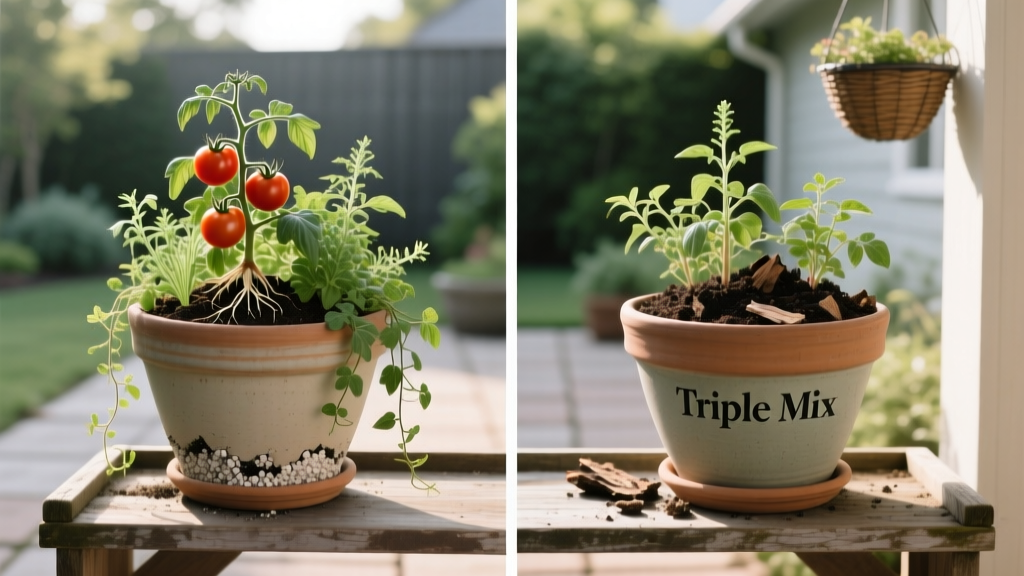
Mel's Mix vs Triple Mix for Containers: 2026 Review
Emily WatsonPublished
Container gardening has surged in popularity through 2026, with urban homesteaders and patio growers utilizing large half-barrels, fabric grow bags, and elevated cedar planter boxes. When filling these sizable containers, gardeners frequently debate two legendary soil recipes: Mel's Mix and Triple Mix. While both are exceptional for in-ground raised beds, their performance in isolated container environments differs drastically. In this comprehensive 2026 guide, we break down the science, structure, and suitability of Mel's Mix versus Triple Mix specifically for container and pot gardening.
The Foundations: What Are These Mixes?
Mel's Mix: The Square Foot Gardening Standard
Developed by Mel Bartholomew, Mel's Mix is the cornerstone of the Square Foot Gardening method. The classic recipe calls for equal parts (by volume) of three ingredients:
- 1/3 Blended Compost: Provides a broad spectrum of nutrients and beneficial microbiology.
- 1/3 Coarse Vermiculite: Ensures excellent water retention and keeps the soil structure light and airy.
- 1/3 Peat Moss (or Coco Coir): Offers acidity control and moisture retention. In 2026, sustainable coco coir has largely replaced peat moss among eco-conscious container gardeners.
According to the Square Foot Gardening Foundation, this soilless blend is designed to be fluffy, nutrient-dense, and entirely free of weed seeds, making it a dream for small-space growers.
Triple Mix: The Traditional Landscape Blend
Triple Mix is a staple at garden centers and landscape supply yards. It is traditionally mixed in equal parts:
- 1/3 Topsoil: Provides mineral content, bulk, and structural weight.
- 1/3 Peat Moss: Lightens the topsoil and improves moisture retention.
- 1/3 Compost: Adds organic matter and slow-release nutrients.
While Triple Mix is the gold standard for amending heavy clay lawns or filling massive in-ground garden borders, the inclusion of topsoil fundamentally changes how it behaves inside a pot.
Mel's Mix vs Triple Mix: Head-to-Head Container Comparison
When confining soil to a container, the rules of physics and hydrology change. Water cannot percolate into the subsoil, and roots cannot escape poor drainage. Here is how these two mixes compare when used in large pots and raised planter boxes in 2026.
| Feature | Mel's Mix (Adapted for Pots) | Triple Mix (Standard) |
|---|---|---|
| Weight (Wet) | Lightweight | Very Heavy |
| Drainage in Containers | Excellent (requires frequent watering in terracotta) | Poor (prone to compaction and waterlogging) |
| Nutrient Density | High (relies entirely on compost) | Moderate (diluted by mineral topsoil) |
| Aeration Over Time | Remains fluffy for 2-3 seasons | Compacts heavily after one season |
| Best Container Type | Fabric grow bags, hanging baskets, large ceramic pots | Stationary wooden planter boxes, massive half-barrels |
| Cost per Cubic Foot (2026) | $12 - $18 (DIY bulk) | $6 - $10 (Bulk delivery) |
Why Triple Mix Often Fails in Containers
If you ask university extension experts about using garden soil or topsoil in containers, they will almost universally advise against it. As noted by researchers at the University of Minnesota Extension, topsoil lacks the necessary porosity for container environments. In an open garden bed, earthworms, freeze-thaw cycles, and deep root systems naturally aerate topsoil. In a pot, topsoil quickly settles into a dense, anaerobic brick.
When Triple Mix is used in a standard 15-gallon nursery pot, the topsoil component compacts under the weight of watering. This suffocates delicate feeder roots and creates a perched water table at the bottom of the pot, leading to root rot. If you must use Triple Mix in a container, it should only be in massive, immovable raised planter boxes (at least 24 inches deep) where the sheer volume mimics an in-ground environment, and it must be heavily amended with extra perlite or pumice.
Adapting Mel's Mix for Large Pots and Half-Barrels
Mel's Mix is inherently closer to a commercial potting soil because it is entirely soilless. However, the classic recipe can sometimes be too moisture-retentive for certain containers, particularly unglazed terracotta or fabric grow bags exposed to full summer sun.
The 2026 Container-Optimized Mel's Recipe
To adapt Mel's Mix specifically for container gardening, modern horticulturists recommend a slight tweak to improve structural integrity and drainage:
- 40% High-Quality Blended Compost: Use at least three different sources (e.g., mushroom, cow manure, and homemade kitchen compost) to ensure a complete micronutrient profile.
- 30% Coarse Coco Coir: Coir is the 2026 standard over peat moss. It wets more easily, is a renewable resource, and has a more neutral pH, reducing the need for lime amendments.
- 15% Coarse Vermiculite: Retains moisture and nutrients.
- 15% Perlite or Pumice: This is the crucial container addition. Adding perlite creates macro-pores that guarantee oxygen reaches the root zone, preventing the compaction that plagues container soils.
"The secret to container gardening is oxygen. Roots need to breathe just as much as they need to drink. A soilless mix with added pumice or perlite ensures your potted tomatoes and peppers won't drown during heavy summer rains."
Cost Breakdown: Mixing Your Own vs. Bagged Potting Soil
In 2026, the cost of premium bagged potting mixes has risen, often exceeding $25 for a 2-cubic-foot bag of organic mix. Filling a large 4x8 elevated cedar planter box requires roughly 25 cubic feet of soil. Buying bagged soil would cost over $300.
Mixing your own Mel's Mix or adapted container blend is significantly more economical. A 3.8-cubic-foot bale of compressed coco coir costs around $15. A 4-cubic-foot bag of coarse vermiculite is approximately $35. Bulk compost can often be sourced from local municipal facilities for $30 a cubic yard (27 cubic feet). By sourcing ingredients in bulk and mixing them yourself in a wheelbarrow, you can fill that same 4x8 planter box for roughly $110 to $140, saving more than 50% while achieving superior soil quality.
Managing Nutrients and pH in Container Mixes
Because Mel's Mix relies entirely on compost for nutrition, the quality of your compost dictates the success of your harvest. The Environmental Protection Agency (EPA) highlights that properly cured compost provides a slow-release nutrient matrix that is ideal for container plants. However, in a closed container system, nutrients are constantly leaching out of the drainage holes every time you water.
Top-Dressing and Liquid Feeding
- Mid-Season Top Dressing: For long-season crops like indeterminate tomatoes or pole beans grown in pots, add a one-inch layer of fresh worm castings or blended compost to the surface of the Mel's Mix in mid-July.
- Liquid Kelp or Fish Emulsion: Apply a diluted organic liquid fertilizer every three weeks to replace trace minerals that wash out of the soilless mix.
- Monitoring pH: Coco coir and compost generally maintain a pH between 6.0 and 6.8, which is perfect for most container vegetables. Avoid adding wood ash or excessive lime, which can spike the pH and lock out iron and manganese in potted plants.
Conclusion: Which Mix Wins for Containers?
When it comes to container and pot gardening, the debate between Mel's Mix and Triple Mix has a clear winner. Triple Mix, while fantastic for amending native garden soil or filling deep, in-ground raised beds, is simply too heavy and prone to compaction for the unique hydrology of containers. The topsoil component restricts root growth and invites waterlogging in confined spaces.
Mel's Mix, particularly when adapted with coco coir and a touch of perlite for enhanced aeration, provides the perfect balance of moisture retention, drainage, and nutrient density required for potted plants. By mixing your own soilless blend in 2026, you not only save money compared to premium bagged potting soils, but you also gain complete control over the inputs, ensuring your container garden remains productive, lightweight, and vibrant for years to come.
