Pest Control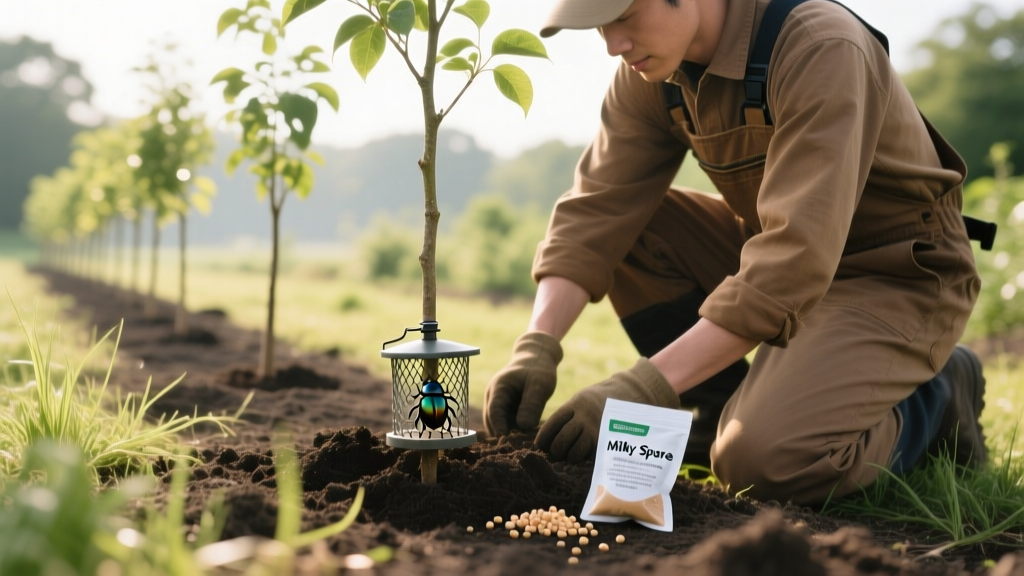
2026 Tree Planting Guide: Milky Spore & Beetle Traps
Mike RodriguezPublished
Integrating Pest Management into Your 2026 Tree Planting Strategy
Planting a new tree is a long-term investment in your landscape, but in 2026, the threat of the Japanese beetle (Popillia japonica) remains one of the most significant challenges for homeowners and arborists alike. As climate shifts continue to alter seasonal emergence patterns across USDA Hardiness Zones 4 through 7, Japanese beetles are appearing earlier and feeding more aggressively on the tender, newly expanded foliage of susceptible trees. When you combine the stress of transplant shock with severe defoliation and root damage from grub feeding, a newly planted tree can easily fail to establish.
From a tree selection and planting perspective, managing this pest requires a proactive, dual-pronged approach. You must protect the developing root system from subterranean grubs while simultaneously managing the adult beetle population above ground. This comprehensive guide details how to seamlessly integrate milky spore biological control into your planting process and how to strategically place pheromone traps to protect your new canopy without inadvertently drawing in a larger infestation.
Tree Selection: Assessing Japanese Beetle Susceptibility
Before you even dig the hole, your first line of defense is selecting the right tree for your specific pest pressure. Japanese beetles are notoriously polyphagous, feeding on over 300 plant species, but they show strong preferences. If your property has a documented history of heavy Japanese beetle activity, consider planting resistant species in 2026.
- Highly Susceptible Trees (Avoid or Protect): Littleleaf linden, Japanese elm, American elm, cherry, plum, birch, and horsechestnut.
- Resistant Alternatives (Recommended for 2026): Oak (red and white), hickory, dogwood, magnolia, tulip tree, and hemlock.
If your design specifically calls for a susceptible species like a linden or a flowering cherry, you must implement the biological and mechanical controls outlined below at the exact time of planting.
Applying Milky Spore During the Planting Process
Milky spore is a naturally occurring bacterium (Paenibacillus popilliae) that specifically targets and kills Japanese beetle grubs without harming beneficial earthworms, pollinators, or the delicate new roots of your tree. When a grub ingests the spores while feeding on grass and tree roots, the bacteria multiply inside its hemolymph, turning it a milky white color before it dies. As the grub decays, it releases billions of new spores into the surrounding soil, creating a self-sustaining biological barrier.
The Backfill Integration Method
Most homeowners mistakenly apply milky spore only to their lawn, ignoring the critical root zone of their landscape trees. Japanese beetle grubs frequently migrate toward the moist, nutrient-rich soil surrounding a newly planted tree's root ball, feeding on the fine root hairs and causing severe transplant shock. In 2026, professional arborists recommend integrating the spore dust directly into the backfill soil.
- Prepare the Hole: Dig your planting hole twice as wide as the root ball but no deeper. Scarify the sides of the hole to prevent root glazing.
- Coat the Root Ball: Lightly dust the exterior of the tree's root ball with milky spore powder before lowering it into the hole.
- Mix the Backfill: As you mix your native soil with organic compost (keeping compost to no more than 20% of the total volume), evenly distribute milky spore powder into the pile. A standard 10-ounce box of St. Gabriel Organics Milky Spore Powder (retailing around $75 to $85 in 2026) treats 2,500 square feet. Calculate the square footage of your planting bed and mix the appropriate ratio into your wheelbarrow.
- Watering In: Milky spore requires consistent soil moisture to establish and spread. Fortunately, a newly planted tree requires a deep, slow watering immediately after planting. This initial watering helps push the spores into the soil profile where the grubs reside.
According to research highlighted by Rutgers Cooperative Extension, milky spore can take two to three years to achieve full saturation in the soil. Applying it at the time of planting gives the bacterium a multi-year head start, establishing a protective perimeter just as the tree's root system begins to expand outward.
Strategic Japanese Beetle Trap Placement
While milky spore handles the subterranean grub threat, adult beetles emerging in early summer will still target your tree's canopy. Pheromone traps are highly effective at capturing adults, but they are frequently misused, resulting in severe damage to the very trees they are meant to protect.
The 'Draw-In' Effect and Proper Siting
Modern Japanese beetle traps, such as the highly rated 2026 models from RESCUE! and Spectracide Bag-a-Bug, utilize a potent combination of a floral lure (eugenol) and a female sex pheromone (japonilure). These lures are so powerful that they can attract beetles from miles away. If you hang a trap on the trunk of your newly planted linden tree, or on a fence directly next to it, you will draw thousands of beetles into your yard. Many of them will stop to feed on your tree's tender leaves before they ever reach the trap.
The Golden Rule of Trap Placement: Always place traps at least 30 to 50 feet away from susceptible trees, and ideally downwind from your primary garden beds. The University of Minnesota Extension advises positioning traps near non-host areas, such as the edge of a property line, near a driveway, or adjacent to a garage. This intercepts the beetles as they fly into your property from neighboring areas, luring them away from your newly planted canopy.
Comparison: Grub Control Methods for Newly Planted Trees
When establishing a new tree, root health is paramount. Here is how milky spore compares to synthetic chemical controls commonly used in 2026.
| Treatment Type | Active Ingredient | Impact on New Tree Roots | Longevity & Cost |
|---|---|---|---|
| Milky Spore (Biological) | Paenibacillus popilliae | Zero negative impact; promotes healthy soil biology. | 10-15 years once established. ~$80 per 2,500 sq ft. |
| Chlorantraniliprole | Acelepryn / GrubEx | Safe for roots and pollinators when applied as a soil drench. | Annual application required. ~$35 per season. |
| Neonicotinoids | Imidacloprid | Can stress young roots; systemic uptake may harm beneficial insects visiting nearby blooms. | Annual application. Banned or restricted in several states as of 2026. |
For a holistic, long-term tree planting strategy, milky spore is the superior choice. While the upfront cost is higher, it permanently alters the soil ecology of your planting bed, protecting the tree's expanding root zone for over a decade without the need for annual chemical drenches.
2026 Seasonal Timeline for Tree Planting and Beetle Management
To maximize the survival rate of your newly planted trees, follow this seasonal maintenance schedule tailored to current climatic emergence patterns.
- Early Spring (March - April): Plant dormant or early-flushing trees. Incorporate milky spore powder into the backfill soil. Apply a 2-inch layer of mulch around the root zone, keeping it 3 inches away from the trunk to prevent rot.
- Late Spring (May): In warmer zones (Zones 6-7), monitor local university extension reports for Japanese beetle degree-day tracking. Beetles typically emerge around 450 to 550 growing degree days (base 50°F).
- Early Summer (June - July): Deploy pheromone traps 30 to 50 feet away from the new trees. Empty the trap canisters every 2 to 3 days to prevent the scent of decaying beetles from masking the pheromone lure. Hand-pick any stray adults off the new tree's canopy in the early morning when they are sluggish, dropping them into a bucket of soapy water.
- Late Summer to Fall (August - September): Grubs are actively feeding near the surface. The milky spore applied during planting will begin to infect this generation. Ensure the tree receives 1 inch of water per week to maintain the soil moisture necessary for the spores to remain viable and spread.
Conclusion
Successfully establishing a new tree in an environment plagued by Japanese beetles requires foresight. By viewing pest control not as an afterthought, but as a foundational step in the planting process, you give your tree the best chance to thrive. Integrating milky spore directly into the backfill soil protects the vulnerable root system biologically, while strict adherence to strategic trap placement ensures you do not accidentally invite a swarm to your new canopy. As noted by the Environmental Protection Agency (EPA), combining targeted biological controls with smart mechanical trapping is the cornerstone of modern, sustainable Integrated Pest Management (IPM). Plan your 2026 planting with these strategies, and your trees will grow strong, resilient, and beautifully defoliation-free.