Pest Control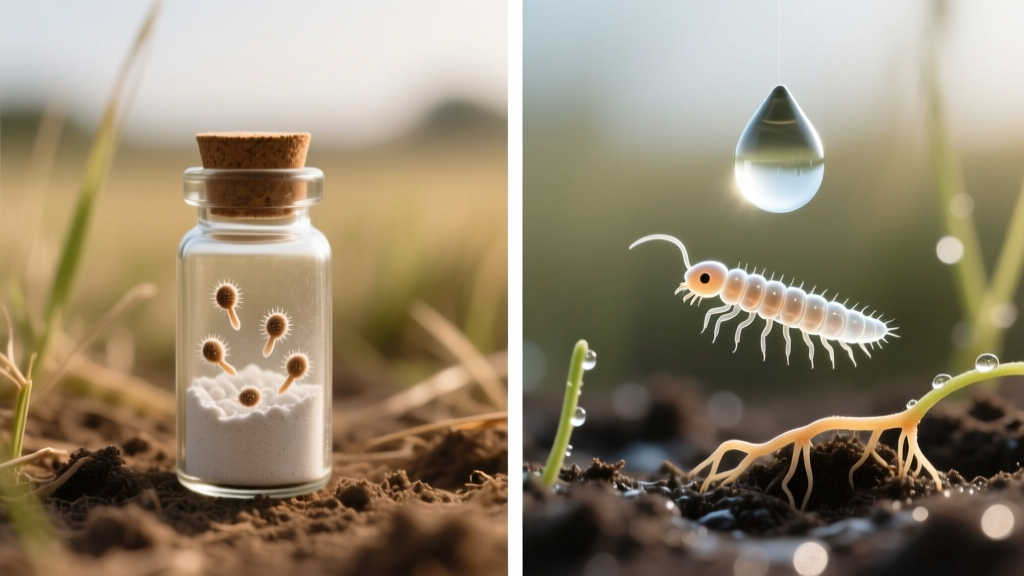
Milky Spore vs Nematodes: Best Organic Grub Control
Robert HayesPublished
The Battle Against White Grubs: An IPM Approach
White grubs—the larval stage of Japanese beetles, June bugs, and European chafers—are among the most destructive pests in home lawns. They feed aggressively on grassroots, leaving behind brown, dead patches that can be rolled back like a carpet. Furthermore, these grubs attract secondary pests like skunks, raccoons, and crows, which tear up the turf to feast on the larvae beneath the surface.
In the realm of Integrated Pest Management (IPM), homeowners and turf professionals are increasingly turning away from broad-spectrum synthetic chemicals like imidacloprid, which can harm non-target pollinators and beneficial soil organisms. Instead, biological controls have emerged as the gold standard for sustainable lawn care. The two heavyweights in the organic grub control arena are Milky Spore and Beneficial Nematodes. But which one is right for your lawn?
According to turfgrass experts at Penn State Extension, understanding the life cycle of the grub and the specific mechanism of your chosen biological control is critical for success. In this comprehensive comparison, we will break down the science, application, cost, and efficacy of Milky Spore versus Beneficial Nematodes to help you make an informed decision for your yard.
Contender 1: Milky Spore (Bacillus popilliae)
Milky Spore is a naturally occurring bacterium (Bacillus popilliae) that specifically targets the larvae of the Japanese beetle. It was one of the first biological pesticides registered in the United States and has been used for decades as a long-term grub management strategy.
How It Works
When Japanese beetle grubs feed on grassroots, they inevitably ingest Milky Spore spores present in the soil. Once inside the grub's digestive tract, the spores germinate and multiply rapidly, causing the grub's internal fluids to turn a milky white—hence the name. The infected grub dies within 7 to 21 days. As the grub's body decomposes, it releases billions of new spores back into the soil, creating a self-sustaining cycle of pest control.
Application and Timing
Milky Spore is typically sold in powder or granular form. The traditional powder application requires placing one teaspoon of the product on the lawn every four feet in a grid pattern across your yard. Granular versions can be applied using a standard broadcast spreader. The ideal time to apply Milky Spore is in late summer to early fall when grubs are actively feeding and soil temperatures are between 65°F and 85°F.
Pros and Cons
- Pros: Once established, it can remain effective in the soil for 10 to 15 years. It is completely safe for pets, humans, and beneficial insects like earthworms.
- Pros: It creates a long-term, self-replicating defense mechanism in your soil.
- Cons: It is highly specific; it will only kill Japanese beetle grubs, not June bugs or European chafers.
- Cons: It is a slow burn. It can take 1 to 3 years for the spore count in the soil to reach levels that provide noticeable grub control.
Contender 2: Beneficial Nematodes (Heterorhabditis bacteriophora)
Beneficial nematodes are microscopic, unsegmented roundworms that act as lethal parasites to a wide variety of soil-dwelling pests. For grub control, the Heterorhabditis bacteriophora (Hb) strain is the most effective, as it actively hunts its prey rather than waiting for it.
How It Works
Nematodes hunt grubs by sensing the carbon dioxide and heat emitted by the larvae. Once a nematode locates a grub, it enters the host's body through natural openings and releases a symbiotic bacterium. This bacterium causes septicemia, killing the grub within 24 to 48 hours. The nematodes then reproduce inside the dead grub, releasing thousands of new infective juveniles into the soil to hunt for the next victim.
Application and Timing
Because nematodes are living organisms, they are usually purchased in a dormant state suspended in a gel or powder and must be kept refrigerated until use. They are mixed with water and applied using a hose-end sprayer or watering can. Application should occur in the early evening or on a cloudy day to protect the nematodes from UV light. Late summer and early fall are optimal, provided the soil is kept consistently moist.
Pros and Cons
- Pros: Extremely fast-acting; you will see dead grubs within 48 hours of application.
- Pros: Broad-spectrum control. The Hb strain kills Japanese beetles, June bugs, European chafers, and even flea larvae.
- Cons: Short shelf life and highly sensitive to environmental conditions. They will die if the soil dries out or if exposed to direct sunlight during application.
- Cons: They do not establish a permanent population. You must reapply them annually or bi-annually to maintain control.
Head-to-Head Comparison Chart
| Feature | Milky Spore | Beneficial Nematodes (Hb) |
|---|---|---|
| Active Agent | Bacteria (B. popilliae) | Microscopic Roundworms |
| Target Pests | Japanese Beetle Grubs ONLY | Japanese Beetles, June Bugs, Chafers, Fleas |
| Speed of Kill | 7 to 21 Days | 24 to 48 Hours |
| Time to Full Efficacy | 1 to 3 Years | Immediate (Days) |
| Longevity in Soil | 10 to 15 Years | 1 to 2 Seasons |
| Application Method | Drop Spreader / Hand | Hose-End Sprayer / Watering Can |
| Soil Temp Requirement | 65°F to 85°F | 55°F to 85°F |
| UV Sensitivity | Low (once watered in) | High (must apply at dusk/cloudy) |
Cost Analysis: Which is More Economical?
When budgeting for organic pest control, it is essential to look at both the upfront cost and the long-term cost per square foot.
- Milky Spore: A standard 20-ounce box of Milky Spore powder costs between $60 and $80 and treats up to 7,000 square feet. While the upfront cost is higher, the fact that it only needs to be applied once every decade makes the long-term cost roughly $0.50 to $0.80 per year, per 1,000 square feet.
- Beneficial Nematodes: A package containing 10 million nematodes (enough to treat roughly 2,000 to 3,000 square feet) typically costs $30 to $50. Because they must be applied annually, treating a 7,000-square-foot lawn will cost between $100 and $175 every single year.
Verdict: Milky Spore is the clear winner for long-term budgeting, while nematodes are more expensive but offer immediate, broad-spectrum results.
Which Should You Choose?
The decision ultimately comes down to your specific pest pressure, your timeline, and your commitment to lawn maintenance. The Environmental Protection Agency (EPA) recognizes both as safe, biological pesticides, but their use-cases differ vastly.
Choose Milky Spore If:
- You have positively identified Japanese beetle grubs as your primary pest.
- You are looking for a "set it and forget it" long-term solution.
- You do not mind waiting 1 to 3 years for the spore population to build up in your soil.
- You want to minimize annual labor and recurring costs.
Choose Beneficial Nematodes If:
- Your lawn is being destroyed by a mix of June bugs, European chafers, and Japanese beetles.
- You are currently experiencing severe grub damage and need an immediate rescue treatment.
- You also struggle with soil-dwelling pests like flea larvae or fungus gnat larvae.
- You are willing to commit to annual applications and precise watering schedules.
Pro IPM Tip: You do not necessarily have to choose just one. Many turf managers use Beneficial Nematodes as an immediate "knockdown" treatment in the fall to stop active feeding, while simultaneously applying Milky Spore to establish a long-term biological barrier against future Japanese beetle generations.
Critical Application Rules for Success
Biological controls are not like synthetic chemicals; they are living entities or rely on biological processes. If you apply them incorrectly, you will waste your money. Follow these strict guidelines:
- Moisture is Mandatory: Both nematodes and Milky Spore require moist soil to travel and survive. Water your lawn thoroughly the day before application, and water it again immediately after (about 0.5 inches of water) to wash the product off the grass blades and into the root zone.
- Mind the Sun: Never apply nematodes in the middle of a hot, sunny day. UV radiation will kill them on contact. Apply them at dusk or during a steady, light rain.
- Check Expiration Dates: Nematodes are alive. If you buy them from a garden center that has left them sitting on a hot shelf, they are likely dead. Always order nematodes from reputable suppliers who ship them in insulated coolers with ice packs, and store them in your refrigerator until the exact moment of application.
- Avoid Broad-Spectrum Fungicides: While Milky Spore is a bacterium, some broad-spectrum soil fungicides and heavy chemical fertilizers can alter the soil microbiome enough to hinder the establishment of biological controls. Stick to organic lawn care practices to support your soil's food web.
Conclusion
Transitioning to organic grub control is one of the best decisions you can make for the long-term health of your lawn and the local ecosystem. By understanding the differences between Milky Spore and Beneficial Nematodes, you can tailor your IPM strategy to your lawn's unique needs. Whether you opt for the rapid, broad-spectrum strike of nematodes or the enduring, targeted defense of Milky Spore, you are choosing a sustainable path to a lush, grub-free landscape.