
Landscaping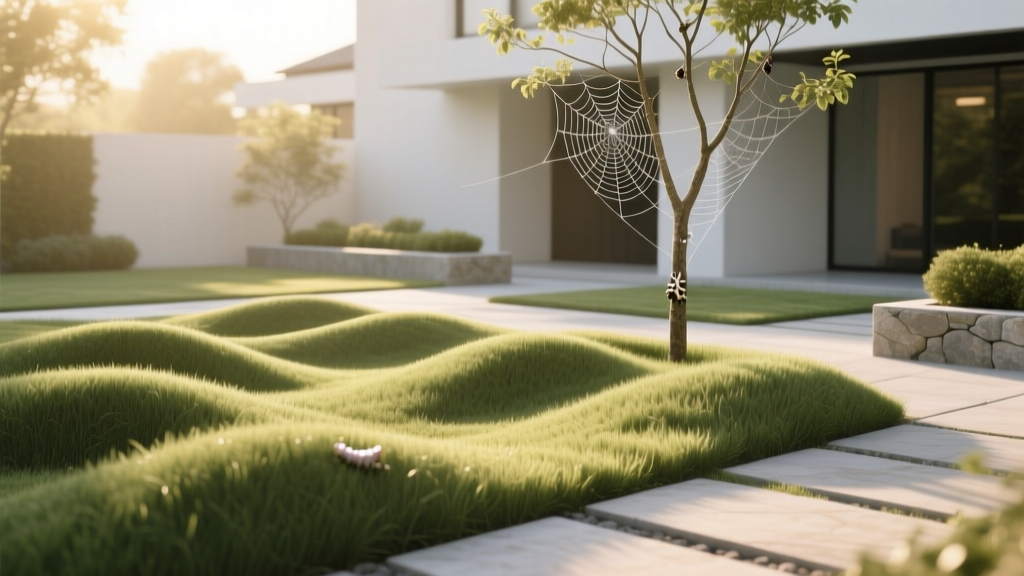
Tree Web Worm Control For Minimalist Yards In 2026
Sarah ChenPublished
The 2026 Minimalist Front Yard: Grasses and Accent Trees
Modern minimalist front yards have dominated landscape architecture trends heading into 2026. Characterized by stark geometric hardscaping, monochromatic color palettes, and sweeping mass plantings of ornamental grasses, these designs rely on absolute visual order and tranquility. Ornamental grasses such as Calamagrostis x acutiflora (Karl Foerster Feather Reed), Muhlenbergia capillaris (Pink Muhly), and Pennisetum alopecuroides (Fountain Grass) provide architectural texture, movement, and year-round interest without the chaotic maintenance of traditional perennial borders. To anchor these grass-heavy designs, landscape architects frequently incorporate a single, striking accent tree. Whether it is a sculptural Japanese Maple, a multi-stemmed Crape Myrtle, or a delicate Flowering Dogwood, the accent tree serves as the undisputed focal point of the minimalist landscape.
The Aesthetic and Biological Threat of Tree Web Worms
In a traditional, sprawling garden, a web worm infestation might go unnoticed or be dismissed as a minor natural occurrence. In a modern minimalist front yard, however, an unsightly, silken web enveloping the canopy of your focal point tree is an aesthetic disaster. The fall webworm (Hyphantria cunea) and the Eastern tent caterpillar (Malacosoma americanum) spin large, messy, and expansive webs that completely disrupt the clean lines and intentional spacing of minimalist design. According to the Penn State Extension, fall webworms can defoliate entire branches late in the season, leaving behind a skeletonized canopy that looks chaotic and unkempt.
Beyond the visual disruption, web worms pose a significant biological threat to the ornamental grasses below. As the caterpillars feed within their webbed tents, they produce copious amounts of frass (caterpillar droppings). This frass rains down onto the dense clumps of ornamental grasses, staining the delicate foliage and creating a breeding ground for fungal pathogens like rust and leaf spot. In minimalist designs where the grasses are meant to look pristine and uniform, frass accumulation can quickly degrade the health and appearance of the entire planting bed.
Selecting Accent Trees: A Minimalist’s Guide to Web Worm Resistance
The most effective web worm control strategy in 2026 begins at the design phase. By selecting accent trees that are naturally resistant to web worms and tent caterpillars, you can maintain the pristine aesthetic of your minimalist yard without resorting to aggressive chemical interventions. The table below compares popular minimalist accent trees based on their visual appeal, susceptibility to web worms, and recommended resistant alternatives.
| Accent Tree Species | Minimalist Appeal | Web Worm Susceptibility | 2026 Recommended Alternative |
|---|---|---|---|
| Japanese Maple (Acer palmatum) | High (Sculptural form, fine texture) | Moderate to High | Kousa Dogwood (Cornus kousa) |
| Crape Myrtle (Lagerstroemia) | High (Multi-stem bark, summer blooms) | High | Serviceberry (Amelanchier) |
| Flowering Dogwood (Cornus florida) | Moderate (Horizontal branching) | High | Ginkgo Biloba (Pruned for form) |
| River Birch (Betula nigra) | High (Peeling bark, winter interest) | Low | River Birch (Keep as primary choice) |
| Eastern Redbud (Cercis canadensis) | High (Spring color, heart-shaped leaves) | Moderate | Fringetree (Chionanthus virginicus) |
As noted by the University of Minnesota Extension, while fall webworms prefer pecan, walnut, and sweetgum, they are highly opportunistic and will readily infest stressed maples, birches, and fruit trees. Choosing resilient species like the Kousa Dogwood or the Fringetree ensures that your focal point remains unblemished throughout the late summer and autumn months when web worms are most active.
Targeted Web Worm Control Protocols for 2026
If your minimalist yard already features a susceptible accent tree, implementing a targeted, eco-friendly control protocol is essential. The goal in 2026 is to eradicate the pests without harming the beneficial insect populations that keep your ornamental grasses healthy, and without leaving chemical residues on your pristine hardscaping.
Biological Controls: Btk and Spinosad
For early-stage infestations, biological insecticides are the gold standard. Bacillus thuringiensis var. kurstaki (Btk) is a naturally occurring soil bacterium that specifically targets caterpillars. When applied to the foliage within and around the web tent, Btk is ingested by the web worms, disrupting their digestive systems and causing them to stop feeding within hours. Because Btk is highly specific, it will not harm the pollinators visiting your Pink Muhly grass or the ground beetles patrolling your gravel paths. Spinosad is another excellent organic option for 2026, offering slightly faster knockdown while remaining safe for the surrounding minimalist ecosystem once it has dried.
Trunk Injections: The Zero-Drift Solution
In high-end minimalist landscapes, foliar spraying can be problematic. Spray drift can land on the broad blades of ornamental grasses, causing phytotoxicity or unsightly spotting. Furthermore, overspray can stain the sealed concrete pavers, Corten steel planters, and dark basalt gravel that define modern minimalist hardscapes. To circumvent this, professional arborists in 2026 increasingly rely on systemic trunk injections using emamectin benzoate or azadirachtin. This method delivers the active ingredient directly into the tree's vascular system, ensuring zero drift, zero mess, and complete protection for the grasses and hardscapes below.
Protecting Hardscapes and Ornamental Grasses During Treatment
If you must use a foliar spray for a severe web worm outbreak, precision is paramount. Use a shielded nozzle and a low-pressure pump sprayer to apply Btk directly into the webbed canopy. Avoid using high-pressure hose-end sprayers, which atomize the solution and create uncontrollable drift. Before spraying, lay down a lightweight, breathable landscaping fabric over the ornamental grasses directly beneath the tree to catch any dripping residue or dislodged caterpillars. Remove the fabric immediately after treatment to prevent the grasses from overheating or being crushed.
Mechanical Removal and Winter Sanitation
Mechanical control remains a vital component of web worm management in minimalist landscapes. Because the aesthetic threshold for disorder in a minimalist yard is near zero, waiting for biological controls to work may not be acceptable. Using a long-handled pole pruner, carefully snip off the infested branch tips containing the web tents. Do this in the early morning when the caterpillars are clustered inside the tent. Immediately dispose of the pruned webs in a sealed yard waste bag—never leave them on the ground or in open compost bins near your ornamental grasses, as surviving caterpillars will crawl back into the landscape.
During the winter months, when the ornamental grasses are left standing to provide structural interest and frost-catching beauty, perform a thorough inspection of your accent tree. Look for the hardened, silken tents of the Eastern tent caterpillar or the egg masses of the fall webworm on the bare branches. Prune out these egg masses during dormancy. This proactive winter sanitation ensures that your minimalist front yard emerges in the spring with clean, sharp lines, healthy ornamental grasses, and a completely pest-free focal point, perfectly embodying the landscape design ideals of 2026.

