
Landscaping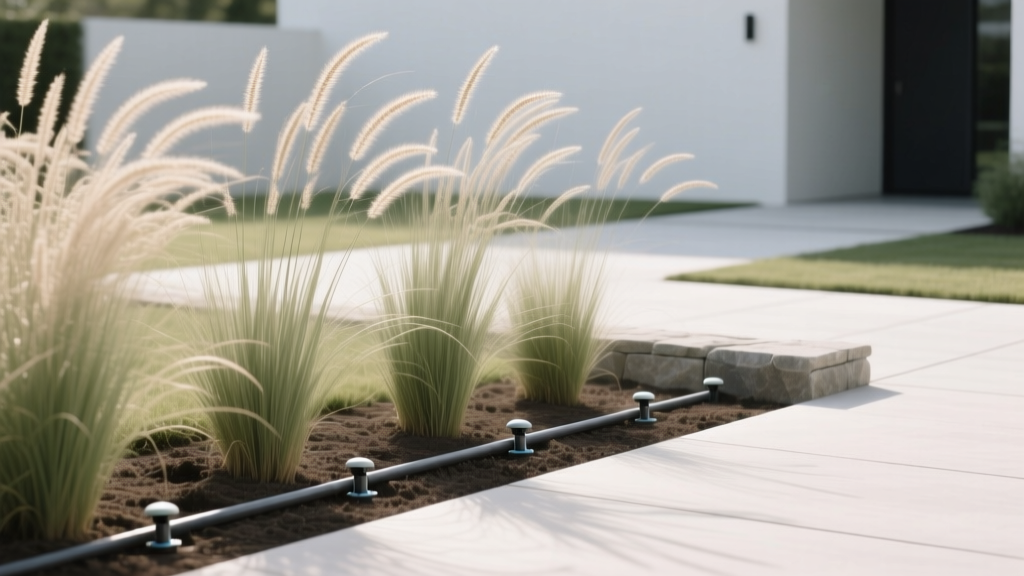
Irrigation For Minimalist Ornamental Grass Yards 2026
James MillerPublished
The Rise of the Modern Minimalist Front Yard
In 2026, the landscape architecture world has fully embraced the modern minimalist front yard. Homeowners are moving away from high-maintenance, water-thirsty turfgrass lawns in favor of clean geometric hardscaping, architectural gravel beds, and striking ornamental grasses. Species like Karl Foerster feather reed grass, Mexican feather grass, and Muhly grass provide dynamic movement, texture, and year-round visual interest without the weekly mowing and heavy fertilization required by traditional lawns. However, achieving this pristine, uncluttered aesthetic requires a fundamental shift in how we approach outdoor watering. The visual purity of a minimalist landscape is easily destroyed by poorly placed irrigation hardware, making the integration of invisible, highly efficient watering systems an absolute necessity for modern curb appeal.
The Irrigation Challenge in Minimalist Landscaping
Traditional pop-up spray sprinklers are fundamentally incompatible with modern minimalist design. First, they disrupt the clean sightlines of the yard. Even when retracted, sprinkler heads create visual clutter in carefully raked gravel or minimalist concrete planters. Second, traditional spray heads are notoriously inefficient in narrow, geometric planting beds typical of minimalist designs. They inevitably overspray onto adjacent hardscapes, driveways, and walkways, leading to water waste, mineral staining on concrete, and moss growth in shaded crevices. Finally, ornamental grasses generally prefer deep, infrequent watering that encourages deep root growth, whereas traditional spray systems often deliver shallow, frequent moisture that can lead to fungal issues and weak root systems. To maintain the architectural integrity of your yard while keeping your grasses lush, you must abandon overhead spraying and look below the surface.
Subsurface Drip Irrigation: The 2026 Gold Standard
For the modern minimalist yard, subsurface drip irrigation (SDI) and inline drip tubing are the undisputed gold standards in 2026. By burying the irrigation lines and emitters beneath the soil or gravel mulch, you deliver water directly to the root zone of the ornamental grasses. This method eliminates evaporation, prevents wind drift, and ensures that not a single drop of water is wasted on surrounding hardscapes. More importantly, it keeps all irrigation hardware completely hidden from view, preserving the stark, clean lines that define minimalist landscaping. Modern inline drip tubing features built-in emitters spaced at precise intervals, ensuring uniform water distribution across the entire root mass of clump-forming grasses.
Top Product Recommendations for 2026
- Netafim Techline CV: This inline drip tubing features built-in check valves that prevent low-head drainage, keeping the lines empty when the system is off. This is crucial for minimalist yards with sloped hardscapes where puddling at the lowest point would ruin the aesthetic and cause erosion.
- Rain Bird XFS Dripline with Copper Shield: Ornamental grasses have aggressive, fibrous root systems that can sometimes seek out moisture and intrude into emitter openings. The Rain Bird XFS utilizes a copper shield inside the emitter to naturally deter root intrusion without the need for harsh chemical herbicides.
- Toro Precision Soil Moisture Sensors: These wireless sensors bury flush with the ground and communicate directly with your smart controller, overriding scheduled watering if the soil already holds adequate moisture.
Watering Requirements for Popular Ornamental Grasses
Understanding the specific hydro-needs of your chosen plants is critical for programming your system. According to the UCANR WUCOLS database, which classifies landscape species by their water needs, most established ornamental grasses fall into the low to moderate water use categories. During the first year of establishment, grasses like Calamagrostis x acutiflora require consistent moisture to build their root architecture. However, once established by year two, they thrive on deep, infrequent watering cycles. Overwatering established ornamental grasses can lead to floppy growth, center die-out, and root rot. Designing your drip zones to allow for deep soaking once or twice a week, rather than daily light watering, mimics natural rainfall patterns and promotes the structural integrity necessary for these grasses to stand tall and upright.
Comparing Irrigation Methods for Minimalist Yards
When planning your 2026 landscape renovation, it is helpful to compare the efficiency and aesthetic impact of different irrigation methods. The table below outlines why subsurface drip is the superior choice for minimalist designs.
| Irrigation Method | Aesthetic Impact | Water Efficiency | Suitability for Grasses |
|---|---|---|---|
| Traditional Pop-Up Spray | Poor (visible heads, overspray on hardscape) | Low (high evaporation and wind drift) | Poor (promotes shallow roots and fungal issues) |
| Micro-Sprayers / Spinners | Moderate (visible stakes and tubing) | Moderate (some wind drift and evaporation) | Moderate (wets foliage, which some grasses dislike) |
| Point-Source Drip Emitters | Good (tubing can be hidden under mulch) | High (delivers water to specific root balls) | Good (but requires moving emitters as grass clumps expand) |
| Inline Subsurface Drip | Excellent (completely invisible) | Very High (zero evaporation, zero runoff) | Excellent (uniform moisture, promotes deep roots) |
Step-by-Step Installation Guide
Installing a hidden drip system for your ornamental grass beds requires careful planning and precise execution. Follow these steps to ensure a flawless, invisible setup.
1. Hydrozoning and Layout
Before digging, map out your planting beds. Group plants with similar water needs on the same valve. Ornamental grasses should be on a separate zone from any drought-tolerant succulents or minimalist groundcovers. Measure the square footage of the bed to calculate the required length of inline drip tubing. For most ornamental grasses, a grid pattern with tubing spaced 12 to 18 inches apart provides the most uniform coverage.
2. Trenching and Preparation
For a truly minimalist look, the tubing must be buried. Dig a shallow trench (about 3 to 4 inches deep) around the perimeter of the bed to house the main PVC supply line and the flush valves. For the drip tubing itself, you can either lay it directly on the soil surface and cover it with 2 to 3 inches of decorative gravel or mulch, or bury it slightly beneath the topsoil. If using gravel mulch—a staple of minimalist design—lay a high-quality landscape fabric over the soil and drip lines before adding the stone to prevent the gravel from shifting and damaging the emitters.
3. Laying the Inline Drip Tubing
Unroll the inline drip tubing and let it sit in the sun for an hour to soften the plastic, making it easier to work with. Lay the tubing in a grid or serpentine pattern across the bed, securing it every 3 feet with landscape staples. Connect the tubing to the main supply line using compression fittings. It is critical to install a pressure regulator (set to 25-30 PSI) and a 120-mesh filter at the head of the zone to protect the emitters from debris and high-pressure blowouts.
4. Flushing and Testing
Before capping the ends of the drip lines or covering them with gravel, turn the system on and let it flush for two minutes. This clears any dirt or plastic shavings from the manufacturing process out of the lines. Once the water runs clear, attach the flush valves or end caps. Inspect every emitter to ensure uniform weeping.
Integrating Smart Controllers in 2026
A hidden drip system is only as efficient as the brain controlling it. In 2026, smart irrigation controllers are no longer a luxury; they are a standard component of sustainable landscaping. Devices like the Rachio 3e or the B-hyve XR utilize hyper-local weather intelligence, pulling real-time data from local weather stations to adjust watering schedules automatically. If a sudden summer downpour occurs, the controller will skip the scheduled cycle, preventing your ornamental grasses from becoming waterlogged. According to the EPA WaterSense program, upgrading to a smart irrigation controller can save the average home thousands of gallons of water annually. When programming your smart controller for subsurface drip, remember that drip systems apply water much slower than traditional sprinklers. You will need to set longer run times (often 45 to 90 minutes) but fewer watering days per week to achieve the deep soil penetration that ornamental grasses require.
Maintenance and Winterization
While subsurface drip irrigation is remarkably low-maintenance, it is not entirely maintenance-free. To keep your minimalist yard functioning perfectly, incorporate these seasonal tasks into your routine. In the spring, open the flush valves at the end of each drip zone and run the system for a few minutes to clear out any sediment or mineral buildup that accumulated over the winter. Check the filter at the head assembly and clean it if necessary. In late autumn, before the first hard freeze, it is vital to winterize the system. Because ornamental grass beds are often integrated with hardscapes that limit access, using an air compressor to blow out the remaining water from the drip lines is highly recommended. This prevents freezing water from expanding and cracking the hidden emitters, which would require digging up your pristine gravel beds to repair. For more detailed regional advice on seasonal landscape care, the University of Minnesota Extension offers excellent guidelines on adjusting irrigation practices based on shifting seasonal temperatures and soil types.
Conclusion
Designing a modern minimalist front yard with ornamental grasses is an investment in both aesthetics and environmental sustainability. By pairing the architectural beauty of feather reed and Muhly grasses with a hidden, high-efficiency subsurface drip irrigation system, you create a landscape that is as functional as it is beautiful. In 2026, there is no excuse for wasting water on hardscapes or ruining clean design lines with bulky sprinkler heads. With the right inline drip products, a smart weather-based controller, and a thoughtful installation approach, your minimalist oasis will thrive effortlessly for years to come.

