
Landscaping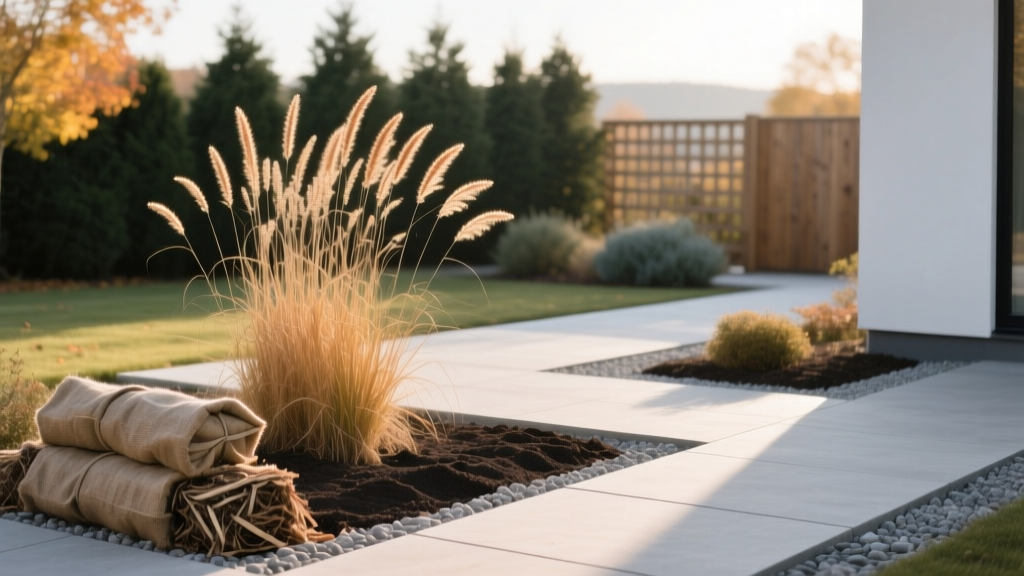
2026 Fall Care Guide: Minimalist Ornamental Grass Yards
Sarah ChenPublished
The Rise of the Minimalist Front Yard
The modern minimalist front yard has become the defining landscape aesthetic of 2026. Moving away from the chaotic, high-maintenance cottage gardens and sprawling turf lawns of the past, today's homeowners favor clean geometric lines, large-format porcelain pavers, corten steel edging, and a highly curated plant palette. At the heart of this design philosophy is the ornamental grass. Grasses provide the necessary kinetic movement, soft texture, and ecological benefits required to balance rigid, modern hardscaping. However, as autumn temperatures drop, caring for a minimalist landscape requires a highly specific approach. Fall lawn and garden care in a minimalist setting is less about aggressive cleanup and more about strategic preservation, soil health, and meticulous hardscape maintenance.
Unlike traditional perennial borders that demand constant deadheading and cutting back, a minimalist grass landscape thrives on structural integrity and negative space. The transition from autumn into winter is arguably the most important season for these landscapes, as the grasses take over the visual heavy lifting once the deciduous trees drop their leaves. Understanding how to manage this transition ensures your yard remains an architectural masterpiece year-round.
The Golden Rule: Leave Ornamental Grasses Standing
The most common mistake new minimalist landscape owners make in the fall is treating ornamental grasses like traditional turf or perennial flowers. The urge to tidy up and cut back brown foliage as soon as dormancy sets in is strong, but it is fundamentally incorrect for this design style. According to experts at Penn State Extension, ornamental grasses should be left completely intact throughout the fall and winter months. Cutting them back in autumn exposes the hollow stems to moisture, which can funnel rain and melting snow directly into the plant's crown, leading to fatal winter rot.
Beyond plant health, leaving grasses standing is essential for the minimalist aesthetic. The bleached, wheat-colored plumes of warm-season grasses catch the low-angle autumn and winter sunlight, providing striking visual contrast against dark concrete, black basalt gravel, or dark-stained cedar fencing. Furthermore, the dense root systems and standing foliage provide critical overwintering habitat for native pollinators and birds, aligning modern minimalist design with the sustainable landscaping mandates of 2026.
You should only schedule your cutback for late February or early March, just before the spring flush of new growth begins. When you do cut them back in late winter, use a battery-powered hedge trimmer to slice the entire clump down to 4 to 6 inches above the soil line in one clean, horizontal pass to maintain a uniform, architectural look.
Fall Planting: Executing the Minimalist Grid
Fall is the optimal time to install or replace ornamental grasses in your minimalist front yard. The soil is still warm from the summer, which encourages rapid root establishment, while the cooler air temperatures reduce transplant shock and water requirements. When planting in a minimalist design, randomness is the enemy. Plants are typically arranged in strict geometric grids, linear drifts, or staggered equilateral triangles.
For most mid-sized ornamental grasses, such as Panicum virgatum (Switchgrass) or Calamagrostis (Reed Grass), spacing them 24 to 36 inches on-center is ideal. This spacing allows the plants to mature into distinct, sculptural mounds without their foliage tangling together, preserving the negative space that is crucial to minimalist design.
Instead of traditional wood mulch, which breaks down, requires annual replenishment, and clashes with modern hardscapes, use a 2-inch layer of 3/8-inch minus black basalt or dark granite gravel. This inorganic mulch suppresses weeds, retains soil moisture, creates a striking dark backdrop that makes the green and gold foliage pop, and perfectly complements concrete pavers and steel edging.
Top Ornamental Grasses for Minimalist Designs
Selecting the right cultivar is vital. You want grasses that hold their form under heavy snow loads and high winds. Below is a comparison chart of the top performing ornamental grasses for modern minimalist landscapes in 2026:
| Grass Cultivar | Fall Color | Winter Structure | Minimalist Application |
|---|---|---|---|
| Karl Foerster Reed Grass | Golden Wheat | Upright, Rigid | Linear borders, strict grid planting |
| Shenandoah Switchgrass | Deep Burgundy | Upright, Airy | Mass planting, Corten steel planter beds |
| Prairie Dropseed | Copper Orange | Fountain, Dense | Geometric edging, parterre accents |
| Autumn Moor Grass | Yellow-Green | Mounding, Compact | Gravel bed accents, low modern borders |
| Standing Ovation Bluestem | Purple-Bronze | Stout, Vertical | Architectural focal points, driveway lining |
Hardscape and Debris Management
Minimalist landscapes show every single fallen leaf. A scattering of oak leaves might look charming in a woodland garden, but on a pristine expanse of 24x48 inch porcelain pavers or in a meticulously raked Zen-style gravel bed, it simply looks like neglect. Fall debris management is a weekly chore in the modern front yard.
For large-format pavers and concrete surfaces, avoid using stiff metal rakes that can scratch the finish. Instead, invest in a high-quality, quiet electric leaf blower. The EGO Power+ 650 CFM Blower is a top choice for 2026; its variable speed dial allows you to gently move leaves off hardscapes without blasting the joints' polymeric sand. Its low decibel output also respects the peaceful ambiance of modern neighborhoods.
Cleaning debris out of gravel beds requires a different technique. If you blow gravel beds on high, you will displace the stones and expose the weed fabric beneath. Use a blower on its lowest setting, holding the nozzle parallel to the ground to skim the leaves off the top. Alternatively, use a specialized flexible shrub rake with wide, soft tines to gently lift leaves out of the basalt gravel without disturbing the stones.
Soil Health and Hidden Fertilization
Because minimalist yards feature fewer plants, each individual specimen must look flawless. There are no sprawling groundcovers or dense shrub borders to hide yellowing foliage or stunted growth. Therefore, subterranean soil health is paramount. The University of Minnesota Extension notes that while established ornamental grasses require very little supplemental fertilizer, they do demand well-draining soil with a balanced pH.
Early fall is the perfect time to conduct a professional soil test. If your soil is heavy clay—which is common in many new construction developments where minimalist yards are often installed—the freeze-thaw cycles of winter can cause severe heaving, uprooting your carefully spaced grass grid. To combat this, top-dress the root zones in late October with a thin layer of expanded shale or pumice mixed with organic compost. This improves drainage and prevents the soil from compacting and freezing solid around the crown.
Avoid high-nitrogen synthetic fertilizers in the fall. Nitrogen pushes soft, leafy growth that will be immediately killed by the first frost, wasting the plant's energy. If your soil test indicates a deficiency, apply a slow-release, organic kelp-based fertilizer that focuses on root development and winter hardiness.
Winterizing Minimalist Irrigation
Most modern minimalist yards utilize sub-surface drip irrigation, such as Netafim Techline, which is hidden beneath the gravel mulch to maintain the clean, uncluttered aesthetic. While drip lines are less prone to freezing than overhead sprinklers, they still require proper winterization to prevent catastrophic cracks in the emitters.
In late November, before the ground freezes, you must blow out the irrigation system. Connect an air compressor to the mainline and blow compressed air through the zones at a low PSI (never exceed 50 PSI for drip systems) until only a fine mist exits the emitters. Additionally, ensure that all smart irrigation controllers, like the Rachio 3 or Hunter Hydrawise, are updated to their winter schedules, completely shutting off water flow to the ornamental grass zones, as dormant grasses require zero supplemental moisture.
Conclusion
Maintaining a modern minimalist front yard in the fall is an exercise in restraint and precision. By leaving your ornamental grasses standing to protect their crowns and provide vital winter structure, executing strict planting grids, managing hardscape debris with the right tools, and winterizing your hidden irrigation, you ensure your landscape remains a pristine, architectural triumph. Embrace the golden hues and structural elegance of the dormant season, and your minimalist yard will reward you with unparalleled curb appeal all winter long.

