
Landscaping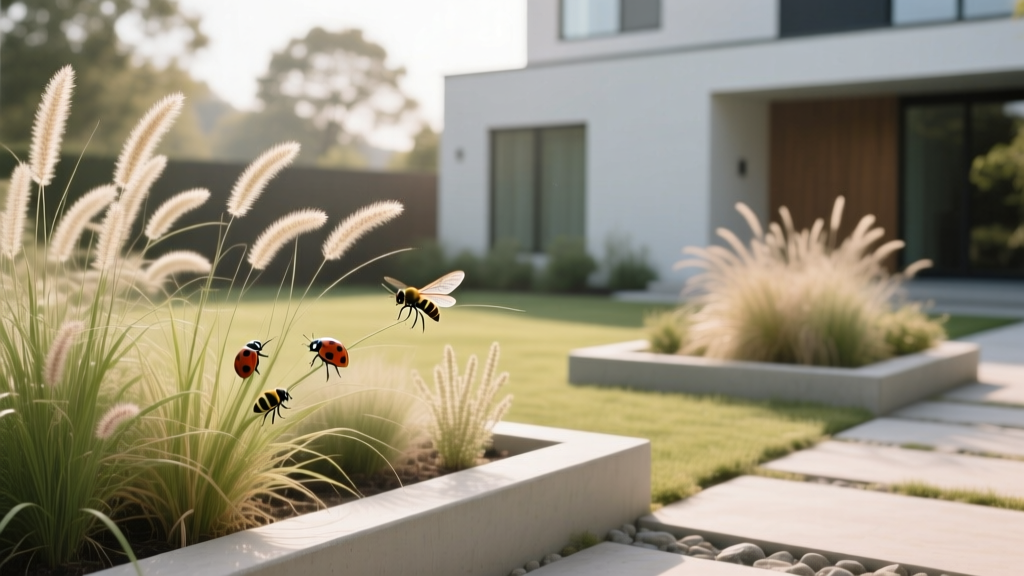
Modern Minimalist Grasses For Beneficial Insects 2026
Mike RodriguezPublished
The Intersection of Minimalist Design and Eco-Friendly Bio-Control
As we navigate the landscaping trends of 2026, the industry has witnessed a massive paradigm shift. Homeowners and landscape architects are increasingly abandoning sterile, high-maintenance turf lawns in favor of modern minimalist front yards anchored by ornamental grasses. However, a common misconception persists: the belief that minimalist design—characterized by clean lines, monochromatic palettes, and restrained plant selections—cannot support local ecosystems or natural pest management. In reality, when selected intentionally, architectural ornamental grasses serve as powerful insectaries. They provide critical overwintering habitats, alternative prey sources, and nectar for beneficial insects, enabling natural bio-control that eliminates the need for synthetic pesticides.
Modern minimalism in 2026 is not about creating a sterile void; it is about rigorous editing and functional massing. By utilizing large, geometric drifts of a single, highly functional grass species, you can create a striking visual impact while simultaneously establishing a robust habitat for predatory insects. According to the The Xerces Society for Invertebrate Conservation, preserving native and ornamental grasses is one of the most effective ways to support overwintering beneficial arthropods, which are essential for early-season pest suppression.
The Philosophy of Minimalist Bio-Control
In previous decades, bio-control gardens were often designed as wild, cottage-style meadows that clashed with modern architectural homes. Today, the 2026 approach merges ecological functionality with strict geometric precision. The secret lies in the structural integrity of the plants and the hardscaping framework. By planting ornamental grasses in precise, measured grids and utilizing dark, inorganic mulches like black basalt gravel, you create a high-contrast, minimalist canvas. Beneath the surface and within the dense culms of the grasses, a complex food web thrives.
Beneficial insects such as ladybugs (Coccinellidae), green lacewings (Chrysoperla), and parasitic wasps require specific microclimates to survive temperature fluctuations. The dense, upright habit of modern ornamental grasses provides a buffer against harsh winds and extreme UV exposure, acting as a living sanctuary. Furthermore, the Environmental Protection Agency (EPA) heavily advocates for biological pest control and the conservation of natural enemies to reduce reliance on chemical pesticides, which aligns perfectly with the low-input philosophy of modern minimalist landscaping.
Top Architectural Grasses for Beneficial Insects in 2026
To achieve a minimalist aesthetic while maximizing bio-control potential, you must select grasses with strong vertical lines, predictable growth habits, and high ecological value. Here are the top performers for 2026:
1. Feather Reed Grass (Calamagrostis x acutiflora 'Karl Foerster')
A staple in modern landscape architecture, 'Karl Foerster' offers strict, vertical lines that can reach up to 5 feet in height, making it an excellent backdrop or living screen. From a bio-control perspective, the hollow, rigid stems of this grass are prime real estate for overwintering solitary wasps and ladybugs. These predators emerge in early spring, precisely when aphid populations begin to spike on nearby broadleaf ornamentals. The dense root system also harbors ground beetles, which are voracious predators of slug and snail eggs.
2. Little Bluestem (Schizachyrium scoparium 'Standing Ovation')
Minimalist design relies heavily on texture and seasonal color shifts. 'Standing Ovation' provides an upright, non-flopping habit that transitions from blue-green in summer to deep bronze in winter. The National Wildlife Federation notes that native grasses like Little Bluestem are essential for supporting native insect populations. The dense, fibrous base of this grass creates a humid microclimate ideal for predatory mites and parasitic wasps that target spider mites and scale insects.
3. Prairie Dropseed (Sporobolus heterolepis)
For a softer, yet highly structured minimalist mound, Prairie Dropseed is unmatched. Its fine-textured, emerald-green foliage forms perfect geometric spheres when planted in a grid. It produces a subtle, cilantro-like fragrance in late summer and provides essential pollen for predatory hoverflies (Syrphidae). The larvae of hoverflies are among the most effective biological control agents for soft-bodied pests like aphids and mealybugs.
Hardscaping and Layout: The 2026 Minimalist Grid
The success of a minimalist bio-control front yard relies as much on the hardscaping as the plant material. In 2026, the standard for high-end minimalist landscaping involves the use of concealed Corten steel edging to create razor-sharp bed lines. This prevents the aggressive rhizomes of certain grasses from encroaching on walkways while maintaining a clean, architectural boundary.
Instead of traditional wood mulch, which can harbor fungal gnats and tie up soil nitrogen, modern minimalist designs utilize 3/8-inch black basalt gravel or dark slate chippings. This dark mulch provides a striking visual contrast against the bright green and golden hues of the grasses. More importantly, gravel mulch allows ground-dwelling beneficial insects, such as rove beetles and wolf spiders, to navigate the soil surface easily to hunt pests, without the barrier of matted wood chips. The average cost for professional installation of a minimalist grass grid with steel edging and basalt mulch in 2026 ranges from $18 to $24 per square foot, depending on regional labor rates and site preparation requirements.
Grass Species and Bio-Control Data Matrix
When planning your front yard, use the following matrix to match your aesthetic goals with specific bio-control outcomes. This data reflects the 2026 consensus on ornamental grass ecology and integrated pest management (IPM).
| Ornamental Grass Cultivar | Minimalist Design Role | Target Beneficial Insects | Pests Controlled (Bio-Control) |
|---|---|---|---|
| Calamagrostis x acutiflora 'Karl Foerster' | Strict vertical lines, backdrop | Ladybugs, Solitary Wasps | Aphids, Caterpillars |
| Schizachyrium scoparium 'Standing Ovation' | Upright mounding, color contrast | Ground Beetles, Parasitic Wasps | Slugs, Spider Mites |
| Sporobolus heterolepis (Prairie Dropseed) | Fine-textured geometric mounds | Predatory Thrips, Hoverflies | Thrips, Scale Insects |
| Pennisetum alopecuroides 'Hameln' | Soft arching borders, edging | Lacewings, Minute Pirate Bugs | Whiteflies, Aphids |
Bio-Control Maintenance Strategies for 2026
Maintaining a minimalist bio-control garden requires a departure from traditional, heavy-handed landscaping practices. The goal is to intervene as little as possible, allowing the beneficial insect populations to establish a natural equilibrium.
Strategic Spring Cut-Backs
The most critical mistake homeowners make is cutting back ornamental grasses in late fall. This destroys the overwintering habitat for countless beneficial insects. In 2026, the recommended IPM protocol is to leave all grass seed heads and hollow stems completely intact throughout the winter. Wait until nighttime temperatures consistently stay above 50°F (usually late March or early April, depending on your hardiness zone) before cutting the grasses down to 4 inches. This timing ensures that overwintering ladybugs, lacewings, and solitary bees have safely emerged from their dormancy.
Targeted Biological Releases
If you notice a localized pest outbreak on companion plants (such as aphids on a minimalist drift of Allium 'Millennium'), avoid broad-spectrum insecticides, which will decimate your beneficial population and ruin the ecological balance of your front yard. Instead, utilize modern biological controls. In late May, you can purchase and release Chrysoperla rufilabris (green lacewing) larvae or Aphidius colemani (parasitic wasps) directly into the grass grid. These agents will quickly neutralize the pest population and establish a breeding colony within the protective foliage of your ornamental grasses.
Soil Microbiome and Fertilizer Management
Ornamental grasses thrive in lean, unamended soils. Over-fertilizing with high-nitrogen synthetic fertilizers causes weak, sappy growth that attracts sap-sucking pests and causes the grasses to flop, ruining their minimalist architectural form. In 2026, the standard practice is to apply a single, light top-dressing of compost tea or a slow-release, mycorrhizal-enhanced organic fertilizer in early spring. This supports the soil food web, encouraging predatory nematodes that hunt soil-dwelling pests like fungus gnat larvae and root weevils, ensuring your minimalist front yard remains pristine, sustainable, and naturally pest-free.
Conclusion
Designing a modern minimalist front yard with ornamental grasses is no longer just an exercise in visual restraint; it is a proactive strategy for ecological resilience. By embracing the architectural beauty of grasses like 'Karl Foerster' and Prairie Dropseed, and pairing them with precise hardscaping and intelligent maintenance protocols, you create a landscape that is as functional as it is beautiful. In 2026, the most sophisticated landscapes are those that work with nature, utilizing beneficial insects and bio-control to maintain a flawless, chemical-free environment that elevates both your curb appeal and your local ecosystem.

