Pest Control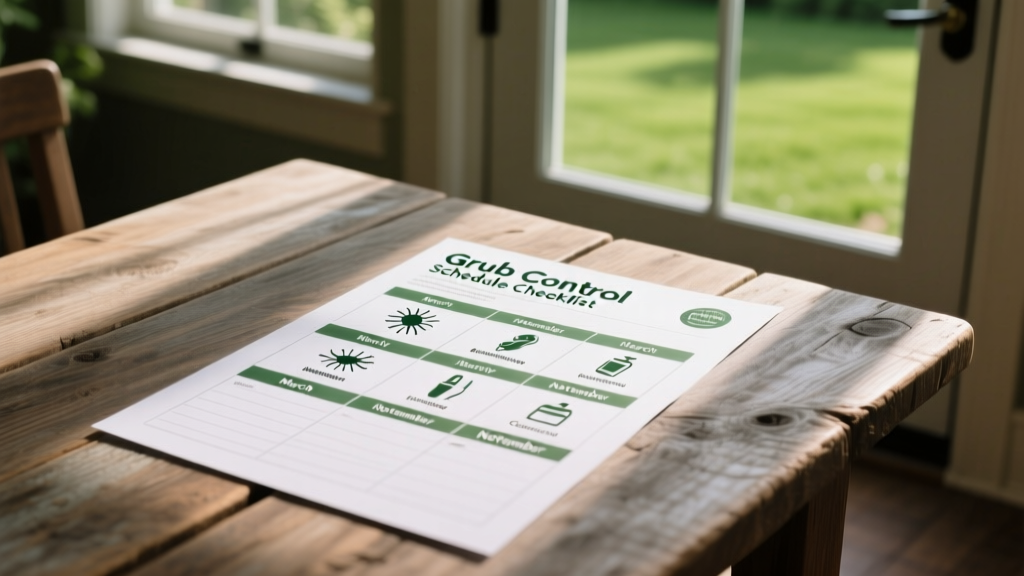
The Ultimate Grub Control Schedule: A Month-by-Month Checklist
Sarah ChenPublished
The Ultimate Grub Control Schedule: A Month-by-Month Checklist
White grubs—the larval stage of Japanese beetles, June bugs, and European chafers—are among the most destructive subterranean pests in North American lawns. By feeding aggressively on grassroots, these C-shaped, cream-colored larvae cause irregular brown patches, spongy turf, and severe root detachment that invites secondary damage from foraging skunks and crows. Effective grub management is not a one-time application; it requires a strategic, season-long Integrated Pest Management (IPM) approach. Timing is everything. Applying the wrong product at the wrong time wastes money and harms beneficial soil organisms.
This comprehensive, month-by-month checklist will guide you through monitoring, preventing, and curing grub infestations using both biological and chemical controls, ensuring your lawn remains thick, green, and pest-free year-round.
Understanding the Grub Life Cycle
To master grub control, you must understand their life cycle. Adult beetles emerge in early summer, mate, and lay eggs in the top inch of soil. These eggs hatch in mid-to-late summer into young grubs that feed voraciously near the surface. As soil temperatures drop in late fall, grubs burrow deep below the frost line to overwinter. They return to the surface in spring to feed briefly before pupating and emerging as adults. According to Penn State Extension, targeting grubs when they are small and actively feeding near the surface is the key to successful eradication.
Spring (March – May): Assessment and Prevention Planning
March & April: Lawn Assessment and Cultural Controls
- Monitor for Spring Damage: As the ground thaws, check for brown patches that peel back like loose carpet. This indicates overwintered grubs feeding near the surface.
- Perform a Grub Count: Cut three sides of a 1-foot square piece of sod and peel it back. Count the grubs. A healthy lawn can tolerate up to 5 grubs per square foot. If you find 10 or more, you have a severe infestation requiring immediate action.
- Apply Milky Spore (Optional): If you are dealing specifically with Japanese beetle grubs and prefer a long-term biological approach, apply milky spore disease (Paenibacillus popilliae) to the soil. Note that it takes 2-3 years to establish full efficacy.
May: Preventative Application Window
- Apply Long-Residual Preventatives: Mid-to-late May is the ideal time to apply preventative insecticides containing Chlorantraniliprole (e.g., Scotts GrubEx or Acelepryn). This active ingredient is highly effective against young grubs and has a low toxicity profile for bees and earthworms.
- Watering In: Immediately after application, irrigate the lawn with 0.25 to 0.5 inches of water to move the active ingredient into the root zone where the eggs will soon hatch.
Summer (June – August): Targeted Interventions
June & Early July: Secondary Preventatives
- Imidacloprid Applications: If you missed the May window with Chlorantraniliprole, early July is your last chance for preventatives using Imidacloprid (e.g., Bayer Advanced Season-Long Grub Control). This chemical binds to the organic matter in the soil and waits for the newly hatched grubs to ingest it.
- Adult Beetle Management: Keep an eye on adult Japanese beetle populations. While trapping is popular, University of Kentucky Entomology warns that traps often attract more beetles to your yard than they catch. Instead, hand-pick adults in the early morning or apply organic Neem oil sprays to ornamental plants to reduce egg-laying near your turf.
August & September: Curative Treatments and Biological Warfare
- Curative Chemical Controls: By August, grubs have hatched and are actively feeding. Preventatives will no longer work. Switch to fast-acting curative products containing Trichlorfon (e.g., Dylox or Bayer 24-Hour Grub Killer). Apply at a rate of 1.5 to 2 lbs per 1,000 square feet. Trichlorfon breaks down quickly in the soil, so it must be applied while grubs are actively feeding near the surface.
- Beneficial Nematodes: For an organic approach, apply Heterorhabditis bacteriophora (Hb) nematodes in late August or early September. These microscopic worms seek out grubs, enter their bodies, and release bacteria that kill the pest within 48 hours. Pro Tip: Nematodes are living organisms. Apply them in the late evening or on a cloudy day to avoid UV degradation, and keep the soil consistently moist for two weeks post-application.
Fall (October – November): Recovery and Winter Prep
October: Turf Recovery
- Aeration and Overseeding: Grub damage leaves bare spots vulnerable to weeds. Core aerate the affected areas to relieve soil compaction, apply a starter fertilizer, and overseed with a drought-tolerant, endophyte-enhanced turfgrass blend (like tall fescue or perennial ryegrass). Endophytic fungi naturally deter surface-feeding insects and improve overall grass vigor.
- Final Grub Assessment: Conduct one last sod-peel test. If curative treatments failed and grub populations remain above the threshold, a late-fall application of a fast-acting contact insecticide may be necessary before the ground freezes.
November: Winterization
- Reduce Irrigation: As soil temperatures drop below 50°F, grubs will burrow deep into the soil profile to overwinter. Stop irrigating your lawn to allow it to enter natural dormancy. Dry soil conditions in the upper root zone can actually increase winter mortality rates for surviving grubs.
Winter (December – February): Planning and Maintenance
- Equipment Maintenance: Clean and calibrate your broadcast or drop spreader. Ensure the hopper is free of corrosive fertilizer and insecticide residue.
- Budgeting: Review the past year's pest pressure. If your neighborhood experienced a massive beetle flight, budget for preventative treatments in May of the coming year.
Grub Control Products: Preventatives vs. Curatives
Choosing the right product depends entirely on the time of year and the life stage of the grub. Refer to the comparison chart below to select the appropriate treatment for your schedule.
| Treatment Type | Active Ingredient | Application Window | Target Stage | Est. Cost (per 1,000 sq ft) |
|---|---|---|---|---|
| Preventative | Chlorantraniliprole | April – May | Eggs / 1st Instar | $3.00 - $4.50 |
| Preventative | Imidacloprid | June – Early July | Eggs / 1st Instar | $2.00 - $3.50 |
| Curative | Trichlorfon (Dylox) | August – September | 2nd / 3rd Instar | $4.00 - $6.00 |
| Biological | Hb Nematodes | Late Aug – Early Sept | 2nd / 3rd Instar | $15.00 - $20.00 |
| Biological | Milky Spore | Spring or Fall | Japanese Beetle Larvae | $10.00 - $15.00 |
Integrated Pest Management (IPM) & Cultural Controls
Chemical and biological treatments are only half the battle. A robust lawn can naturally withstand and recover from minor grub feeding. Implement these cultural practices to make your yard less hospitable to egg-laying beetles:
- Mow High: Maintain a mowing height of 3 to 4 inches throughout the summer. Taller grass develops deeper, more extensive root systems that can tolerate grub feeding. Furthermore, beetles prefer laying eggs in thin, short turf exposed to direct sunlight.
- Water Deeply and Infrequently: Avoid light, daily watering. Grub eggs require consistent surface moisture to survive. Watering deeply (1 inch per week) but infrequently encourages deep root growth while allowing the top inch of soil to dry out, which can desiccate newly laid eggs.
- Encourage Natural Predators: Make your yard welcoming to insectivorous birds, toads, and ground beetles. Avoid broad-spectrum insecticides that wipe out these beneficial predators. According to the University of Minnesota Extension, a diverse ecosystem is your first line of defense against localized pest outbreaks.
Expert Insight: 'The most common mistake homeowners make is applying curative products like Dylox in the spring, or preventative products in the fall. Matching the active ingredient to the grub's life stage is the single most important factor in successful lawn pest management.'
Frequently Asked Questions
How do I know if animals are digging up my lawn for grubs?
If you notice small, cone-shaped holes (skunks) or large, rolled-back patches of turf (raccoons or crows), you likely have a high grub population. Animals will only expend the energy to dig if the grub density is high, usually exceeding 10 grubs per square foot.
Can I apply grub control and grass seed at the same time?
It depends on the active ingredient. Products containing Imidacloprid or Chlorantraniliprole are generally safe to use during overseeding. However, some fast-acting curatives and broad-spectrum insecticides can inhibit seed germination. Always read the product label for specific overseeding intervals.
Are grubs completely bad for the soil?
In small numbers, grubs contribute to the soil food web by breaking down organic matter and serving as a food source for birds and mammals. However, in the confined ecosystem of a residential lawn, their population can quickly explode past the threshold of tolerance, necessitating intervention to save the turf.