
Landscaping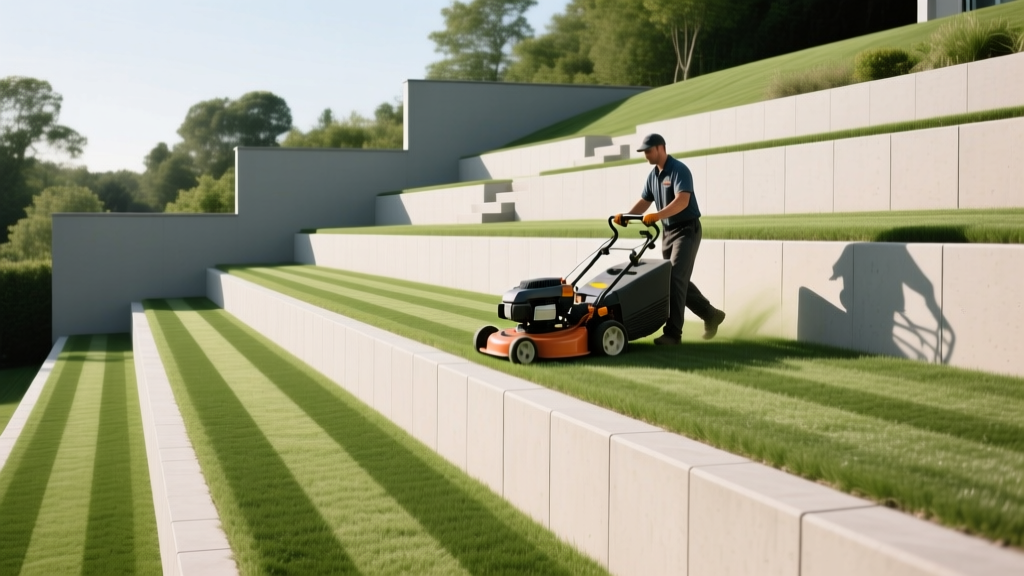
Mowing Terraced Lawns: Segmental Retaining Wall Patterns 2026
Sarah ChenPublished
Mastering the Intersection of Hardscaping and Lawn Care
Transforming a steep, unusable backyard into a series of flat, manageable platforms is one of the most rewarding landscaping projects a homeowner can undertake. Sloped backyard terracing with segmental retaining walls (SRWs) not only solves severe drainage and erosion issues but also creates stunning multi-level outdoor living spaces. However, once the hardscaping is complete and the sod is laid, a unique challenge emerges: how do you efficiently and safely mow these newly created terraced strips?
Mowing a terraced lawn is fundamentally different from mowing a flat, open yard. The presence of segmental retaining walls introduces hard boundaries, elevation changes, and narrow corridors that dictate your mowing patterns and equipment choices. In 2026, the integration of advanced robotic mowing technology and refined manual mowing techniques has made maintaining these tiered landscapes easier than ever. This guide will walk you through the best mowing techniques, patterns, and equipment strategies specifically designed for sloped backyard terracing with segmental retaining walls.
Designing the Terrace Edge for Mowing Efficiency
Before you even start the mower, the success of your mowing routine depends on how the transition between the turf and the retaining wall was designed. According to the National Concrete Masonry Association (NCMA), proper SRW design must account for surface water management, which directly impacts how grass and clippings interact with the wall.
The Mowing Strip (Curb Reveal)
The most critical feature for maintaining terraced lawns is the mowing strip. This is a flush border of pavers, stamped concrete, or tightly packed gravel installed at the base of the retaining wall. A mowing strip allows the wheels of your mower to travel smoothly along the edge without the deck dropping into the gravel drainage aggregate behind the wall. If your 2026 terrace design lacks a mowing strip, you will be forced to use a string trimmer for the entire perimeter, increasing maintenance time and risking damage to the SRW blocks.
Capstone Overhang Considerations
Segmental walls are typically finished with a capstone that overhangs the face by 1 to 2 inches. When mowing the upper terrace, this overhang can hide uncut grass and create a shadow line. To achieve a clean cut, you must use a mower with a deck that extends slightly past the wheelbase, or rely on a specialized edging pass to reach beneath the capstone lip.
2026 Mower Technology for Multi-Level Terraces
The landscaping equipment market in 2026 has heavily favored automation and slope-safety features, making terraced lawn care vastly more efficient. Choosing the right mower depends on the width of your terraces and the steepness of the transition ramps between them.
RTK GPS Robotic Mowers
For homeowners with multiple terraced zones, Real-Time Kinematic (RTK) GPS robotic mowers have become the gold standard in 2026. Unlike older models that required physical boundary wires—which are easily damaged by retaining wall settling or aeration—RTK mowers use satellite positioning to create virtual boundaries. Models like the Mammotion Luba 3 AWD and the Husqvarna Automower NERA series allow you to map each terrace as a distinct "zone." When it is time to mow, you simply carry the lightweight robot to the desired terrace and select the zone via the app. The AWD (All-Wheel Drive) variants can handle the steep transition ramps between terraces without slipping.
Slope-Sensing Zero-Turn Mowers
If your terraces are wide enough (15 feet or more) and feature gentle ramp transitions, compact zero-turn mowers equipped with 2026 gyroscopic slope-sensors are an excellent choice. These sensors automatically adjust the hydraulic fluid distribution to maintain traction on inclines and will safely shut off the blades if the mower detects a tilt exceeding 20 degrees, preventing scalping and rollover accidents near the wall edges.
Strategic Mowing Patterns for Terraced Strips
The geometry of a terraced lawn usually consists of long, narrow rectangles bounded by the retaining wall on one side and a fence or garden bed on the other. Applying the correct mowing pattern is essential for turf health, aesthetic striping, and protecting your hardscape.
1. The Perimeter Discharge Pass
Always begin your mowing session with a perimeter pass along the retaining wall. Critical Technique: Ensure your mower's discharge chute is pointed away from the segmental wall. If you blow clippings into the wall joints, the organic matter will decompose, trap moisture against the concrete blocks, and create a breeding ground for weeds in the wall's drainage gravel. By discharging clippings toward the center of the terrace, you keep the SRW clean and maintain proper hydrostatic pressure relief behind the wall, a key principle highlighted by Allan Block's design basics.
2. The Linear Overlap Pattern
For narrow terraces (8 to 12 feet wide), the linear back-and-forth pattern is the most efficient. To create professional-grade stripes in 2026, use a mower with a rear roller or attach a striping kit. Overlap each pass by 3 inches to account for the slight bouncing that occurs when mower wheels transition over minor soil undulations near the wall base.
3. The Terrace Spiral
If your terracing wraps around a curved patio or features a wide, square landing pad, the spiral pattern works best. Start on the outside perimeter (discharging inward) and spiral toward the center. This pattern minimizes the number of tight 180-degree turns, reducing the risk of turf tearing near the retaining wall corners where the soil is often shallower and more prone to compaction.
Managing Micro-Climates and Turf Health on Terraces
Terraced slopes create distinct micro-climates. The lower terraces often retain more moisture due to runoff from the upper levels, while the upper terraces dry out faster and receive more direct sunlight. The University of Minnesota Extension emphasizes that mowing height should be adjusted based on turf stress and environmental conditions.
- Upper Terraces: Set your mower deck to 3.5 or 4 inches. The taller grass blades will shade the soil, reducing evaporation and protecting the roots from the intense sun exposure typical of elevated, unshaded platforms.
- Lower Terraces: Set the deck to 3 inches. Because lower terraces stay damp longer due to the retaining wall's drainage weep holes and gravity-fed runoff, slightly shorter grass promotes better air circulation at the soil level, preventing fungal diseases like brown patch.
Edging and Trimming Along Segmental Walls
Even with a well-designed mowing strip, some trimming is required. When using a string trimmer along a segmental retaining wall, technique is everything to avoid permanent damage to the hardscape.
The Nylon String Threat: High-speed nylon trimmer line will quickly scour and chip the colored finish off concrete segmental blocks. Over time, this exposes the raw aggregate beneath, leading to a faded, degraded appearance. In 2026, professional landscapers recommend using a wheeled edger with a plastic blade guard specifically designed for hardscape borders, or keeping the trimmer head tilted slightly away from the wall face so the string only grazes the grass.
Managing the Weep Holes: Never use a trimmer to clear grass out of the wall's weep holes or drainage pipes. The high-speed line can easily snap off inside the pipe, causing a clog that compromises the wall's drainage system. Use a handheld blower or a soft-bristle brush to keep these critical drainage points clear.
2026 Mower Recommendations for Terraced SRWs
Selecting the right equipment is vital for safety and efficiency. Below is a comparison of the best mower types for terraced segmental retaining wall landscapes in 2026.
| Mower Type | Ideal Terrace Width | Max Slope Grade (Transitions) | 2026 Key Feature |
|---|---|---|---|
| RTK GPS Robot (AWD) | 5 to 20 ft | 45° (100% grade) | Virtual multi-zone mapping; no boundary wires to break near walls. |
| Walk-Behind Self-Propel | 4 to 12 ft | 20° (36% grade) | Rear-wheel drive with aggressive turf-grip tires for ramp traction. |
| Compact Zero-Turn | 15+ ft | 15° (26% grade) | Gyroscopic slope-sensor shutoff; wide deck for rapid linear passes. |
| Push Reel Mower | Under 6 ft | Flat terraces only | Zero-emission, ultra-quiet; perfect for small, narrow privacy terraces. |
Conclusion
Sloped backyard terracing with segmental retaining walls is a premier landscaping solution that demands a specialized approach to lawn care. By incorporating flush mowing strips during the design phase, leveraging 2026 RTK robotic mowers for multi-zone management, and executing perimeter-first mowing patterns to protect your wall's drainage aggregate, you can maintain a pristine, multi-level landscape. Remember to respect the structural integrity of your SRWs by trimming carefully and adjusting your mowing heights to suit the unique micro-climates of each terrace. With the right techniques, your terraced lawn will remain a safe, beautiful, and highly functional extension of your home for decades to come.

