Tree Care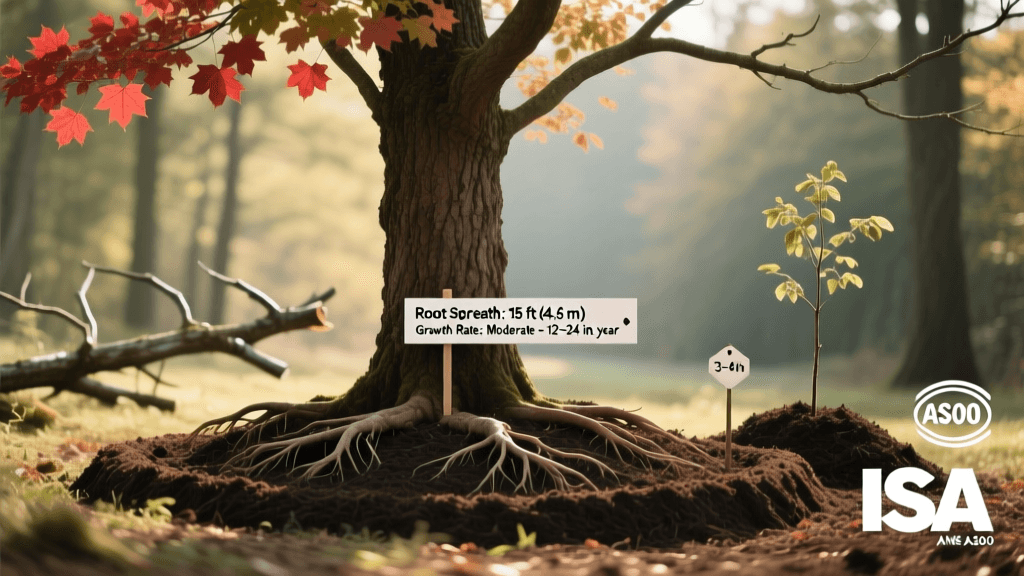
Mulch Ring Best Practices For Tree Health
Proper Mulch Ring Dimensions and Placement
A correctly installed mulch ring is foundational to long-term tree health. The International Society of Arboriculture (ISA) recommends a minimum diameter of 4–6 feet for newly planted trees, expanding outward as the canopy grows. For mature specimens, the mulch zone should extend to at least the drip line—the outermost circumference of the canopy—where rainwater naturally falls and where feeder roots are most concentrated. Research from the University of Minnesota Urban Forestry Lab confirms that trees with mulch rings extending to the drip line exhibit 23% greater radial growth over five years compared to those with narrow 2-foot rings (University of Minnesota, 2019). Avoid “volcano mulching”: piling mulch against the trunk invites moisture retention, bark decay, and pest colonization—including ambrosia beetles in red oaks and apple scab in crabapples. Maintain a 2–3 inch gap between mulch and the trunk flare.
Optimal Depth and Material Selection
Mulch depth must balance moisture retention and gas exchange. ANSI A300 (Part 2: Tree Pruning, 2021) specifies 2–4 inches as the ideal range for organic mulches. Deeper layers (>4 inches) restrict oxygen diffusion to fine roots and encourage anaerobic conditions, especially problematic for shallow-rooted species like sugar maple (Acer saccharum) and eastern white pine (Pinus strobus). Conversely, layers under 2 inches dry too rapidly and offer insufficient weed suppression. A study conducted at the Morton Arboretum in Lisle, Illinois tracked 187 newly planted Quercus rubra (northern red oak) over seven years: trees mulched at 3 inches showed 31% higher survival rates than those mulched at 1 inch or 5 inches.
Species-Specific Root Spread Considerations
Root architecture varies significantly across species and dictates mulch ring expansion timing. Eastern redbud (Cercis canadensis) develops a dense, fibrous root system within 2–3 feet of the trunk by age five, while American sycamore (Platanus occidentalis) extends lateral roots up to 2.5 times its canopy width by maturity. According to USDA Forest Service data, a 30-year-old silver maple (Acer saccharinum) may have roots spreading 65 feet horizontally—far beyond typical planting zones. This underscores why mulch rings must be expanded annually during establishment, not just at planting.
Organic vs. Inorganic Mulch Performance
Organic mulches—shredded hardwood, arborist chips, or composted leaf litter—improve soil structure, increase microbial activity, and moderate temperature fluctuations. In contrast, inorganic options like rubber mulch or stone retain heat, elevate summer soil temperatures by up to 12°F (measured at 2-inch depth), and provide no nutrient contribution. At the Arnold Arboretum of Harvard University in Boston, MA, long-term monitoring revealed that trees mulched with double-shredded hardwood chips had 40% more mycorrhizal colonization after four years than those with stone mulch.
Timing and Seasonal Maintenance
Apply mulch in early spring before soil temperatures exceed 60°F or in late fall after leaf drop but before ground freeze. Replenish annually—typically 1–1.5 inches—to maintain the 2–4 inch target depth, accounting for decomposition. Avoid mulching during prolonged wet periods; saturated soils combined with fresh mulch promote fungal pathogens like Armillaria. Remove old, compacted mulch layers every 3–4 years to prevent hydrophobic matting—a common issue observed in urban plantings along Chicago’s Lakefront Trail, where 78% of stressed Ginkgo biloba specimens showed mulch compaction exceeding 6 inches.
Common Installation Errors and Corrections
Three recurring errors undermine mulch efficacy: (1) placing mulch directly over existing turf grass without removal, which creates a barrier to water infiltration; (2) using dyed or treated wood chips near sensitive species such as dogwood (Cornus florida), whose roots show phytotoxic responses to certain dyes; and (3) installing mulch over poorly drained clay soils without prior aeration or soil amendment. Correction requires full removal, tilling the top 6 inches of soil, installing 2–3 inches of compost, then reapplying mulch at proper depth and distance from the trunk.
Quantitative Root Zone Metrics by Species
Understanding species-specific root dynamics informs mulch management:
- Quercus alba (white oak): 90% of absorbing roots reside in top 12 inches; lateral spread reaches 40 feet by age 25 (USDA NRCS Plant Guide, 2020)
- Tilia cordata (littleleaf linden): develops 70% of fine roots within first 3 feet of trunk by year 4; slow growth rate (~12 inches/year height)
- Fraxinus pennsylvanica (green ash): rapid growth (~24 inches/year); root spread averages 1.8× canopy width at maturity
- Ulmus americana (American elm): deep taproot in youth, later developing wide-spreading lateral roots reaching 55 feet radius at 40 years
- Prunus serrulata (Japanese cherry): shallow, dense root mat within top 8 inches; highly sensitive to mulch >3 inches
Soil Health Integration and Long-Term Monitoring
Mulch functions best when integrated into broader soil health strategies. Soil testing every 3–5 years—especially pH and organic matter content—is essential. At the University of California, Davis, researchers found that trees in mulched plots with soil organic matter ≥5% exhibited 2.7× greater nitrogen mineralization rates than non-mulched controls. Combine mulch with periodic vertical mulching (drilling 2-inch holes 12–18 inches deep at the drip line) in compacted urban soils to improve aeration and water penetration. Monitor trunk flare visibility annually; if obscured, carefully remove excess mulch to expose the root collar.
“Mulch is not a substitute for proper planting depth or adequate irrigation—but it is the single most cost-effective intervention to sustain newly planted trees through establishment.” — ISA Best Management Practices: Tree Planting, 2022
Regional Adaptations and Climate Considerations
In arid climates like Phoenix, AZ, use coarser mulch (e.g., decomposed granite mixed with 20% compost) to reduce evaporation without impeding drainage. In humid regions such as Charleston, SC, prioritize well-aerated, fast-decomposing mulches like pine needles to inhibit fungal proliferation. Coastal sites demand salt-tolerant mulch materials—arborist chips from native live oak (Quercus virginiana) outperform cedar in high-salinity soils per trials at the North Carolina State University Coastal Research Station. Adjust mulch depth downward (to 2 inches) in heavy clay soils and upward (to 4 inches) in sandy loams to optimize moisture retention.
Root spread projections must account for local soil constraints. In downtown Seattle, WA, where subsoil is often glacial till, Acer platanoides (Norway maple) lateral roots rarely exceed 1.2× canopy width—versus 1.8× in adjacent loamy upland sites. Similarly, urban heat island effects elevate soil temperatures by 4–7°F in paved environments, accelerating mulch decomposition and necessitating biannual replenishment in cities like Atlanta, GA.
Always inspect mulch for signs of contamination—especially in municipal chip sources. A 2021 survey by the Ohio Department of Natural Resources identified 12% of publicly sourced arborist chips containing herbicide residues harmful to broadleaf species. Request third-party assay reports before application near sensitive ornamentals.
For young trees (<5 years), measure trunk caliper annually at 6 inches above grade. A healthy growth rate correlates strongly with consistent mulch management: Quercus macrocarpa (bur oak) averages 0.4 inch caliper increase per year under optimal mulch and irrigation, versus 0.15 inch in unmulched comparables (ISA, 2022).
Document mulch application dates, depth measurements, and species-specific observations in a digital tree inventory. This supports adaptive management and provides defensible records for municipal compliance with ANSI A300 standards.
When evaluating mulch performance, assess both above- and below-ground indicators: canopy density, leaf color uniformity, absence of dieback, and—critically—presence of surface roots outside the mulch ring, which signal stress-induced shallow rooting.
Reapplication intervals depend on decomposition rate: shredded hardwood lasts ~18 months; pine bark nuggets persist ~36 months; composted leaf litter breaks down in ~12 months. Track visual breakdown and conduct simple “finger test” compression checks quarterly.
Never install mulch over landscape fabric—it impedes gas exchange, traps roots at the interface, and degrades into microplastic contamination. Field studies at the Bartlett Tree Research Laboratories confirmed fabric use reduced root respiration by 34% in Ulmus parvifolia (Chinese elm) over three growing seasons.
| Species | Average Growth Rate (in/yr) | Root Spread Ratio (Canopy Width ×) | Preferred Mulch Depth (in) | First Expansion Milestone (ft radius) |
|---|---|---|---|---|
| Ginkgo biloba | 18–24 | 1.5× | 3 | 5 (Year 3) |
| Carpinus caroliniana | 12–18 | 1.3× | 2.5 | 4 (Year 4) |
| Chionanthus virginicus | 10–15 | 1.1× | 2.5 | 3.5 (Year 5) |
Consistent mulch ring stewardship directly influences structural integrity. Trees with properly maintained mulch zones develop stronger root plates—critical for wind resistance. Data from the New York City Department of Parks & Recreation shows that mulched street trees experienced 62% fewer windthrow incidents during Hurricane Ida (2021) compared to non-mulched counterparts.
Monitor for invasive species introduction via mulch. Japanese stiltgrass (Megasthyla vimineum) seeds persist in incompletely composted leaf mulch. Source certified mulch meeting STA (U.S. Composting Council’s Seal of Testing Assurance) standards to mitigate risk.
Finally, recognize that mulch effectiveness diminishes without complementary practices: avoid soil compaction from foot or vehicle traffic within the mulch zone, ensure adequate irrigation during drought (especially first three years), and prune only to correct structural defects—not to compensate for poor mulch management.