Lawn Care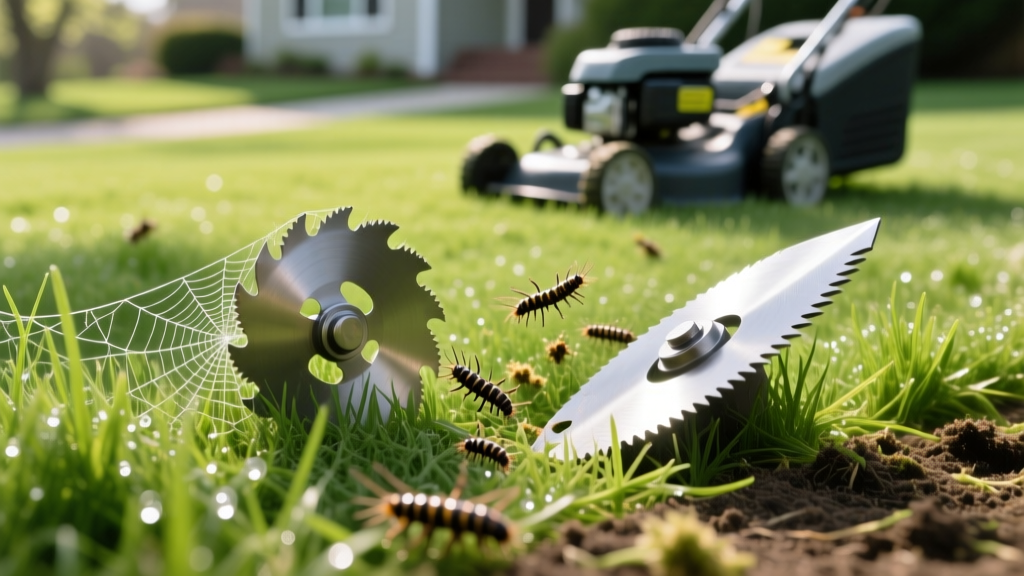
Mulching vs High-Lift Blades for Web Worm Debris 2026
Lisa ThompsonPublished
The Hidden Lawn Damage from Tree Web Worms
When autumn arrives, homeowners with mature deciduous trees often face a familiar nuisance: tree web worms. While the Penn State Extension notes that fall webworms rarely cause long-term harm to established trees, the impact on the lawn beneath the canopy is a completely different story. As we navigate the 2026 lawn care season, shifting regional weather patterns have extended the active feeding period of these pests, resulting in heavier frass (caterpillar droppings) and sticky webbing raining down on our turf well into late autumn.
Managing this debris requires more than just a standard mowing routine. It demands a strategic approach to your mower's cutting deck. Specifically, the debate between using a mulching mower blade versus a high-lift blade becomes critical when dealing with web worm fallout. In this comprehensive guide, we break down exactly how each blade type handles web worm debris, helping you protect your lawn from smothering, fungal outbreaks, and nutrient burn in 2026.
Understanding the Threat: Frass, Silk, and Fungal Spores
Before comparing blades, we must understand the enemy on the ground. Tree web worms, including the eastern tent caterpillar and the fall webworm, are voracious eaters. According to Clemson University HGIC, a single colony can defoliate entire branches, producing massive amounts of frass and silk webbing. When this material falls onto your lawn, it creates three distinct problems:
- Turf Smothering: The silk webbing is surprisingly durable. When it mats onto the grass, it blocks sunlight and traps excess moisture against the soil surface, starving the turf.
- Fungal Incubation: The trapped moisture and decaying organic matter create a perfect breeding ground for lawn diseases like brown patch and dollar spot, which thrive in the humid microclimates created by fallen webs.
- Frass Burn: While caterpillar frass is organic, heavy concentrations act like a hot, uncomposted manure. It can burn the grass blades and alter the localized soil pH, leaving brown, dead patches directly beneath the infested tree canopy.
Mulching Blades vs. High-Lift Blades: The Core Differences
To effectively manage this debris, you need to understand the aerodynamics of your mower deck and how different blade geometries interact with organic matter.
The Mulching Blade
Mulching blades (often called 3-in-1 blades) feature a distinct, aggressive curvature with multiple cutting edges and bends along the blade's length. Their primary function is to keep grass clippings, and in this case, fallen debris, suspended in the air inside the mower deck. They chop the material repeatedly into microscopic particles before dropping them back onto the soil surface.
The High-Lift Blade
High-lift blades feature a pronounced, steep upward angle on the trailing edge of the blade. This design acts like a fan, creating powerful vertical suction that lifts grass blades for a clean, even cut and forcefully ejects the clippings out of the side discharge chute or into a rear bagger attachment.
The Physics of Suction: Dealing with Sticky Silk
Web worm silk is not like a normal autumn leaf. It is sticky, fibrous, and highly resistant to tearing. When a mower blade spins at over 3,000 RPM, standard blades can struggle to cut through this tensile strength. High-lift blades generate a vacuum effect measured in inches of water lift. A premium high-lift blade generates significant upward force, which is necessary to peel the sticky webbing off the grass blades before the cutting edge strikes it. If the webbing is not lifted, the blade simply pushes it down into the thatch layer, where it will smother the crown of the grass plant.
Conversely, mulching blades sacrifice some of this vertical lift to create a horizontal vortex inside the deck. This vortex is excellent for recutting dry frass, but if the webbing is damp from morning dew, the lack of vertical lift can cause the mower to push the damp webs into a matted layer. Therefore, timing your mowing sessions for the mid-afternoon, when the sun has dried out the silk and frass, is a critical 2026 lawn care strategy for properties with heavy tree cover.
Why Mulching Blades Excel During Web Worm Season
For the majority of the web worm season, a high-quality mulching blade is your best defense. When light to moderate frass and fragmented webbing fall onto the lawn, a mulching blade acts as a biological accelerator. By chopping the sticky webbing and frass into ultra-fine particles, the mulching blade ensures the debris falls deep into the turf canopy rather than resting on top of the grass blades. Once in contact with the soil, native microbes and earthworms rapidly break down the organic matter. The frass, which is rich in nitrogen and phosphorus, is safely recycled into the soil food web without burning the turf.
In 2026, advanced mulching blades like the Oregon Gator G6 and the Toro Atomic series feature specialized micro-teeth that can easily shred tough, silken webworm webs that would otherwise tangle around standard spindles.
When to Use High-Lift Blades for Web Worm Cleanup
While mulching is ideal for daily maintenance, there is a tipping point. If you return from a late-summer vacation to find a massive, localized web worm nest has collapsed, covering a 10-foot radius of your lawn in thick, matted webs and heavy frass, a mulching blade will fail. Attempting to mulch heavy, wet, matted webbing will result in the deck clogging. The sticky silk will wrap around the blade spindle, and the damp frass will clump, dropping onto the lawn in heavy, grass-killing piles.
In these severe scenarios, you must switch to a high-lift blade paired with a bagger attachment. The high-lift blade's powerful suction will rip the matted webbing off the turf surface and vacuum it directly into the collection bag, removing the threat entirely from the lawn ecosystem.
2026 Blade Comparison Chart for Web Worm Debris
| Feature | Mulching Blade | High-Lift Blade |
|---|---|---|
| Deck Suction | Moderate (Horizontal Vortex) | High (Vertical Vacuum) |
| Debris Processing | Chops into microscopic particles | Ejects whole or large fragments |
| Webbing Management | Shreds dry silk effectively | Lifts and bags heavy, wet mats |
| Frass Distribution | Recycles into soil safely | Removes from lawn entirely |
| Best 2026 Use Case | Light daily maintenance | Severe nest collapse cleanup |
Mower Deck Maintenance: Preventing Silk Buildup
Regardless of whether you choose a mulching or high-lift blade, tree web worm debris will challenge your mower deck. The combination of frass, tree sap, and silk creates a cement-like paste when mixed with morning dew. In 2026, lawn care professionals recommend applying a ceramic or PTFE-based mower deck spray after every mowing session under infested trees. This prevents the web worm debris from adhering to the underside of the deck. If the deck builds up with sticky webbing, it destroys the aerodynamic flow required for both mulching and high-lift bagging, leading to uneven cuts and stalled engines. Always scrape the deck with a plastic putty knife to avoid chipping the factory powder-coat and inviting rust.
Best Practices for Mowing Under Infested Trees
To maintain a pristine lawn beneath susceptible trees like pecan, hickory, and ash, follow this seasonal protocol:
- Early Summer (Tent Caterpillars): Monitor for early webbing. Use a mulching blade to continuously chop light frass and return nutrients to the soil.
- Late Summer to Fall (Fall Webworms): If webs are small and scattered, stick to mulching. If a major branch drops its web in a heavy clump, switch to a high-lift blade and bag the debris immediately.
- Post-Infestation Recovery: Once the debris is cleared and the worms have pupated, perform a core aeration and apply a light compost top-dressing. This helps the soil process any remaining microscopic silk and restores the turf canopy before winter dormancy.
Final Thoughts
Tree web worms may live in the canopy, but their impact is felt on the ground. By understanding the distinct aerodynamic properties of mulching versus high-lift mower blades, you can adapt your mowing strategy to the severity of the infestation. Utilize mulching blades for routine, light-debris maintenance to feed your soil, and deploy high-lift blades with a bagger when heavy, matted webs threaten to smother your turf. With the right equipment and timing, your lawn can remain healthy and vibrant throughout the 2026 season, no matter what falls from the branches above.