Gardening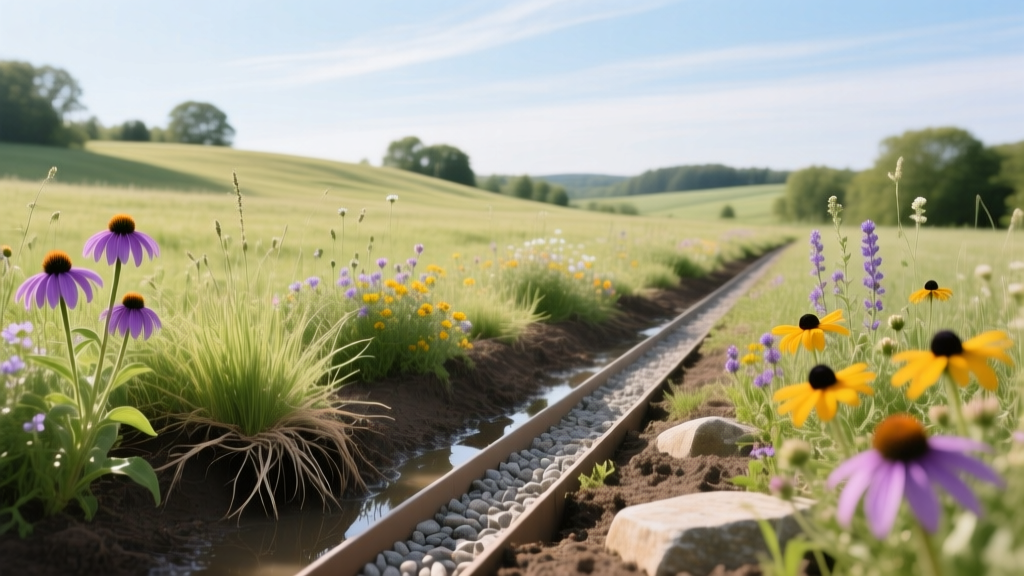
2026 Native Wildflower Meadow and French Drain Guide
Anna KowalskiPublished
The Intersection of Subsurface Drainage and Native Prairies
As we move through 2026, the shift away from resource-intensive turfgrass toward resilient native wildflower meadows has become a cornerstone of sustainable landscaping. Homeowners and land managers are increasingly recognizing the ecological benefits of deep-rooted prairie plants, from supporting vital pollinator populations to sequestering carbon. However, a common and devastating pitfall in meadow establishment is ignoring subsurface hydrology. Many native wildflower species, particularly those adapted to upland prairies, are highly susceptible to root rot and crown failure in waterlogged soils. If your designated meadow site suffers from poor percolation, heavy clay subsoil, or a high seasonal water table, sowing a native seed mix directly into the ground will likely result in failure. The most effective solution is integrating a French drain installation into your site preparation phase before broadcasting your native wildflower seed mix.
Why Native Meadows Require Proper Subsurface Drainage
Unlike shallow-rooted turfgrass, native wildflowers such as Purple Coneflower (Echinacea purpurea), Butterfly Weed (Asclepias tuberosa), and Blazing Star (Liatris spicata) develop extensive taproots that can plunge 5 to 15 feet into the earth. These deep root systems are designed to access moisture during severe summer droughts, but they require well-aerated, freely draining soil profiles to survive the wet winter and spring months. When subsurface water pools and creates anaerobic conditions, the deep roots suffocate and rot. According to the Xerces Society for Invertebrate Conservation, successful native habitat establishment relies heavily on matching plant communities to their precise micro-hydrological niches. When a site is inherently too wet for a standard upland prairie mix, installing a French drain allows you to artificially lower the perched water table, creating the ideal environment for a diverse, drought-tolerant native seed mix to thrive.
Step-by-Step French Drain Installation for Meadow Prep
Integrating a drainage system beneath a future meadow requires careful planning to ensure the drain functions properly without disrupting the topsoil seedbed. Here is the definitive 2026 protocol for installing a French drain in preparation for a native wildflower meadow.
1. Route Planning and Grading
Identify the natural low points where water pools after heavy rainfall. Your French drain trench must follow a continuous downward slope of at least 1% (a 1-inch drop for every 8 feet of pipe) toward a suitable discharge point, such as a dry well, storm drain, or daylighted slope. In 2026, many professionals use drone-assisted topographical mapping or laser transit levels to ensure precise grading across large meadow sites, preventing low spots that could cause the drain pipe to back up.
2. Trenching Specifications
For a meadow integration, the trench should be dug to a depth of 18 to 24 inches and a width of 8 to 10 inches. This depth is crucial; it must sit below the primary root crown zone of your newly germinated seedlings but high enough to intercept the perched water table. Line the trench with a high-quality, non-woven geotextile landscape fabric. This fabric prevents fine clay particles from migrating into the drainage aggregate over time, which is a common cause of drain failure in newly established garden beds.
3. Selecting the Aggregate and Pipe
While traditional 3/4-inch washed drainage gravel remains the gold standard, 2026 has seen a surge in the use of lightweight geocomposite drainage aggregates and recycled HDPE materials that reduce trenching weight and improve flow rates. Place a 2-inch layer of aggregate at the trench base. Next, lay a 4-inch rigid, slotted PVC pipe or corrugated HDPE pipe with the slots facing downward. Rigid PVC is highly recommended beneath meadows because it can withstand the soil compaction and heavy equipment traffic sometimes used during large-scale seedbed preparation.
4. Backfilling and Capping
Cover the pipe with an additional 4 to 6 inches of washed gravel, then fold the excess geotextile fabric over the top to create a sealed "burrito" around the aggregate. Finally, cap the trench with a minimum of 8 to 12 inches of native topsoil. This soil cap is critical—it provides the necessary depth for your wildflower seed mix to germinate and establish without the roots immediately encountering the gravel layer.
Hydrozoning Your Native Seed Mix Over the Drain Field
Even with a French drain installed, the soil moisture profile directly above the trench will differ slightly from the surrounding meadow. The soil cap over the gravel will drain faster and dry out more quickly during late summer. To maximize your meadow's success, practice "hydrozoning" by selecting a diverse native seed mix that accounts for these micro-variations. According to EPA Green Infrastructure guidelines, managing yard hydrology through strategic planting improves overall watershed health and plant resilience.
- Over the Drain Trench (Drier Zone): Broadcast seeds of drought-tolerant, deep-rooted species like Asclepias tuberosa (Butterfly Weed), Schizachyrium scoparium (Little Bluestem), and Ratibida pinnata (Pinnate Prairie Coneflower).
- Adjacent Meadow Areas (Moderate Moisture): Utilize a standard mesic prairie mix featuring Echinacea purpurea, Monarda fistulosa (Wild Bergamot), and Sorghastrum nutans (Indian Grass).
- Discharge Zones (Wetter Areas): If your French drain daylights or discharges into a rain garden swale at the edge of the meadow, plant moisture-loving natives like Joe-Pye Weed and Cardinal Flower to absorb the effluent.
2026 Material and Cost Breakdown
Budgeting for a combined drainage and meadow establishment project requires an understanding of current material costs. Below is an estimated breakdown for a typical 500-square-foot meadow area requiring 100 linear feet of French drain and a premium native seed mix.
| Component | 2026 Specification | Estimated Cost |
|---|---|---|
| Trenching Labor | 18 inches deep, 10 inches wide (100 linear ft) | $450 - $650 |
| 4-inch Slotted PVC Pipe | Schedule 40 rigid PVC for heavy load bearing | $120 - $150 |
| Washed Drainage Gravel | 3/4-inch crushed stone (approx. 1.5 tons) | $80 - $110 |
| Non-Woven Geotextile | Heavy-duty drainage fabric (4x100 ft roll) | $90 - $120 |
| Topsoil Cap & Compost | Native loam blended with leaf compost (5 yards) | $200 - $275 |
| Premium Native Seed Mix | 100% pure live seed, mesic prairie blend (1 lb) | $60 - $95 |
| Erosion Control Mulch | Certified weed-free wheat straw (10 bales) | $70 - $90 |
Sowing the Seed and First-Year Management
Once your French drain is capped and the soil bed is prepared, the timing of your sowing is critical. For most climate zones, dormant seeding in late fall or early winter (after soil temperatures drop below 40°F) is the preferred method for native wildflower mixes. This mimics natural seed drop and provides the cold, moist stratification period required to break seed dormancy for species like Milkweed and Prairie Clover.
Broadcast the seed mix evenly across the prepared seedbed. Because native seeds are incredibly small, mix them with a carrier like damp sand or vermiculite to ensure even distribution. After sowing, lightly roll the area with a turf roller to ensure seed-to-soil contact, but do not bury the seeds deeply. Cover the area with a light layer of weed-free straw mulch to protect the soil from erosion and retain moisture during the spring germination phase.
The first year of meadow establishment is entirely focused on weed management and root development. Do not expect a profusion of blooms in year one; native wildflowers invest their energy into building those massive taproots. Mow the meadow to a height of 6 to 8 inches whenever annual weeds reach 12 inches tall. This "mow-high" technique shades out aggressive annual weeds without harming the slow-growing native rosettes developing at the soil surface. By combining robust subsurface French drain infrastructure with a meticulously selected native seed mix, you are engineering a landscape that is not only ecologically vibrant but structurally resilient against the shifting weather patterns of 2026 and beyond.
