Gardening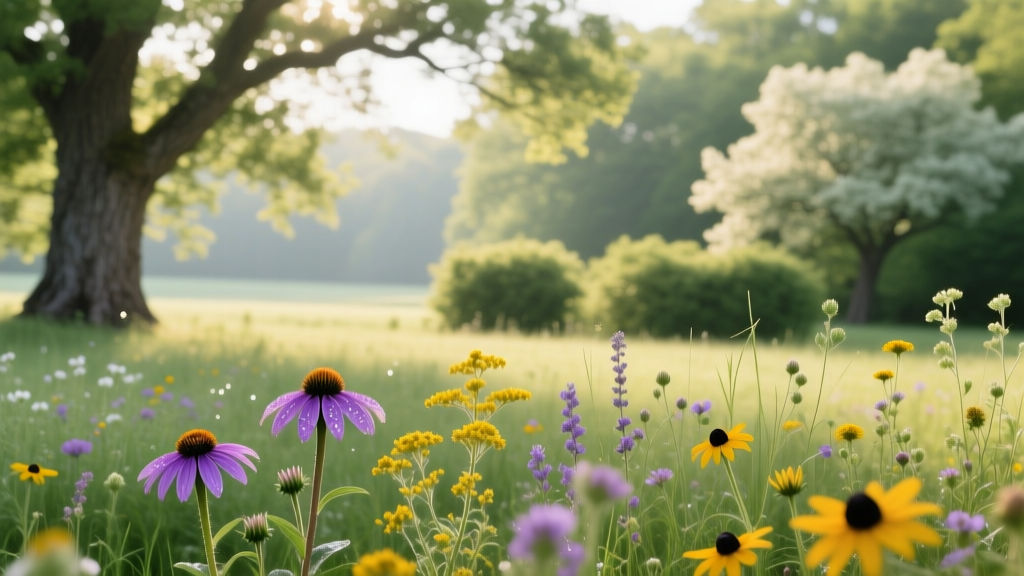
2026 Native Wildflower Meadow & Anchor Tree Planting Guide
Anna KowalskiPublished
The Frontier of 2026 Ecological Landscaping
Establishing a native wildflower meadow from a seed mix is one of the most rewarding ecological projects you can undertake in 2026. However, taking a strictly two-dimensional approach to meadow planting often misses a massive opportunity for biodiversity and landscape resilience. By viewing your meadow through the lens of tree selection and planting guides, you can create a multi-layered habitat that mimics natural savannas, woodland edges, and pine barrens. This integrated approach, often referred to as a tree guild or savanna model, combines the ground-level nectar and pollen resources of a native wildflower seed mix with the vertical structure, deep soil aeration, and canopy shelter provided by carefully selected native anchor trees. In this comprehensive 2026 guide, we will walk you through the exact steps to prepare your site, select the right tree species, sow your wildflower seeds, and maintain the ecosystem during its critical first year.
Why Combine Wildflower Seed Mixes with Anchor Trees?
In natural ecosystems, meadows and forests rarely exist in complete isolation. They interact at the edges and in transitional zones like oak savannas. By intentionally planting native trees within or immediately adjacent to your wildflower meadow, you create microclimates that protect delicate seedlings from harsh midday sun and drying winds. Furthermore, deep-rooted trees act as biological pumps, drawing up minerals from the subsoil and depositing them on the surface via leaf litter, which eventually feeds the shallow-rooted wildflowers. According to the Xerces Society for Invertebrate Conservation, integrating diverse structural layers in pollinator habitats significantly increases the nesting and overwintering success of native bee populations, as many species require both the floral resources of the meadow and the structural shelter of native woody plants.
Additionally, the National Wildlife Federation emphasizes that native trees are the keystone species of any garden ecosystem, supporting hundreds of species of caterpillars and birds. When you combine a high-quality 2026 regional ecotype seed blend with keystone native trees, you are not just planting a garden; you are engineering a self-sustaining food web.
Selecting the Right Native Trees for Meadow Integration
Not all trees are suitable for planting within or near a wildflower meadow. Species with dense, heavy canopies (like the Norway Maple or American Beech) will cast deep shade that quickly chokes out sun-loving meadow forbs and grasses. Instead, you must select 'anchor trees' that feature open canopies, dappled shade, and deep taproots that do not aggressively compete with the meadow's topsoil root matrix. Below is a comparison chart of ideal anchor trees for meadow integration in 2026.
| Tree Species | Botanical Name | Canopy Type | Root System | Ideal Companion Seed Mix |
|---|---|---|---|---|
| Bur Oak | Quercus macrocarpa | Open / Savanna | Deep Taproot | Tallgrass Prairie Mix |
| Eastern Redbud | Cercis canadensis | Light / Dappled | Medium / Branching | Woodland Edge Mix |
| Serviceberry | Amelanchier arborea | Light / Dappled | Shallow / Medium | Shrub-Savanna Mix |
| Longleaf Pine | Pinus palustris | Open / Needle | Deep Taproot | Southeastern Sandhill Mix |
When sourcing these trees in 2026, opt for bare-root saplings or air-pruned container stock to prevent root girdling. A 5-gallon containerized Bur Oak typically costs between $45 and $85, while bare-root Eastern Redbuds can be sourced for $15 to $25 from regional native plant nurseries.
Site Preparation: The Foundation of Seed and Sapling Success
The most common point of failure in native wildflower meadow establishment from seed mix is inadequate site preparation. You cannot simply broadcast seed over an existing lawn and expect a meadow to materialize. In 2026, organic land care standards heavily favor the 'stale seedbed' and 'smother cropping' techniques over the use of broad-spectrum herbicides.
Begin your preparation at least three months before your intended sowing date. Mow the existing vegetation as low as possible. Cover the area with overlapping layers of uncoated cardboard or heavy silage tarps, and weigh them down with compost or soil. This solarization and smothering process will exhaust the existing weed seed bank. When you remove the tarps, lightly rake the top inch of soil to create a bare, friable seedbed. This is also the exact moment you should dig and amend the planting holes for your anchor trees, ensuring that heavy soil disturbance happens before the delicate wildflower seeds are sown.
Sowing the Native Wildflower Seed Mix
Timing is everything. For most climate zones, late fall to early winter is the optimal time to sow a native wildflower seed mix. This allows the seeds to undergo natural cold stratification over the winter, breaking their dormancy and preparing them for a vigorous spring germination.
To ensure even distribution, mix your wildflower seeds with a bulk carrier material. A ratio of 1 part seed to 4 parts damp sand or vermiculite works perfectly. For a standard 1,000-square-foot plot, you will need approximately 0.5 to 1 ounce of pure live seed (PLS), depending on the specific mix's density. Broadcast half of your seed-sand mixture in a north-to-south pattern, and the remaining half in an east-to-west pattern. After broadcasting, use a lightweight lawn roller or simply walk over the area with flat-soled boots to ensure firm seed-to-soil contact. Do not bury the seeds; most native wildflower seeds require light to germinate and should remain on the soil surface or covered by no more than a dusting of fine compost.
Planting the Anchor Trees Amidst the Seedbed
Once your meadow seeds are sown and rolled, it is time to plant your anchor trees. The physical act of planting must be done carefully to avoid disturbing the surrounding seedbed. When following the Arbor Day Foundation Tree Planting Guide, the most critical rule is to locate the root flare—the point where the trunk widens at the base—and ensure it sits slightly above the final soil grade. Planting trees too deeply is the number one cause of sapling mortality.
Dig your holes twice as wide as the root ball but no deeper. Place the tree, backfill with native soil, and water deeply to eliminate air pockets. To protect the tree trunk from future meadow maintenance and rodent damage, install a wire mesh guard. Finally, apply a 2-inch layer of arborist wood chips in a 3-foot diameter ring around the tree. Crucially, keep this mulch ring strictly confined to the tree's base; do not let the wood chips spill over into the meadow zone, as thick mulch will smother your newly sown wildflower seeds and prevent spring germination.
First-Year Maintenance: Balancing Water and Weed Control
The first year of a native wildflower meadow and tree guild is entirely focused on weed management and root establishment. You will not see a magnificent display of blooms in year one; instead, the plants are investing their energy into deep root systems. During the first growing season, implement a strict mowing regime. Set your mower or string trimmer to a height of 6 to 8 inches. This height cuts back fast-growing annual weeds before they can drop their own seeds, while allowing the slow-growing native wildflower rosettes to capture the sunlight they need to survive.
Watering requires a delicate balance. Your newly planted anchor trees will need deep, infrequent watering—roughly 10 to 15 gallons per week during dry summer spells—to encourage their taproots to drive downward. However, the meadow seedbed should only receive light, occasional watering if a severe drought threatens the young seedlings. Avoid overhead sprinklers that can cause fungal diseases in the dense meadow foliage; instead, use a soaker hose coiled specifically around the drip line of your anchor trees.
Conclusion
Establishing a native wildflower meadow from seed mix while simultaneously planting native anchor trees is a masterclass in ecological gardening. By embracing the savanna model in 2026, you are building a resilient, multi-tiered landscape that sequesters carbon, manages stormwater, and provides critical habitat for local wildlife. With careful site preparation, precise seed sowing, and thoughtful tree selection, your integrated meadow and tree guild will thrive for decades to come.
