
Landscaping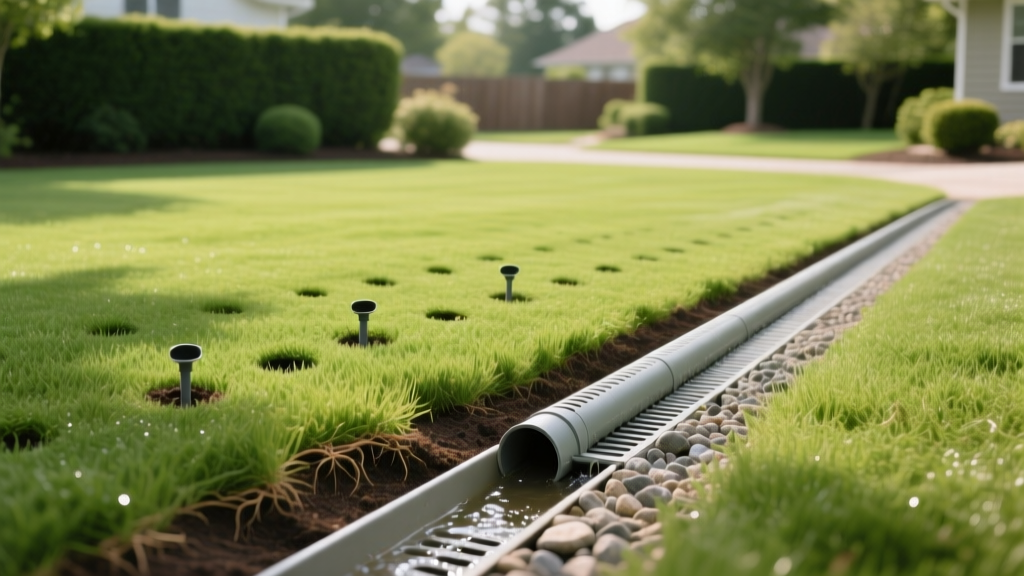
2026 French Drain & NDS Pro Channel Install Guide
Mike RodriguezPublished
The 2026 Approach to Comprehensive Lawn Drainage
As we navigate the landscaping challenges of 2026, shifting weather patterns have brought more intense, localized micro-bursts of rain to many regions. For homeowners, this means that traditional surface grading is often no longer enough to protect foundations, patios, and turf health. To achieve a truly resilient landscape, professionals are now integrating subsurface soil management with heavy-duty hardscape drainage. Specifically, combining core aeration techniques with a hybrid French drain and NDS Pro Series channel drain system has emerged as the gold standard for managing both surface runoff and subsurface saturation.
While most DIY guides treat drainage as purely a trenching and piping exercise, true landscaping experts know that water movement begins at the soil surface. If your soil is heavily compacted, water will sheet across the lawn, overwhelming surface drains and causing erosion. By approaching your drainage project from a core aeration perspective, you prepare the soil matrix to absorb, percolate, and feed water into your French drain system efficiently, while the NDS Pro Series channel drain handles the heavy surface loads from driveways and patios.
Why Core Aeration is the Missing Link in Drainage Design
Before you rent a trencher or purchase PVC piping, you must address soil compaction. According to the University of Minnesota Extension, core aeration is critical for alleviating soil compaction, breaking down thatch, and improving the soil's infiltration rate. When soil is compacted, its pore spaces are crushed, forcing water to pool on the surface.
If you install a French drain in a yard with highly compacted clay soil without first aerating, the surrounding earth will act like a concrete bowl. Water will never reach the perforated pipe buried in the gravel bed; instead, it will pool on the surface and flood your hardscapes. By performing a deep core aeration pass over the drainage zone prior to trenching, you create thousands of micro-channels. These channels allow surface water to infiltrate the subsurface, where it can naturally migrate toward the French drain's aggregate bed. This holistic approach ensures that both the surface and the subsurface are working in tandem to move water away from your property.
Understanding the NDS Pro Series Channel Drain
For surface water interception—particularly where a driveway meets a lawn or a patio meets a garden bed—the NDS Pro Series channel drain is the premier choice in 2026. As outlined by NDS drainage experts, the Pro Series is engineered from high-density polyethylene (HDPE) and is designed to handle heavy vehicular and pedestrian traffic when properly supported by concrete.
Unlike cheap, flimsy plastic trench drains that crack under the weight of an SUV or degrade under UV exposure, the NDS Pro Series features a robust 5-inch or 7-inch wide profile with interlocking sections that prevent shifting. The grates are available in various styles, including slotted and decorative patterns, ensuring that your hardscape maintains its curb appeal while efficiently capturing high-volume surface runoff.
Designing the Hybrid System: Channel Drain + French Drain
The hybrid system uses the NDS Pro Series channel drain as the primary surface interceptor. It captures the massive volume of water sheeting off impermeable surfaces like concrete driveways. The channel drain is then tied into a subsurface French drain, which carries the water away to a storm drain, dry well, or daylighted pop-up emitter. Meanwhile, the surrounding lawn, prepped via core aeration, absorbs the ambient rainfall and feeds excess groundwater into the French drain's gravel envelope.
The EPA's green infrastructure guidelines heavily emphasize managing stormwater at the source and promoting soil permeability. By pairing aeration with this hybrid drain setup, you are actively reducing the burden on municipal storm sewers and preventing localized flooding.
Step-by-Step Installation Guide
Phase 1: Soil Preparation and Core Aeration
Two weeks before your planned installation, rent a walk-behind core aerator. Mow the lawn short and water it deeply the night before to soften the ground. Run the aerator over the entire drainage zone, making two passes in perpendicular directions to ensure maximum plug extraction. Leave the extracted soil plugs on the lawn to break down naturally; they will help top-dress the yard and introduce beneficial microbes to the thatch layer. This step is non-negotiable for ensuring the soil can actually absorb water and direct it toward your subsurface drain.
Phase 2: Trenching and Slope Calculation
Use a string line and a laser level to map your trench route. A French drain requires a minimum slope of 1/8 inch per foot (1% grade) to ensure gravity moves the water effectively. Dig a trench that is 12 inches wide and 18 to 24 inches deep. For the NDS Pro Series channel drain section, you will need to dig a wider, shallower trench to accommodate the concrete encasement required for load-bearing support.
Phase 3: NDS Pro Series Channel Placement
At the driveway or patio edge, set up your wooden forms. Lay down a 2-inch base of concrete, then set the NDS Pro Series channel drain sections into the wet concrete, ensuring the top of the grate sits exactly 1/4 inch below the adjacent hardscape surface to catch sheeting water. Connect the channel drain sections using the built-in tongue-and-groove joints and PVC cement. Attach a 4-inch PVC schedule 40 adapter to the bottom or end outlet of the channel drain to transition into the subsurface pipe.
Phase 4: French Drain Integration and Backfill
Line the subsurface trench with a high-quality, non-woven geotextile landscape fabric. This prevents fine soil particles from migrating into the gravel and clogging the system over time. Add a 3-inch base layer of 3/4-inch washed gravel. Lay your 4-inch perforated PVC pipe (holes facing down) on top of the gravel. Connect this pipe to the outlet of your NDS Pro Series channel drain. Cover the pipe with more washed gravel until you are 3 inches below the soil surface. Fold the excess landscape fabric over the top of the gravel to create a protective envelope, then backfill the remaining 3 inches with the native soil you removed during trenching. Finally, overseed the aerated and backfilled zones to restore the turf.
Material Comparison: Drainage Solutions for 2026
| Feature | NDS Pro Series Channel Drain | Standard Plastic Trench Drain | Corrugated French Drain Pipe |
|---|---|---|---|
| Material | High-Density Polyethylene (HDPE) | Polypropylene / Thin PVC | Flexible Corrugated Plastic |
| Load Rating | Heavy Duty (Vehicular w/ concrete) | Light Duty (Pedestrian only) | N/A (Buried Subsurface) |
| Clog Resistance | High (Removable grates) | Moderate | Low (Prone to root/silt clogging) |
| Best Application | Driveways, Patios, Pool Decks | Garden paths, small patios | Basic yard swales (Not recommended) |
| Est. Cost per Ft (2026) | $45.00 - $65.00 | $15.00 - $25.00 | $2.00 - $4.00 |
Note: While corrugated pipe is cheaper, rigid 4-inch PVC is highly recommended for French drains in 2026 due to its superior flow rate and resistance to crushing under soil pressure.
2026 Cost and Material Breakdown
Budgeting for a hybrid drainage system requires accounting for both hardscape materials and soil preparation. For a standard 50-foot run intercepting a driveway and moving water to a daylighted emitter, expect the following material costs in 2026:
- NDS Pro Series Channel Drain (10 ft): ~$450 (including grates and end caps)
- Rigid PVC Pipe & Fittings (40 ft): ~$120
- Washed Gravel (1.5 tons): ~$75
- Non-Woven Geotextile Fabric: ~$60
- Core Aerator Rental (1 day): ~$90
- Concrete & Misc Hardware: ~$80
Total material and rental costs generally range between $850 and $1,100 for a professional-grade DIY installation. Hiring a landscaping contractor to perform the aeration, trenching, and hardscape integration will typically push the total project cost to between $2,500 and $4,500, depending on regional labor rates and site accessibility.
Post-Installation Lawn Care and Recovery
Once the NDS Pro Series channel drain is set and the French drain is buried, the final step is lawn recovery. Because you core aerated the zone prior to digging, the soil structure is already primed for rapid seed germination. Apply a high-phosphorus starter fertilizer and a premium turf-type tall fescue or Kentucky bluegrass seed blend over the backfilled trench and the aeration plugs. Keep the soil consistently moist for the first 14 days. The aeration holes will quickly fill with new root growth, creating a dense, permeable turf that works seamlessly with your new drainage infrastructure to keep your landscape dry, healthy, and visually stunning for years to come.

