
Landscaping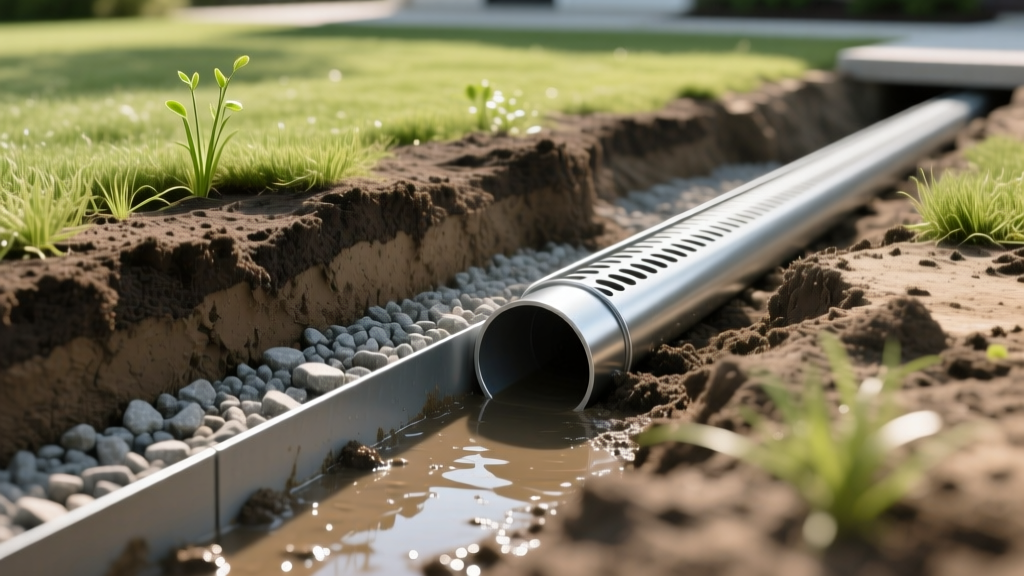
NDS Pro Series Drain Install Before Seeding in 2026
Emily WatsonPublished
Why Drainage Dictates Aeration and Seeding Success
Every spring, homeowners invest heavily in premium 2026 turfgrass seed blends and professional core aeration services, only to watch their newly seeded lawns fail. The culprit is rarely the seed quality or the fertilizer; it is almost always poor subsurface and surface drainage. If your soil remains waterlogged for more than 24 hours after a heavy rain, your aeration and seeding efforts are fundamentally compromised. According to Penn State Extension, compacted and poorly drained soils restrict oxygen to the root zone, creating an anaerobic environment where beneficial microbes die, grass roots suffocate, and newly germinated seeds simply rot.
From an aeration perspective, running a core aerator over wet, poorly drained clay is counterproductive. Instead of pulling clean, 3-inch soil plugs, the aerator tines smear the wet clay, creating a slick, compacted layer at the bottom of the hole. This actually worsens drainage and prevents new seed roots from penetrating the soil profile. Before you spend a single dollar on overseeding or liquid aeration treatments in 2026, you must address the hydrology of your landscape. Integrating a surface-level NDS Pro Series channel drain with a subsurface French drain is the ultimate landscaping prerequisite for a thick, healthy lawn.
The NDS Pro Series and French Drain Combination
To properly prepare a soggy yard for aeration, you must tackle water from two angles: surface runoff and the subsurface water table. The NDS Pro Series Channel Drain is an industry-standard surface trench drain designed to intercept high-volume surface water from driveways, patios, and sloped hardscapes before it can pool on your lawn. However, a channel drain alone will not lower a high water table. That requires a traditional French drain—a perforated pipe surrounded by washed gravel that collects subsurface water.
By trenching a dual-system where the NDS Pro Series captures surface sheet-flow and an underlying or adjacent French drain relieves soil saturation, you create a comprehensive drainage matrix. Once the soil moisture normalizes, core aeration becomes highly effective, pulling clean plugs and creating the perfect seed-to-soil contact required for 2026's advanced drought-tolerant and water-resistant turf varieties.
Step-by-Step Installation Guide for 2026
1. Planning and Trenching the Dual System
Begin by identifying the primary sources of surface water and the natural low points where water pools. Plan a trench route that maintains a minimum slope of 1/8 inch per foot toward your daylight exit point or dry well. For a combined system, you will need to dig a trench approximately 18 to 24 inches deep and 12 inches wide. The top 6 inches will house the NDS Pro Series channel and its concrete or paver base, while the lower 12 to 18 inches will house the French drain gravel bed and perforated pipe.
2. Installing the Subsurface French Drain
Line the bottom and sides of the deep trench with non-woven geotextile landscape fabric to prevent soil intrusion. Add a 2-inch base layer of 3/4-inch washed gravel. Lay a 4-inch perforated corrugated or PVC pipe with the holes facing downward. This is a critical 2026 best practice: holes facing down allow the rising water table to enter the pipe at the lowest point, preventing the gravel bed from becoming a clogged mud trap. Cover the pipe with more washed gravel until you are about 6 inches below the final surface grade, then fold the landscape fabric over the top to encapsulate the gravel.
3. Integrating the NDS Pro Series Channel Drain
Above the encapsulated French drain, add a compactable base material (such as crushed stone dust or a dry concrete mix) to set the NDS Pro Series 5-inch or 7-inch channel drain. Ensure the top grate sits 1/4 inch below the adjacent hardscape or soil grade to effectively catch sheet-flow. Use the NDS Pro Series end caps and outlet adapters to connect the channel drain to a solid PVC pipe. This solid pipe should bypass the French drain gravel and run directly to your daylight exit point, ensuring that heavy surface runoff does not overwhelm the subsurface French drain's capacity.
4. Backfilling and Soil Preparation
Once the drainage system is secured and tested with a garden hose, backfill the remaining trench with a mix of native topsoil and compost. Avoid heavy clay backfill, which will immediately recreate the compaction issues you are trying to solve. Grade the soil smoothly, ensuring it slopes away from foundations and toward your new drainage grates.
Transitioning to Core Aeration and Overseeding
After installation, allow the soil to settle and dry for two to three weeks. You are waiting for the soil moisture to reach the "friable" stage—moist enough to hold together when squeezed, but dry enough to crumble easily when poked. This is the exact window for core aeration. According to the University of Minnesota Extension, proper timing of aeration and seeding is vital for establishing deep root systems before seasonal stressors hit.
Run your core aerator over the newly drained areas in two perpendicular passes. Because the soil is no longer waterlogged, the tines will pull deep, intact plugs, fracturing the subsoil and allowing oxygen to reach the root zone. Immediately following aeration, overseed with a premium 2026 turf blend suited to your region's microclimate. The aeration holes will act as miniature reservoirs, protecting the seed from birds and wind while holding the precise amount of moisture needed for germination—without the risk of drowning.
Soil Moisture vs. Aeration and Seeding Outcomes
| Soil Condition | Aeration Result | Seeding Outcome |
|---|---|---|
| Waterlogged / Soggy | Tines smear clay; holes collapse; worsens compaction. | Seed rots; fungal diseases (damping off) thrive. |
| Dry / Hydrophobic | Tines bounce off surface; shallow, ineffective plugs. | Seed fails to germinate; blows away in wind. |
| Friable (Post-Drainage) | Deep, clean 3-inch plugs; excellent soil fracturing. | High germination; deep root penetration; strong establishment. |
2026 Material and Cost Breakdown
Budgeting for a dual drainage system requires an understanding of current material costs. While prices fluctuate based on regional supply chains, the table below outlines the estimated 2026 costs for a standard 50-foot residential installation.
| Material | Specification | Estimated 2026 Cost (50 ft) |
|---|---|---|
| NDS Pro Series Channel | 5-inch Pro Series with Micro Channel grate | $350 - $450 |
| French Drain Pipe | 4-inch SDR 35 Perforated PVC | $120 - $160 |
| Washed Gravel | 3/4-inch crushed stone (approx. 2 tons) | $100 - $140 |
| Geotextile Fabric | Non-woven drainage fabric (4x100 ft roll) | $85 - $110 |
| Solid PVC & Fittings | 4-inch Schedule 40 for channel outlet | $90 - $130 |
Final Thoughts on Landscape Hydrology
Treating the symptoms of a failing lawn with endless bags of seed and fertilizer is a losing battle if the underlying hydrology is flawed. By investing in an NDS Pro Series channel drain and a properly engineered French drain, you permanently alter the soil environment. This foundational landscaping work transforms dead, compacted clay into a friable, oxygen-rich seedbed, ensuring that your 2026 core aeration and overseeding efforts yield the dense, vibrant turf you have been striving for.

