
Landscaping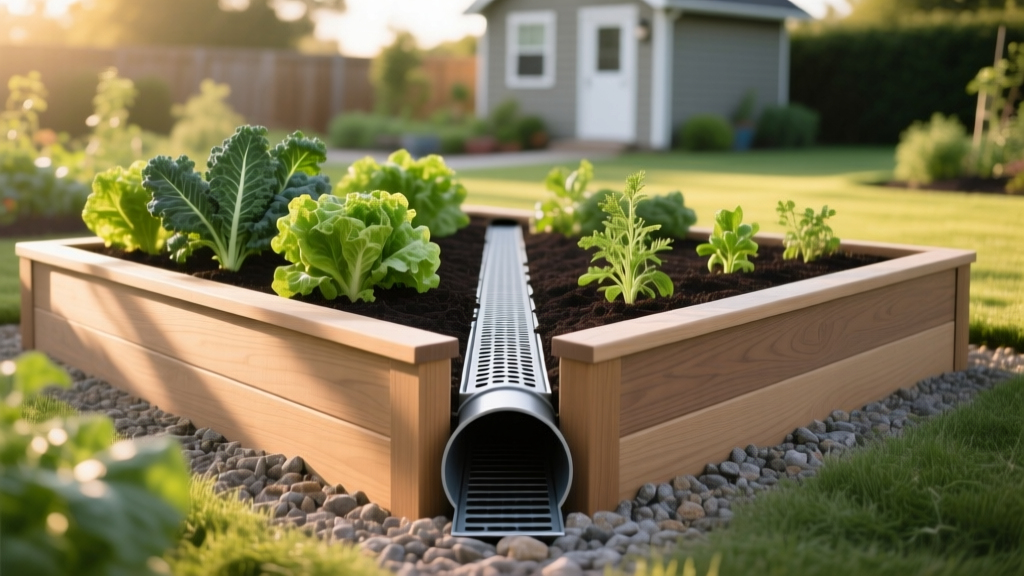
2026 Guide: NDS Pro Series Channel & French Drain for Raised Beds
James MillerPublished
The 2026 Challenge: Extreme Weather and Raised Bed Hydrology
As we navigate the 2026 growing season, home gardeners are facing increasingly unpredictable weather patterns, characterized by intense, sudden downpours followed by prolonged dry spells. For those invested in raised bed vegetable gardening, managing surface runoff and subsurface water accumulation is more critical than ever. While raised beds are inherently designed to improve drainage, they are not immune to the surrounding landscape's hydrology. When the soil around your raised beds becomes completely saturated, capillary action and lateral water pressure can wick excess moisture into your carefully engineered soil mix, leading to anaerobic conditions, root rot, and compromised structural integrity of the bed walls.
To combat this, a hybrid drainage approach is the gold standard for modern landscape design. By combining the surface water interception of the NDS Pro Series channel drain with the subsurface groundwater management of a French drain, you can create an impenetrable defense system for your vegetable garden. According to experts at the University of Minnesota Extension, maintaining optimal soil moisture without waterlogging is the primary key to maximizing vegetable yields in raised environments. This comprehensive guide will walk you through the exact installation process for integrating these two systems in 2026.
Understanding the Hybrid Drainage System
Before grabbing a shovel, it is essential to understand how surface and subsurface drainage systems complement one another. Relying solely on a French drain can lead to system overload during heavy surface storms, as water must percolate through the soil before reaching the pipe. Conversely, a channel drain only catches surface water and does nothing to alleviate a rising water table beneath your garden beds.
The NDS Pro Series Channel Drain
The NDS Pro Series is a heavy-duty, 5-inch wide channel drain system designed to capture high volumes of surface runoff. In a raised bed scenario, this channel is typically installed along the hardscape borders, walkways, or retaining walls adjacent to the garden beds. It features a rugged grate that can withstand foot traffic and wheelbarrow loads, making it ideal for the busy pathways of a productive vegetable garden. The captured surface water is then directed laterally into the subsurface French drain network.
The Subsurface French Drain
A French drain consists of a perforated pipe surrounded by washed gravel and wrapped in non-woven landscape fabric. It is buried in a trench that slopes away from the garden area. As groundwater rises or as the NDS channel drain feeds water into the system, the perforated pipe catches the flow and safely daylights it away from your property. As noted by Clemson University's Home and Garden Information Center, combining subsurface pipes with proper aggregate and fabric prevents soil particles from clogging the system, ensuring decades of reliable performance.
Step-by-Step Installation Guide
Follow these precise steps to install your integrated drainage system this season.
Step 1: Planning and Slope Calculation
Water requires gravity to move. Plan your trench route so that it starts at the highest point near your raised beds and terminates at a safe daylighting area, such as a storm drain, dry well, or lower elevation swale. You must maintain a minimum slope of 1 percent (a 1/8-inch drop per linear foot). Use a string line and a line level to mark your grade stakes.
Step 2: Trenching for the French Drain
Dig a trench approximately 12 to 18 inches deep and 10 inches wide along your planned route. The depth will depend on your frost line and the specific elevation of your raised bed bases. Ensure the bottom of the trench is tamped down and follows your calculated 1 percent slope.
Step 3: Laying the Landscape Fabric and Base Gravel
Line the trench with a high-quality, non-woven geotextile landscape fabric. Do not use woven weed barrier, as it will clog with silt and fail. Leave enough fabric overhang on the sides to completely wrap over the top of the gravel later. Add a 2-inch base layer of 3/4-inch washed drainage gravel to the bottom of the trench.
Step 4: Installing the Perforated Pipe
Lay a 4-inch corrugated or PVC perforated drain pipe on top of the base gravel, ensuring the holes face downward. This counterintuitive placement forces water to rise through the gravel bed before entering the pipe, which minimizes sediment buildup inside the pipe.
Step 5: Integrating the NDS Pro Series Channel
At the designated surface catch points (usually adjacent to the raised bed pathways), excavate a wider section to accommodate the NDS Pro Series channel. Set the channel in a bed of concrete or compacted paver base to ensure it remains perfectly level with the surrounding pathway surface. Use an NDS Pro Series lateral outlet adapter to connect the bottom of the channel drain directly into the 4-inch perforated pipe below. Seal the connection with waterproof silicone or a rubber coupling to prevent localized soil erosion.
Step 6: Backfilling and Wrapping
Cover the perforated pipe with an additional 4 to 6 inches of washed gravel. Fold the overhanging landscape fabric over the top of the gravel, creating a 'burrito' wrap that completely encloses the aggregate. This prevents topsoil and roots from infiltrating the gravel matrix. Finally, backfill the remaining trench space with native soil or pathway material.
Pro Tip for 2026: When backfilling around your raised beds, consider adding a 2-inch layer of coarse wood chips over the landscape fabric before adding topsoil. This creates a secondary biological filter that further protects your French drain from invasive vegetable roots and heavy organic debris.
Material and Cost Breakdown (2026 Estimates)
Budgeting accurately is essential for any landscaping project. Below is a structured breakdown of the materials required for a standard 40-foot run of integrated drainage, reflecting current 2026 market pricing.
| Material / Component | Specification | Estimated Cost (2026) |
|---|---|---|
| NDS Pro Series Channel | 5-inch width, 40 inches length (x12) | $480.00 |
| Perforated Drain Pipe | 4-inch SDR 35 PVC (50 ft roll) | $115.00 |
| Non-Woven Geotextile Fabric | 4 oz, 6 ft x 100 ft roll | $145.00 |
| Washed Drainage Gravel | 3/4-inch crushed stone (1.5 tons) | $95.00 |
| NDS Adapters & Fittings | Lateral outlets, couplings, end caps | $65.00 |
| Total Estimated Materials | Excludes labor and excavation tools | $900.00 |
Long-Term Maintenance and Winterization
Even the most meticulously installed drainage system requires seasonal maintenance to function optimally. In the fall, after your vegetable harvest is complete and before the first hard freeze, remove the grates from the NDS Pro Series channel. Clear out any accumulated organic matter, such as decaying tomato vines, fallen leaves, or windblown mulch. Flush the channel and the connected French drain with a high-pressure garden hose to dislodge any silt that may have settled in the pipe.
If you live in a region with harsh winters, ensure that the daylighting exit point of your French drain is completely clear of debris and ice dams. A frozen exit point will cause water to back up into the system, potentially freezing inside the perforated pipe and causing structural damage. By maintaining this hybrid system, your raised vegetable beds will remain perfectly aerated and primed for a highly productive planting season year after year.

