Pest Control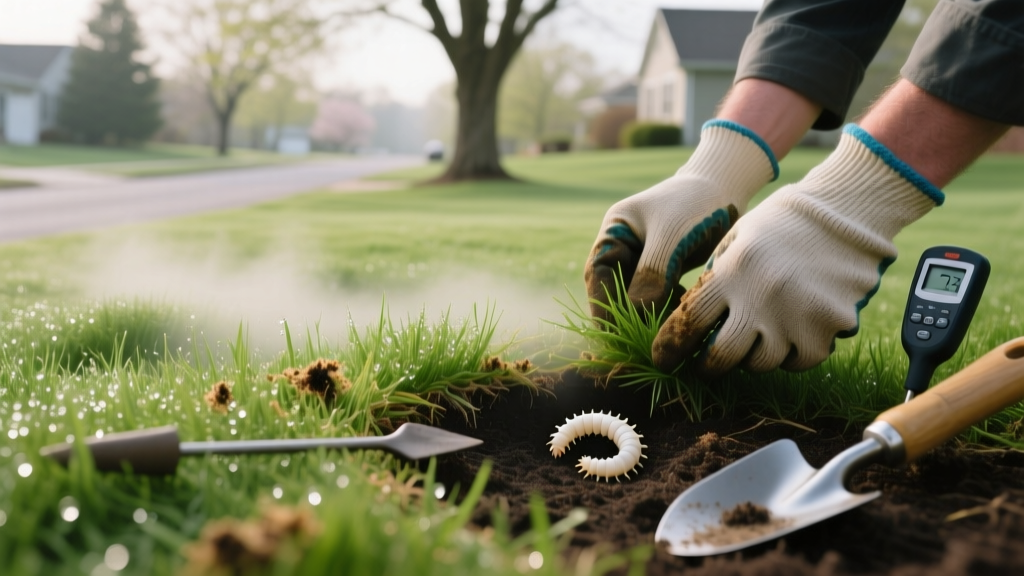
White Grub Control for Northeast and Midwest Lawns
Sarah ChenPublished
Understanding the White Grub Threat in Northern Climates
For homeowners in the Northeast and Midwest, maintaining a lush, cool-season lawn—such as Kentucky bluegrass, tall fescue, or perennial ryegrass—requires vigilance against a hidden, subterranean enemy: the white grub. White grubs are the larval stage of various scarab beetles, including the Japanese beetle, June bug (May/June beetle), and the European chafer. These C-shaped, cream-colored larvae feed aggressively on grassroots, severing the turf's ability to absorb water and nutrients, ultimately leading to large, spongy, brown patches of dead grass.
According to Penn State Extension, the European chafer has become particularly devastating in the Northeast and Midwest over the last two decades, often causing more severe turf damage than the Japanese beetle because its larvae feed later into the fall and earlier in the spring. Effective pest management in these regions requires an understanding of local climate triggers, precise scouting techniques, and a strategic approach to both preventative and curative treatments.
Regional Climate Triggers and the Grub Life Cycle
The distinct seasons of the Northeast and Midwest—heavy spring rains, humid summers, and freezing winters—dictate the annual life cycle of scarab beetles. Understanding this cycle is the cornerstone of Integrated Pest Management (IPM) for northern lawns.
- Spring (April - May): As soil temperatures at a 2-inch depth consistently reach 50°F, overwintering grubs migrate upward to feed on grassroots before pupating.
- Early Summer (June - July): Adult beetles emerge, mate, and lay eggs in moist, well-irrigated turf. Full-sun areas with thick thatch layers are highly attractive egg-laying sites.
- Late Summer (August - September): Eggs hatch into young, first-instar grubs. These young larvae are ravenous and cause the most rapid turf damage as they feed near the surface.
- Fall to Winter (October - March): As soil temperatures drop below 50°F, grubs burrow 4 to 8 inches deep into the soil profile to overwinter, escaping the frost line.
Because the Midwest and Northeast experience significant spring moisture, grub populations can explode in localized areas where soil drainage is moderate and irrigation is frequent. Conversely, severe summer droughts can naturally suppress grub populations by drying out eggs before they hatch.
How to Scout for Grubs
Do not apply pesticides blindly. Scouting your lawn in late August or early September is critical. Use a flat-edged spade to cut a 1-foot by 1-foot square of turf, about 3 inches deep, and peel it back like a carpet. Count the grubs in the soil and on the roots. According to University of Kentucky Entomology, a healthy, well-fertilized cool-season lawn can tolerate 8 to 10 grubs per square foot without visible damage. However, if you count more than 10 grubs per square foot, or if the lawn is already stressed by drought or shade, treatment is warranted.
Pro Tip: Also perform the "tug test." If your lawn feels spongy underfoot and the dead turf rolls back easily like a loose carpet without root resistance, grubs have likely severed the root system.
Chemical and Organic Treatment Strategies
When scouting confirms a damaging threshold, you must choose between preventative and curative chemical controls. Preventative products are applied before eggs hatch and provide long-lasting residual control. Curative products are fast-acting "rescue" treatments used when active, damaging grub populations are already present in late summer or early fall.
| Treatment Type | Active Ingredient | Brand Example | Regional Timing | Est. Cost (per 5,000 sq ft) |
|---|---|---|---|---|
| Preventative | Chlorantraniliprole | Scotts GrubEx1 | May to Mid-June | $15 - $20 |
| Preventative | Imidacloprid / Clothianidin | Bayer Advanced Season-Long | June to Mid-July | $18 - $25 |
| Curative (Rescue) | Trichlorfon | Bayer 24-Hour Grub Killer (Dylox) | August to September | $20 - $30 |
Application Rules for Northern Soils: Clay-heavy soils common in the Midwest can bind certain chemicals. To ensure the active ingredient reaches the root zone where grubs feed, always water in granular grub controls with at least 0.5 inches of water immediately after application. Without this crucial irrigation step, the product will remain trapped in the thatch layer and degrade in the sunlight.
Biological Controls for Eco-Conscious Lawns
For homeowners near waterways or those practicing strict organic lawn care, biological controls offer a viable, climate-specific alternative.
- Beneficial Nematodes: The Heterorhabditis bacteriophora (Hb) strain is highly effective against white grubs. These microscopic worms seek out grubs in the soil, penetrate them, and release bacteria that kill the host within 48 hours. Apply nematodes in late August when soil temperatures are between 60°F and 85°F. Cost is approximately $40-$60 per 10 million nematodes (treating ~2,000 sq ft). Keep the soil moist for 10 days post-application.
- Milky Spore (Paenibacillus popilliae): This organic bacterium specifically targets Japanese beetle grubs. While it takes 2 to 4 years to establish in the soil profile, it can persist for over a decade in the Northeast and Midwest climates. Note: Milky Spore is not effective against European chafer or June bug larvae.
Month-by-Month Grub Control Calendar for the Northeast & Midwest
Timing is everything in regional pest management. Follow this IPM calendar to stay ahead of the life cycle:
- April - May: Inspect lawn for spring damage from overwintered European chafer grubs. Apply curative Trichlorfon if active grubs are found near the surface. Seed bare spots with tall fescue or Kentucky bluegrass.
- June: Apply preventative Chlorantraniliprole (GrubEx) before adult beetles begin heavy egg-laying. Maintain lawn height at 3 to 3.5 inches to shade the soil, which dries out the top inch of soil and discourages egg survival.
- July: Monitor for adult beetle flights (Japanese beetles and June bugs). Avoid excessive irrigation during dry spells; allowing the lawn to go semi-dormant naturally reduces egg hatch rates.
- August - September: Perform the spade scouting test. If grub counts exceed thresholds, apply a curative rescue treatment (Trichlorfon) or beneficial nematodes. Water heavily to move the chemical into the root zone.
- October - November: As grubs move deep for winter, chemical control is no longer effective. Focus on fall fertilization (using a slow-release nitrogen) to promote deep root growth and turf recovery for the following spring.
Managing Secondary Pest Damage
Often, the first sign of a grub infestation in the Midwest or Northeast isn't brown grass, but torn-up turf. As Ohio State University Extension notes, animals such as skunks, raccoons, crows, and starlings actively forage for protein-rich grubs in the fall and spring. While trapping or repellents might deter animals temporarily, the only permanent solution is eliminating their food source by treating the grub population and securing the sod with netting or heavy irrigation to settle the soil back against the roots.
Conclusion
White grubs are a formidable pest in the Northeast and Midwest, but they are entirely manageable with regional awareness and proper timing. By understanding the soil temperature triggers, scouting accurately in late summer, and choosing the right preventative or curative product for your specific lawn profile, you can protect your cool-season turf from subterranean devastation. Embrace Integrated Pest Management, treat only when thresholds are met, and maintain a thick, deeply rooted lawn to naturally outcompete future pest pressures.