
Landscaping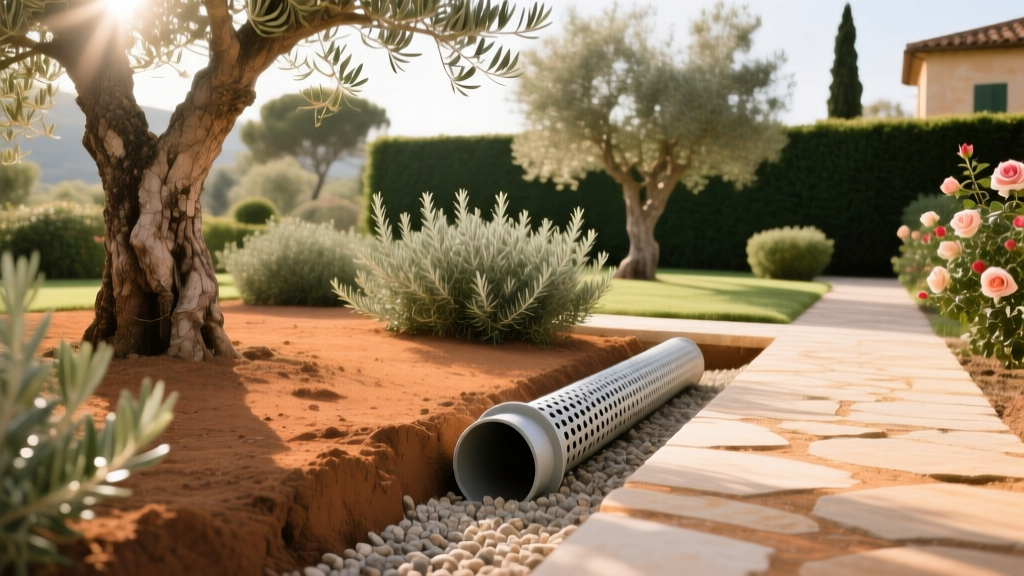
Drainage Pipe Solutions For Mediterranean Olive Trees In 2026
Mike RodriguezPublished
The Mediterranean Paradox: Drought-Tolerant but Drainage-Dependent
As water conservation continues to dictate residential landscaping trends in 2026, the Mediterranean garden style has surged in popularity. Homeowners are increasingly replacing thirsty turfgrass with architectural olive trees (Olea europaea) and fragrant, structural rosemary hedges (Salvia rosmarinus). However, this shift presents a unique horticultural paradox. While these plants are famously drought-tolerant once established, they are extraordinarily sensitive to waterlogged soil. In regions that experience heavy winter rains or possess dense clay soils, failing to install proper subsurface landscape drainage pipes is the number one cause of plant failure in Mediterranean designs.
Olive trees and rosemary shrubs evolved in the rocky, well-aerated soils of the Mediterranean basin. When planted in flat, poorly draining yards without the aid of a French drain or perforated pipe system, their root systems suffocate. According to the University of California Agriculture and Natural Resources (UC ANR), olive trees are highly susceptible to Phytophthora root rot and Verticillium wilt when soil moisture remains excessive for prolonged periods. Similarly, the Texas A&M AgriLife Extension notes that rosemary roots will quickly decay if left in saturated, anaerobic soil conditions. To protect your investment and ensure your landscape thrives in 2026 and beyond, integrating a strategic drainage pipe network is non-negotiable.
Choosing the Right Landscape Drainage Pipe in 2026
The market for subsurface drainage has evolved significantly, offering solutions that cater specifically to the tight spaces and delicate root zones of ornamental landscaping. When designing a drainage system for olive tree basins and linear rosemary hedges, you must select a pipe that balances water infiltration rates with structural integrity. Below is a comparison of the top landscape drainage pipe options available this year.
| Pipe Type | Best Application | 2026 Avg Cost (per 10 ft) | Pros & Cons |
|---|---|---|---|
| Corrugated Slotted Pipe (ADS) | Long linear rosemary hedges | $18 - $25 | Pros: Flexible, inexpensive, easy to curve around garden beds. Cons: Prone to crushing under heavy hardscaping; ridges can trap sediment. |
| Rigid PVC (Schedule 20/40) | Underneath flagstone patios & driveways | $35 - $55 | Pros: Extremely durable, smooth interior prevents clogging. Cons: Rigid, requires fittings for turns, harder to install in tight root zones. |
| NDS EZ-Flow System | Shallow trenches near olive tree root flares | $45 - $60 | Pros: Pre-wrapped in polystyrene aggregate, no messy gravel required. Cons: Higher upfront cost, lower total water volume capacity than gravel. |
Designing the Layout: Perimeter Rings vs. Linear Trenches
The layout of your drainage pipe must respect the distinct root architectures of your chosen plants. Olive trees develop extensive, shallow lateral root systems that spread well beyond the drip line. Running a drainage pipe directly beneath the trunk is a critical mistake that can sever vital anchor roots and invite disease into the heartwood.
The Olive Tree Perimeter Strategy
For specimen olive trees, the best approach in 2026 is a perimeter herringbone or ring layout. Dig a trench roughly 3 to 4 feet away from the trunk, encircling the tree or forming a V-shape pointing away from the tree toward your designated discharge point. This intercepts lateral subsurface water before it pools under the root ball. Use 4-inch rigid PVC with drilled weep holes facing downward, surrounded by washed river rock, to ensure water is pulled away from the taproot zone efficiently.
The Rosemary Hedge Linear Trench
Rosemary hedges are typically planted in linear rows to form privacy screens or property borders. Because they are often planted on slight mounds to encourage surface runoff, subsurface water can still pool in the trench backfill where the soil is looser than the surrounding native clay. Install a continuous 4-inch corrugated slotted pipe parallel to the hedge, positioned about 12 inches away from the base of the plants on the 'wet' side of the slope. This acts as a traditional French drain, capturing groundwater and channeling it to a pop-up emitter or daylighted curb.
Step-by-Step Installation Guide
Proper installation is just as critical as pipe selection. Follow these actionable steps to ensure your Mediterranean landscape remains perfectly drained through the wettest winter months.
- Step 1: Call Before You Dig. Always contact your local utility locator service (like 811 in the US) at least 48 hours before trenching to avoid striking gas, water, or fiber-optic lines.
- Step 2: Establish the Grade. Use a laser level or string line to establish a minimum 1% slope (1 inch of drop per 8 feet of run) for your trench. Without this gravity-fed slope, water will stagnate inside the pipe.
- Step 3: Trenching Dimensions. Dig a trench 12 to 18 inches deep and 10 to 12 inches wide. For rosemary, shallower trenches (12 inches) are usually sufficient. For larger olive tree basins in heavy clay, aim for 18 inches to intercept deeper water tables.
- Step 4: Lay the Geotextile Fabric. Line the trench with a non-woven geotextile drainage fabric. Do not use woven weed barrier, as it restricts water flow. The fabric must be wide enough to fold over the top of the gravel fill later, creating a 'burrito' that prevents soil infiltration.
- Step 5: Add the Base Gravel. Place 2 to 3 inches of 3/4-inch washed angular gravel at the bottom of the trench. Avoid rounded pea gravel, which shifts and fails to support the pipe.
- Step 6: Position the Pipe. Lay your chosen perforated drainage pipe on the gravel bed. Ensure the perforations (or slots) are facing downward. This counter-intuitive placement allows water to rise into the pipe from the saturated soil bed, preventing sediment from washing directly into the slots from above.
- Step 7: Backfill and Wrap. Cover the pipe with another 4 to 6 inches of washed gravel. Fold the excess geotextile fabric over the gravel to seal it. Top the remaining 2 inches of the trench with native soil or decorative Mediterranean gravel, such as decomposed granite (DG).
Integrating Hardscaping and Surface Runoff
Mediterranean landscapes heavily feature hardscaping elements like flagstone patios, permeable pavers, and decomposed granite pathways. While these materials reduce the need for irrigation, they can create severe surface runoff during flash storms. In 2026, modern landscape design dictates that surface drainage and subsurface pipes must work in tandem.
Install 9x9 inch NDS catch basins at the low points of your flagstone patios and connect them via solid (non-perforated) PVC pipe to your main perforated drainage line. Ensure the connection is made using a Y-fitting rather than a T-fitting to maintain smooth water flow and prevent debris from catching in the junction. If you are using decomposed granite pathways near your rosemary hedges, ensure the DG is stabilized with a natural resin binder. Unstabilized DG can wash into your drainage gravel over time, clogging the geotextile fabric and rendering your French drain useless.
2026 Material Cost Breakdown
Budgeting for a comprehensive drainage system is essential for any major landscaping overhaul. Below is an estimated cost breakdown for installing a 50-foot linear French drain to protect a newly planted rosemary hedge and a single perimeter drain for a mature olive tree in the 2026 market.
- Corrugated Slotted Pipe (50 ft): $100
- Rigid PVC (20 ft for olive tree perimeter): $90
- Non-Woven Geotextile Fabric (300 sq ft roll): $85
- Washed 3/4-inch Gravel (2 tons, delivered): $160
- NDS Catch Basin & Fittings: $75
- Pop-Up Emitter & Daylighting Hardware: $45
- Total Estimated Material Cost: $555
While professional excavation and labor will increase this total, the DIY material cost is a fraction of the price of replacing a mature, 15-gallon olive tree or replanting an entire 50-foot rosemary hedge lost to root rot. By investing in high-quality landscape drainage pipes and proper installation techniques, you ensure that your Mediterranean oasis remains resilient, beautiful, and perfectly drained for decades to come.

