Gardening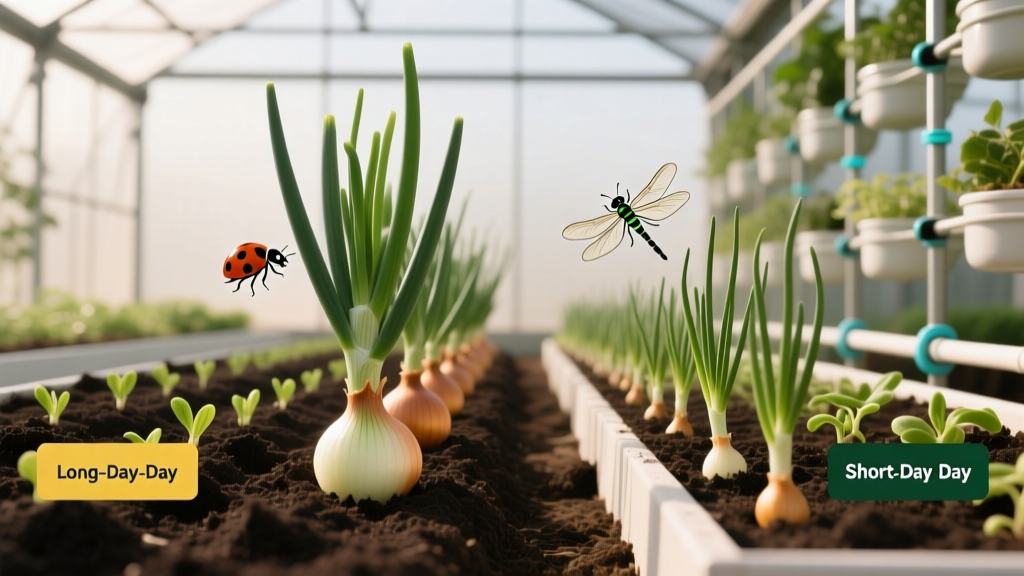
Onion Sets vs Seeds 2026: Bio-Control & Day-Length Guide
Robert HayesPublished
The 2026 Onion Grower’s Dilemma: Sets vs. Seeds and Day-Length Types
As we move through the 2026 growing season, home gardeners and small-scale market farmers are increasingly abandoning broad-spectrum pesticides in favor of integrated bio-control strategies. When it comes to growing onions (Allium cepa), success hinges on two foundational decisions: choosing between onion sets and true seeds, and understanding the photoperiodic requirements of long-day versus short-day varieties. More importantly, how you establish your onion crop directly dictates its vulnerability to devastating pests like onion thrips and onion root maggots. By aligning your planting method and day-length type with a robust beneficial insect strategy, you can cultivate massive, healthy bulbs without disrupting your garden's ecological balance.
Understanding Photoperiodism: Long-Day vs. Short-Day Onions
Onions are photoperiodic, meaning the initiation of bulb formation is triggered by the number of daylight hours they receive, not by the age of the plant or the temperature. Planting the wrong type for your latitude is the most common reason for harvest failure. According to the Cornell University’s NYS IPM program, matching your onion type to your geographic location is critical for maximizing bulb size before pest pressures peak in mid-summer.
| Onion Type | Daylight Requirement | Ideal Latitude | Planting Window | Popular 2026 Varieties |
|---|---|---|---|---|
| Long-Day | 14 to 16 hours | North of 35°N (Northern US, Canada) | Early Spring (as soon as soil is workable) | Patterson, Copra, Red Wing |
| Short-Day | 10 to 12 hours | South of 35°N (Southern US, Gulf Coast) | Fall or Late Winter | Texas SuperSweet, Vidalia, Red Creole |
| Day-Neutral | 12 to 14 hours | Anywhere (Adaptable) | Early Spring | Candy, Sierra Blanca |
Sets vs. Seeds: Agronomics and Pest Vulnerability
The choice between planting onion sets (small, dormant, pre-grown bulbs) and true onion seeds drastically alters your garden's micro-ecology and pest vulnerability profile.
Growing from Onion Sets
Onion sets are harvested prematurely, cured, and replanted the following season. They offer a massive head start, maturing 3 to 4 weeks faster than seeds. This rapid establishment allows the plant to develop a robust root system and thicker cuticle before the primary generation of onion thrips (Thrips tabaci) emerges. However, sets can occasionally harbor soil-borne pathogens or stem and bulb nematodes if not sourced from certified disease-free suppliers. Furthermore, because sets are planted shallowly, they remain highly susceptible to heaving during late-spring frost cycles and early foraging by onion maggots.
Growing from True Seeds
Starting from seed is significantly more cost-effective and offers access to a wider genetic diversity of heirloom and hybrid varieties. However, onion seedlings are notoriously slow-growing and fragile. During their first 45 days, they are highly vulnerable to damping-off fungi and early-season onion maggot flies (Delia antiqua), which lay eggs at the base of tender seedlings. To protect seed-grown onions in 2026 without synthetic chemicals, growers must rely heavily on physical barriers and targeted bio-control agents.
The Bio-Control Arsenal for Onion Pests
As chemical resistance in onion thrips continues to complicate commercial farming in 2026, home gardeners have a distinct advantage: the ability to foster complex, localized food webs. The UC Agriculture and Natural Resources IPM guidelines emphasize that preserving natural enemy populations is the most sustainable method for managing Allium pests.
Managing Onion Thrips Naturally
Onion thrips rasp the leaf surface and suck the plant juices, leaving silvery streaks that reduce photosynthesis and invite bacterial rot. To combat thrips biologically:
- Predatory Mites: Introduce Neoseiulus cucumeris or Amblyseius swirskii via slow-release sachets hung directly on the onion foliage or nearby companion plants. These mites aggressively hunt thrip larvae.
- Minute Pirate Bugs (Orius insidiosus): These generalist predators are voracious consumers of adult thrips. You can attract them by maintaining a diverse flowering border around your Allium beds.
- Fungal Biopesticides: If populations explode, apply Beauveria bassiana, a naturally occurring entomopathogenic fungus that infects and kills thrips without harming beneficial insects like bees or ladybugs.
Eradicating Onion Maggots with Beneficial Nematodes
The onion maggot is a root-feeding fly larva that can decimate a young onion crop in days. Because the damage occurs underground, foliar sprays are useless. Instead, utilize Beneficial Nematodes (Steinernema feltiae). Applied as a soil drench in early spring just as soil temperatures reach 50°F (10°C), these microscopic worms actively seek out and infect maggot pupae and larvae in the soil matrix, releasing bacteria that eliminate the pest within 48 hours. This is highly effective for protecting vulnerable seed-grown onions during their delicate early stages.
Companion Planting to Sustain Beneficial Insects
Beneficial insects require nectar and pollen to sustain their adult breeding stages. Because onions produce dense, upright foliage and their flowers do not bloom until the plant is bolting (which ruins the bulb), you must integrate specific companion plants to serve as 'insectary strips'.
- Sweet Alyssum (Lobularia maritima): Plant low-growing alyssum between onion rows. Its tiny, shallow flowers are perfectly structured for small parasitic wasps and hoverflies (Syrphidae), whose larvae consume hundreds of aphids and thrips.
- Dill and Cilantro: Allow patches of these umbelliferous herbs to bolt and flower near your short-day onion patches. They are magnetic for predatory wasps that parasitize onion pests.
- Yarrow (Achillea millefolium): A perennial border of yarrow provides overwintering habitat for predatory beetles and ladybugs, ensuring a resident population is ready to defend your spring-planted onion sets.
Your 2026 Step-by-Step Bio-Control Planting Schedule
To successfully integrate day-length selection, planting methods, and bio-control, follow this optimized timeline for the 2026 season:
Early Spring (Soil Thaw to 50°F)
Prepare raised beds with well-draining compost. Apply Steinernema feltiae nematodes to the soil to preemptively destroy overwintering onion maggot pupae. Plant long-day onion sets 4 inches apart, 1 inch deep. Install floating row covers to prevent adult maggot flies from accessing the soil.
Mid-Spring (55°F to 65°F)
Remove row covers once the threat of the first maggot fly generation has passed. Broadcast Neoseiulus cucumeris predatory mite sachets every 10 feet along the rows. Sow Sweet Alyssum seeds in the inter-row spaces to begin establishing the insectary habitat.
Early Summer (Daylight Peaks)
For long-day onions, bulb initiation begins. Ensure consistent moisture (1 inch per week) to support rapid cell expansion. Monitor for silvery thrip damage. If observed, release Minute Pirate Bugs. Avoid overhead watering, which can wash away predatory mites and promote downy mildew.
Mid-to-Late Summer (Harvest)
Stop watering when the onion necks begin to soften and tops flop over. Allow the bulbs to cure in a dry, shaded, well-ventilated area. The beneficial insect habitat you maintained will continue to protect your late-season brassicas and fall crops long after the onions are harvested and stored.
Conclusion
Successfully growing onions in 2026 requires more than just putting a seed or set in the ground. By respecting the photoperiodic needs of long-day and short-day varieties, understanding the unique pest vulnerabilities of sets versus seeds, and actively deploying beneficial insects and nematodes, you can achieve a bountiful, chemical-free harvest. Embrace the ecology of your garden, and let nature's predators do the heavy lifting for your Allium crops.
